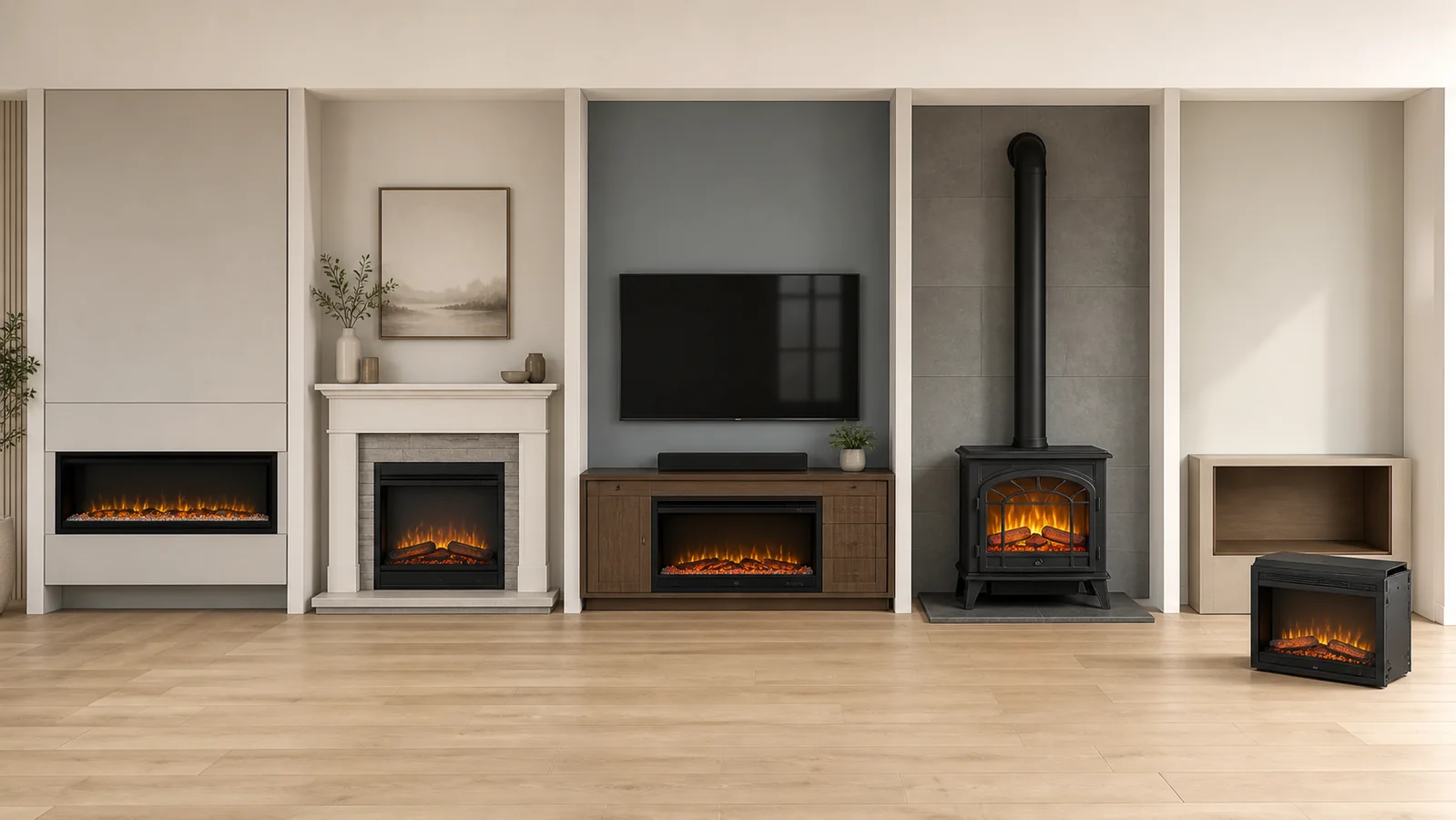
A true electric fireplace does not need a chimney, flue or combustion vent to the outdoors. It does not burn fuel inside the appliance, so there is no combustion exhaust to carry away.
That answer is easy to overextend. “Vent” can also mean a room-air intake, a warm-air outlet or a fresh-air opening that a particular flame-effect cassette needs inside its enclosure. Those paths do not turn the fireplace into a fuel-burning appliance, but covering one can still make the installation wrong.
Four air paths can hide behind “vent”
The useful question is not simply whether the brochure says vent-free. Ask what is moving, where it is going and which document owns the opening.
| Air path | What it does | Does it go outdoors? | What owns the answer |
|---|---|---|---|
| Combustion exhaust, flue or chimney | Carries combustion products away from a fuel-burning appliance | A confirmed electric fireplace does not need this path | Appliance category and exact identity |
| Heater room-air intake | Pulls room air through a fan-forced heater | Normally no; it is not a combustion-air duct | Exact-model manual and intake drawing |
| Warm-air outlet or heater “exhaust” | Returns heated air to the room | Normally no; “exhaust” here can mean leaving the heater, not leaving the building | Exact-model manual and outlet drawing |
| Flame-effect or enclosure fresh-air inlet | Feeds a system that needs air beneath or around a cassette | Do not infer the source or size; it is not a flue | Exact-model manual and approved enclosure path |
Dimplex explains the category answer directly: its electric fireplaces do not burn fuel internally or produce the emissions that a fuel-burning fireplace must vent. EcoSmart likewise describes its electric line as having no flue, chimney or combustion-air requirement. Neither statement authorizes a sealed cabinet around every model.
Make sure the appliance is actually electric
“Fireplace” is not an appliance identity. A product image can show logs, embers or a masonry opening while the appliance behind the effect may be electric, gas, wood or ethanol. A listing may also use “insert” for both electric products and fuel-burning products.
Match the model number on the listing, carton or nameplate to the current manual. The manual should describe an electrical flame effect and, if included, an electric heater. If it contains a gas connection, burner, fuel tank, combustion-air instruction or flue class, this article is not the authority for that installation.
Water vapor does not automatically mean combustion. Some electric cassettes use water and light to create the visual effect. They can still be electric and flue-free while having a model-specific air path for the effect. If the format itself is uncertain, classify the appliance with the types of electric fireplaces guide before answering the vent question.
A vent-free heater still moves room air
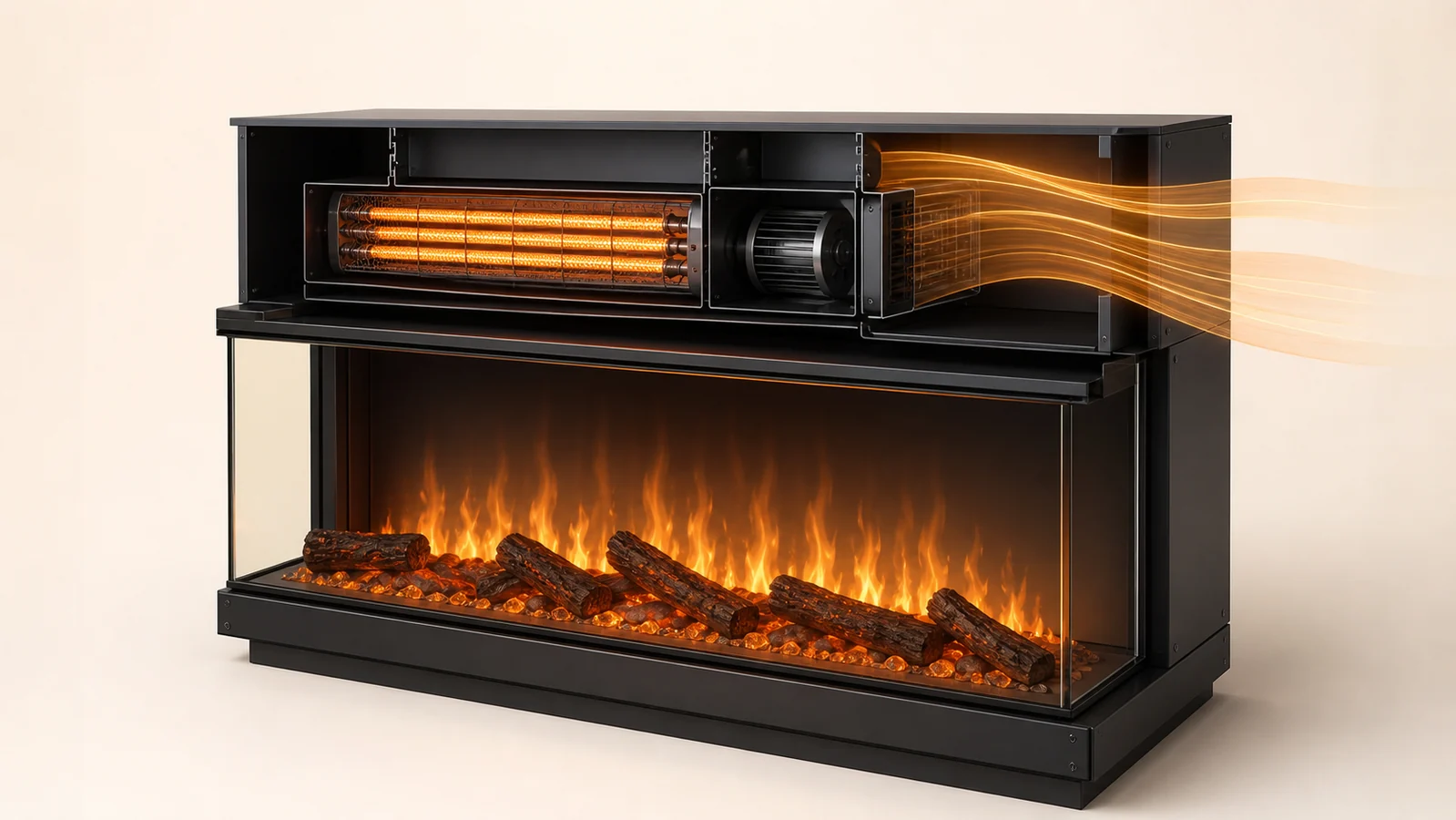
Many electric fireplaces include a fan-forced resistance heater. Room air enters through an intake, crosses the heater and returns through an outlet. Manufacturers place those openings at different parts of the face or body, so the clean trim line in one product photo cannot tell you where another model breathes.
EcoSmart’s current Motion safety instructions say not to insert objects into ventilation or exhaust openings and not to block air intakes or exhaust. In that wording, “exhaust” is an appliance opening. It is not evidence that a chimney has to leave the house.
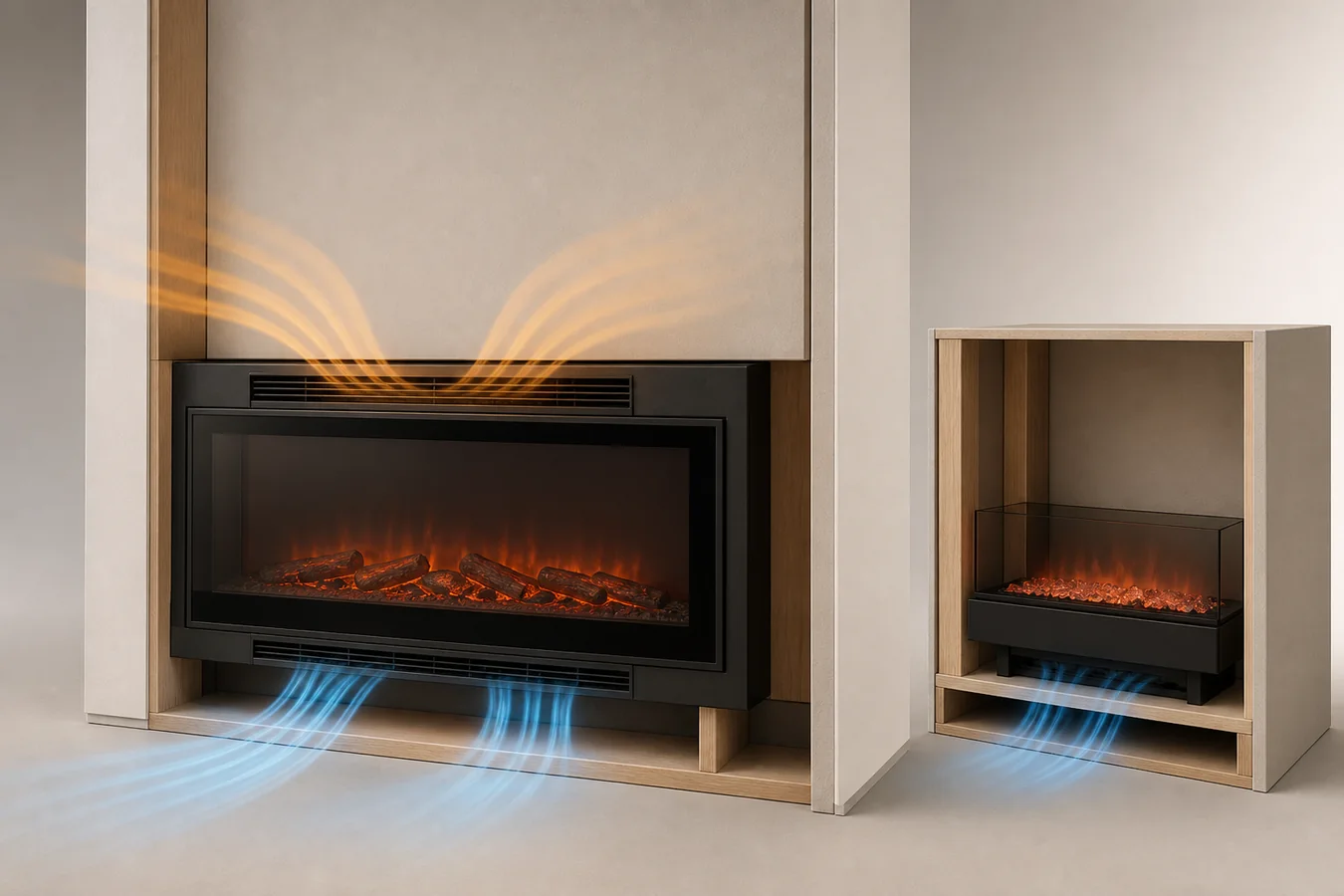
The distinction matters when a fireplace meets cabinetry, a mantel, deep trim, furniture, carpet or a recessed wall. A visible grille may be part of the finished face, while another intake can sit below or behind the unit. Copy the location and clearance language from the exact manual. Do not invent a universal gap and do not move an opening because a different model vents from the front.
Running the flame effect without heat may change which parts operate, but it does not rewrite the installation. Keep every opening the manual assigns to the appliance available in all permitted modes. If heat output is part of the purchase decision, compare the exact heater rating and room role in the electric fireplace heat guide; a no-chimney answer says nothing about how much useful heat the room will receive.
A cassette can need fresh air without needing a flue
Dimplex’s CDFI Pro manual provides the counterexample that one-word answers miss. For the named Opti-myst cassettes, it requires a fresh-air inlet that lets air reach the underside of the unit: 40 square inches (258 cm²) for CDFI500-PRO and 80 square inches (516 cm²) for CDFI1000-PRO. When either cassette is installed in the optional Pro Box Heater, the manual says no additional intake is required because the box includes air intakes.
Those are not universal electric-fireplace dimensions. They belong to two exact cassette models and one documented accessory relationship. They also do not describe a combustion flue. The example proves a narrower rule: a product can be electric and need no chimney while its approved enclosure still needs a defined air opening.
Do not copy 40 or 80 square inches into another water-vapor fireplace. Find the exact model, configuration and current manual, then preserve the manufacturer’s terminology. “Fresh air,” “air inlet,” “ventilation,” “heater intake” and “outlet” may name different functions. The electric fireplace specifications guide helps keep those fields separate instead of turning every opening into a generic vent.
Let the manual name every opening before the wall closes
Read the installation section and dimensional drawing with the chosen installation path in view. Surface mounting, partial recess, full built-in and open cassette installation can expose different faces of the same product family.
For each opening the manual shows, record its name, location, required free area or clearance if one is stated, what feeds or leaves it, and which finish or furnishing could obstruct it. Keep a missing value unresolved. Retailer photography and category advice cannot supply a dimension that the model document does not publish.
Then hand the confirmed air paths to the wall plan. That plan must keep the documented openings clear while also resolving the body, face, rough opening, power termination and future service route. The electric fireplace framing guide owns that transfer; this page only establishes which air-path facts must arrive there.
Power stays separate as well. A plug-in or hardwired connection does not decide venting, and hiding the connection does not make an air opening disappear. Give the exact model and manual to the responsible electrician before finish work limits access.
Your project should end in one of three answers
| Project result | What has been established | What happens next |
|---|---|---|
| No exterior combustion vent | The appliance is confirmed electric, and the current manual shows no flue or chimney | Keep every model-listed intake, outlet and clearance open, then continue the fit and power review |
| No flue, but a model air opening is required | The manual names a heater or enclosure air path, including any model-specific free-area requirement | Put that exact opening into the wall or cabinet handoff; do not replace it with a generic vent rule |
| The vent answer is unresolved | The appliance identity, manual, configuration or opening function does not match | Pause the enclosure decision and obtain the applicable manual or manufacturer clarification |
So, does an electric fireplace need to be vented? Not for combustion when it is genuinely electric. The finished project is ready only when “no chimney” and “all required air paths remain open” are both true for the exact model.