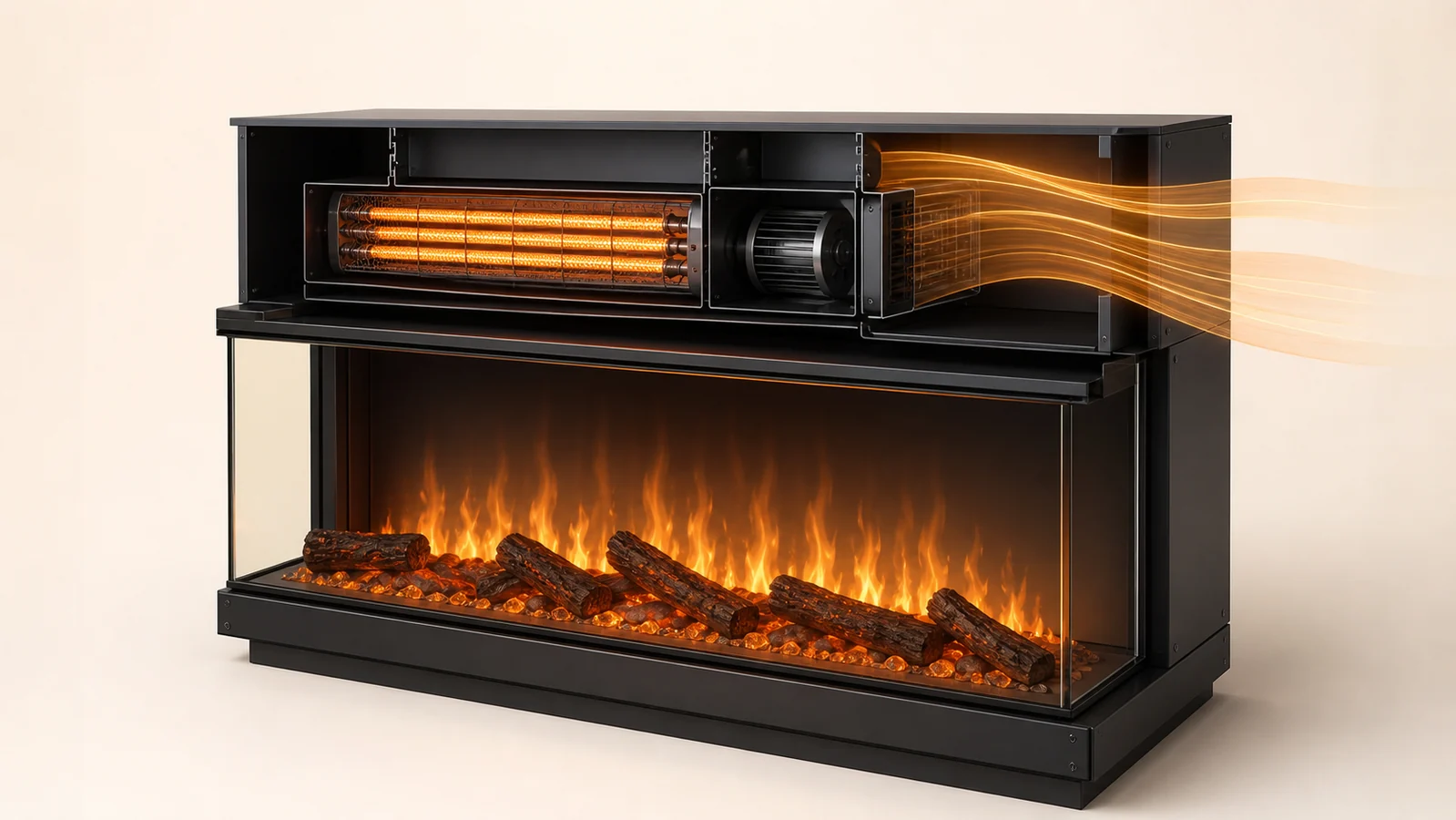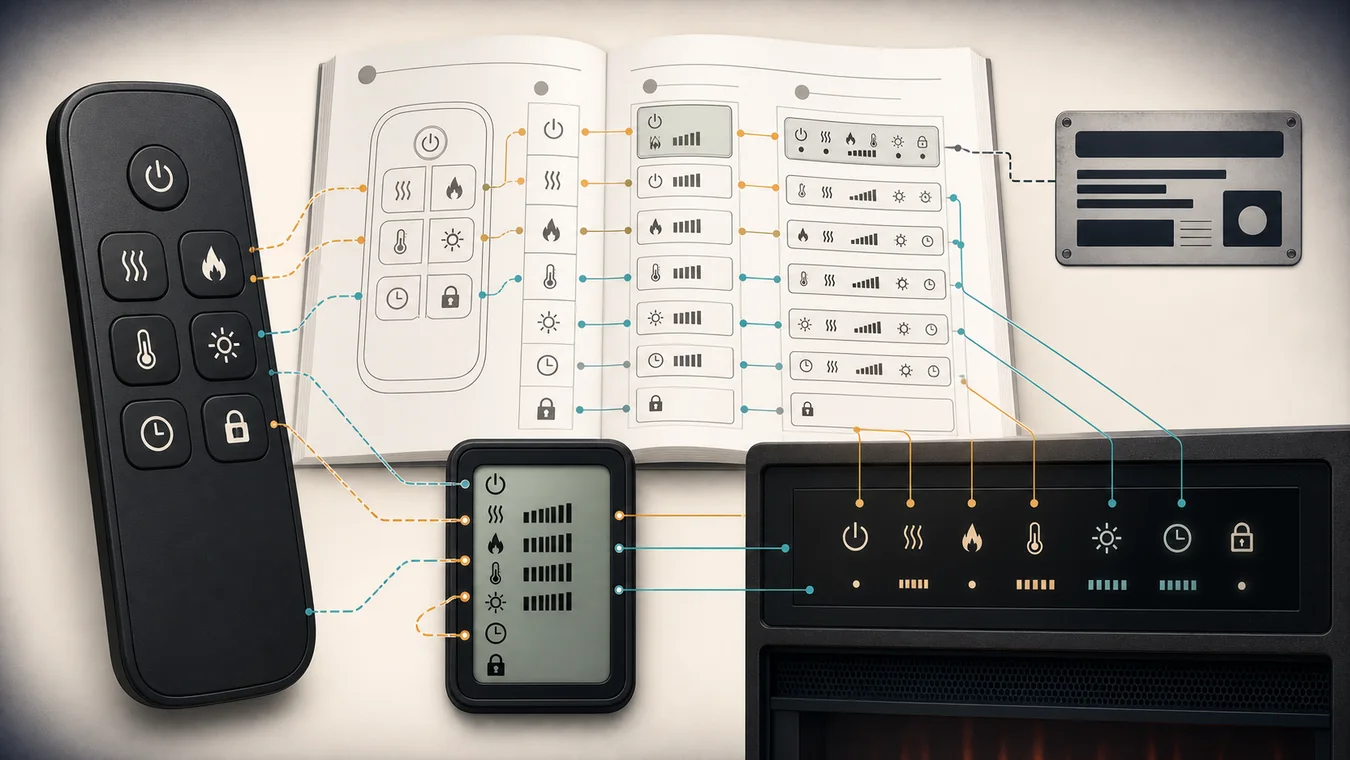
An electric fireplace remote can look right and still control nothing. The plastic shell is only the visible end of a system: the fireplace model, its onboard controls, the transmitter, any model-specific initialization, and the receiver or control module all have to belong to the same chain.
Start at the fireplace, not a replacement listing. Try the controls built into the unit, using only the normal operating directions in its manual. If the fireplace responds there, the appliance can still receive a local command and the remote path deserves attention. If it does not respond locally, another handset is not yet the justified first purchase. Keep the case on the power, appliance or service path until the exact manual explains the state.
Ask the fireplace what still works
| What happens at the onboard controls? | What that result establishes | Next useful evidence | Buying position |
|---|---|---|---|
| Flame and heat commands respond normally | The fireplace can operate locally; the remote path is now the narrower problem | Exact model, old remote markings, manual battery and initialization requirements | Continue toward a model-supported remote candidate |
| Only some local functions respond | There may be an operating mode, lock, control or appliance issue, but the result does not identify the failed part | Exact manual and the precise functions that do and do not respond | Hold the remote order |
| No local command produces a response | A new transmitter has not been shown to address the failed layer | Power state, exact manual and manufacturer or service route | Do not make the remote the first assumed fix |
| The controls cannot be found or safely reached | The test is incomplete | Exact model manual or manufacturer support | Keep the case on an identity and manual hold |
This is fault isolation, not a repair diagnosis. Do not open a receiver housing, remove safety panels or probe electrical parts to make the branch more certain. A photo or seller description of a similar fireplace is not evidence about yours.
The local-control result also prevents two opposite mistakes. A lost handset does not mean the fireplace is unusable if the documented onboard controls still provide the needed functions. A dead fireplace does not become a remote problem merely because the last command came from a remote.
Build the identity from the fireplace outward
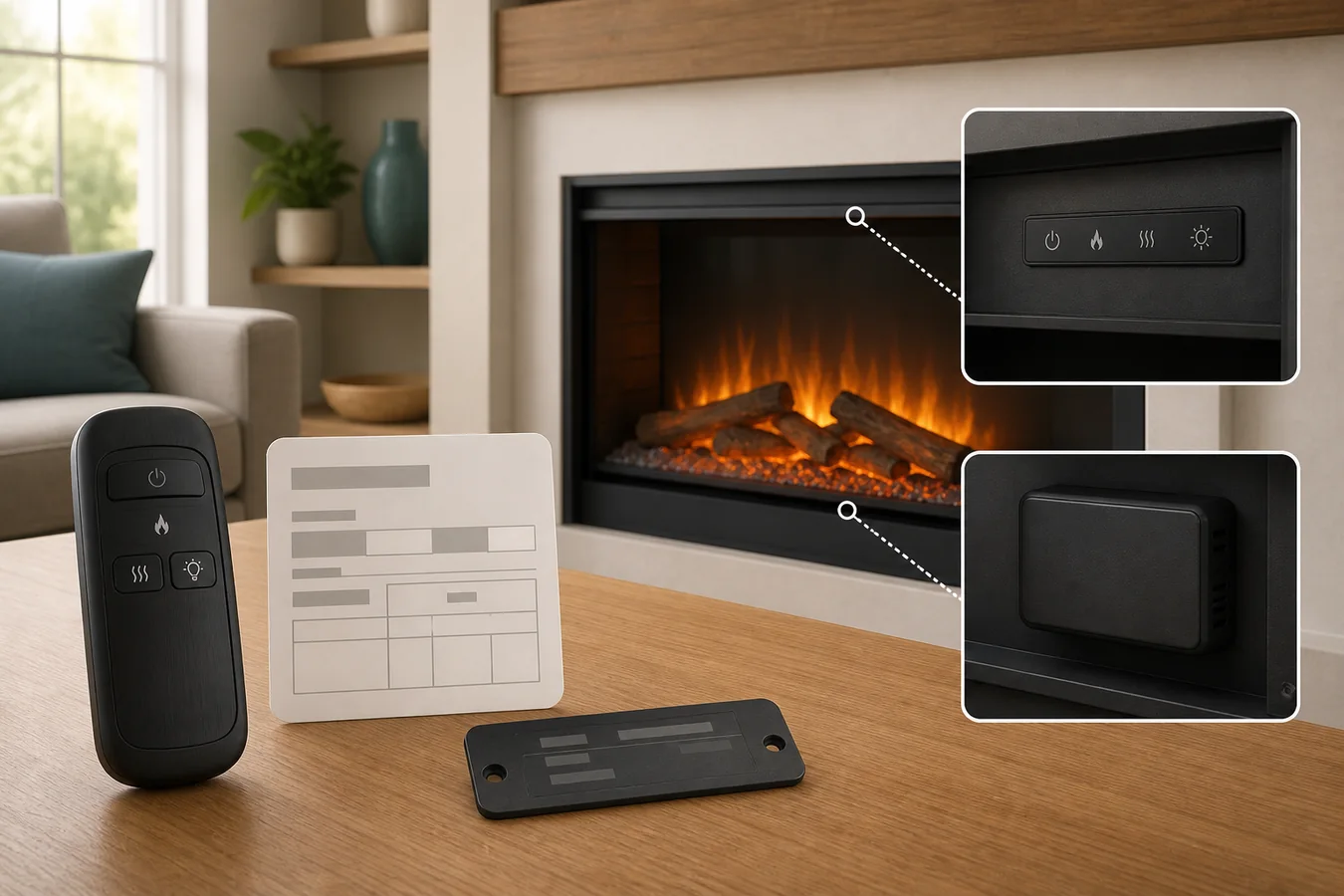
The fireplace is the primary identity; the old handset is supporting evidence. Photograph an accessible rating label and record the manufacturer, complete model number, serial number or revision when present. Preserve every marking on the front, back and battery compartment of the old remote. Do not discard it merely because it is damaged.
Our electric-fireplace specifications guide explains why model, region, source and revision belong together. For this task, add four control-specific fields: the old remote marking, the onboard-control result, the exact manual used and the manufacturer’s candidate replacement part.
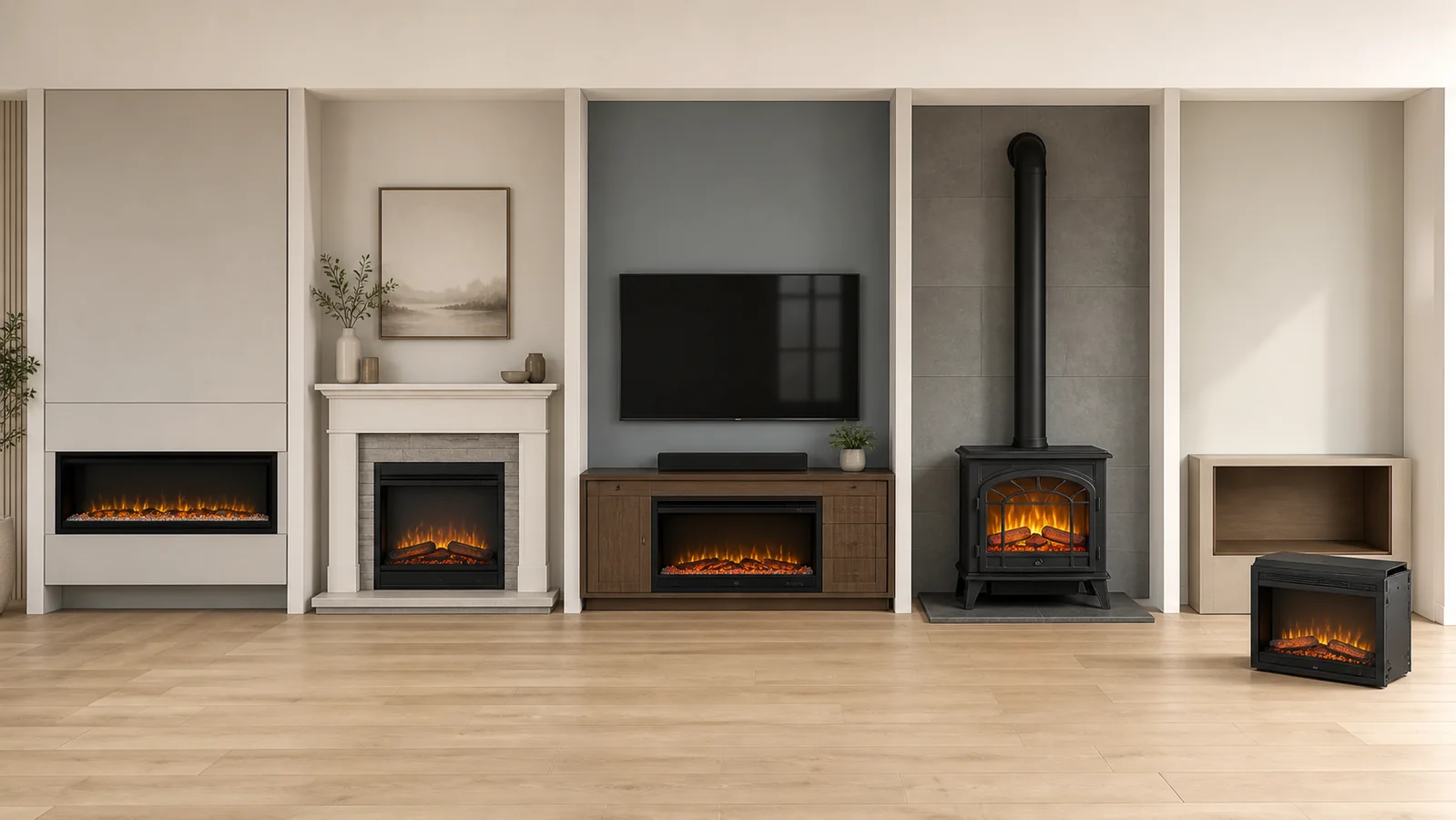
If the label is missing, classify the unit only far enough to find the responsible manufacturer and document family. The types-of-electric-fireplaces guide can help distinguish an insert, wall unit, stove, mantel or other format, but type and width cannot prove remote compatibility. Cabinet furniture branding may also differ from the firebox manufacturer, so inspect the appliance identity that actually owns the controls.
An RV installation adds another owner. Record the coach make, model and year along with the fireplace identity, then use the RV electric-fireplace replacement guide for opening, power and travel-state questions. Those facts do not replace the fireplace manufacturer’s remote mapping.
Touchstone’s current replacement page illustrates the cost of skipping this work. It presents multiple remote options, directs uncertain owners to a selection guide or support, and currently labels fireplace remotes non-returnable. That policy belongs only to the live Touchstone page and can change, but the decision remains useful: identify the part before treating checkout as a compatibility test.
Keep batteries and initialization inside the exact manual
A fresh battery is a reasonable check only when its type, orientation and compartment instructions come from the applicable manual. Record whether the battery contacts are clean and intact. A leaking battery, heat damage or broken compartment is a condition to stop handling the handset and follow the manufacturer’s disposal or support route—not a reason to improvise a repair.
Dimplex’s current technical-support page lists several distinct remote-control possibilities, including batteries, radio-frequency disturbance, required initialization, a defective remote and a defective receiver. That list does not diagnose another brand or series. It shows why “the remote does not work” is an observation, not a part number.
Initialization is where generic web advice becomes especially unreliable. A button sequence from a different model may do nothing, may address a different receiver, or may depend on a power-cycle sequence that is not applicable. Record only three things: whether the exact manual requires initialization, whether its directions were followed without improvisation, and what changed. If the manual is unavailable or does not match the label, the result is unknown.
Intermittent or partial response deserves the same restraint. Note which commands work, the distance and whether the onboard version of the same function works. Do not translate that pattern into “bad remote” or “bad receiver” unless the responsible manufacturer’s documentation or support channel does so for the exact system.
Match three identities, not the plastic shell
A credible replacement path joins the fireplace, transmitter and receiver or control system. The minimum proof is an exact fireplace model or documented series plus a manufacturer-supported remote reference. When the public page does not state the model mapping, send support the label photo and old-remote markings and ask for the current part and any supersession.
Dimplex’s current Sierra replacement page is explicitly scoped to its Sierra SIL-series linear fireplaces. That narrow title is useful evidence: “Dimplex remote” would be too broad. Furrion’s current replacement listing publishes a specific remote reference and a superseded SKU, but the visible compatibility sentence is broader than a model list. In that situation, the page can identify a question for support; it cannot justify filling the missing model mapping by inference.
| Evidence on a candidate page | What it can support | What it cannot support alone |
|---|---|---|
| Exact fireplace model plus exact remote part | A candidate for the named model, subject to revision and current manufacturer status | Compatibility with a look-alike model |
| Named series plus remote part | A candidate inside that documented series | Every product sold under the brand |
| Remote photo and button layout | Visual comparison only | Electronics, frequency, initialization or receiver compatibility |
| Brand name with no model mapping | A support search starting point | An order decision |
| Marketplace phrase such as universal or replacement | A listing claim worth verifying | Manufacturer-supported compatibility |
Also separate “superseded” from “similar.” A manufacturer can intentionally replace an old part number with a new one. A marketplace seller’s visually similar handset does not create that relationship. Preserve both numbers and the page or support message that connects them.
The receiver remains part of the decision even when it is never opened. If local controls work, the exact battery and initialization steps are complete, and a confirmed transmitter still produces no response, the manufacturer may route the case to receiver or service diagnosis. That is a service hold, not permission to expose wiring or substitute a control module.
Write the evidence line that earns an order
Before checkout, the record should contain the fireplace identity, local-control result, old remote evidence, exact manual state, candidate part and the owner that supports the mapping. Missing information should change the outcome rather than disappear from the notes.
| Record state | Decision now | What closes it |
|---|---|---|
| Exact fireplace and revision; local controls work; manual checks complete; manufacturer maps one current remote | Ready to order that candidate | Recheck the live part page, supersession and return terms |
| Exact identity exists, but a documented battery or initialization action remains | Finish the manual path | Record the result before selecting a part |
| Confirmed remote path is complete, but the unit still will not receive commands | Receiver or service hold | Manufacturer or qualified service diagnosis |
| Manufacturer confirms the original part is obsolete | Use the obsolete-part route | Ask for an authorized supersession or supported control upgrade; do not choose by appearance |
| Model, revision or manufacturer mapping remains uncertain | Keep an identity hold | Label evidence or written manufacturer confirmation |
The order is justified only when you can write one plain sentence: “My fireplace is exact model and revision ___; its onboard controls ___; the applicable manual check ___; and the manufacturer identifies remote ___ for this system.” If one blank still depends on resemblance, a generic code list or a seller’s broad compatibility phrase, the honest result is not “probably compatible.” It is the specific blank you need the manufacturer to close.