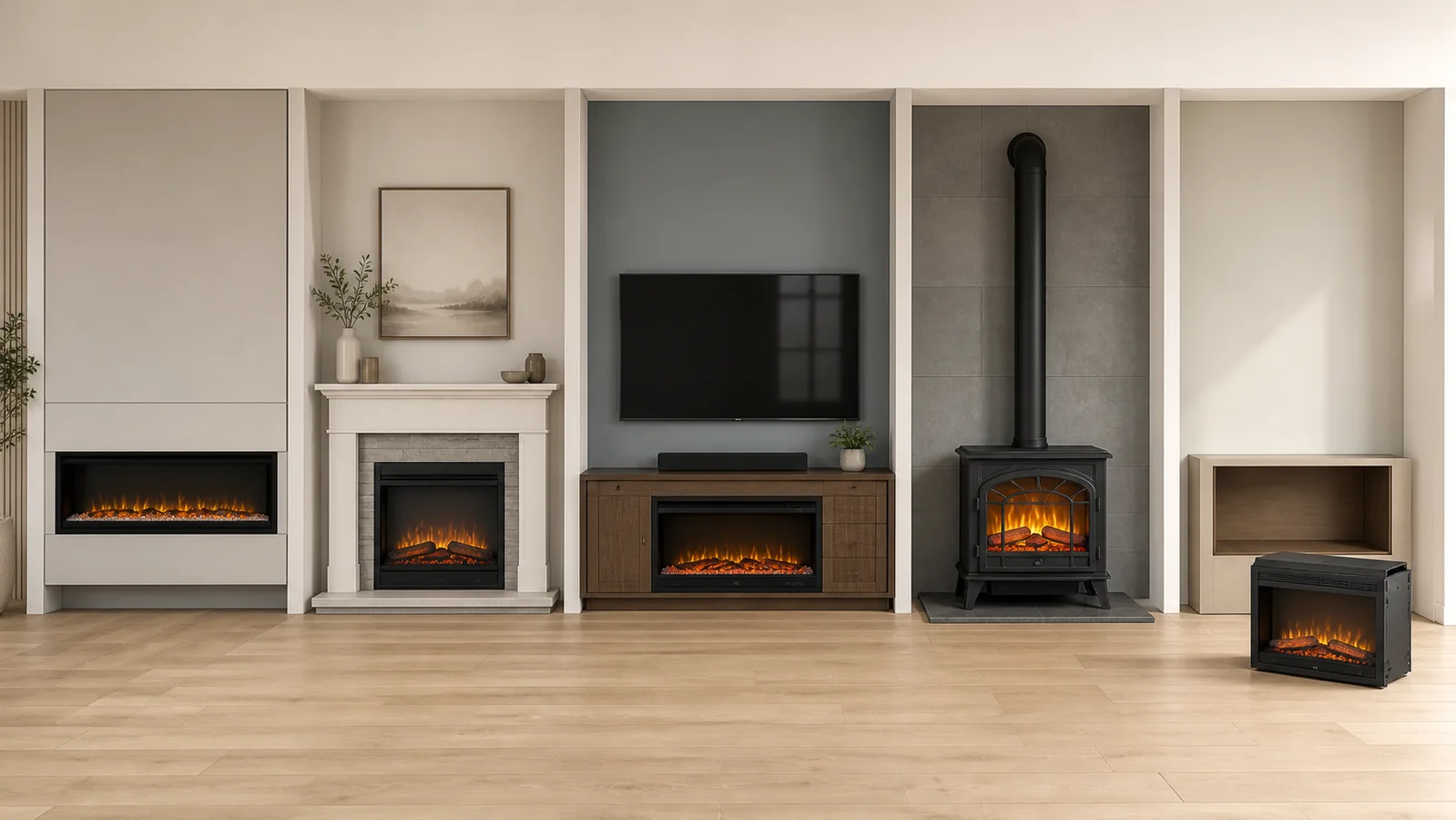
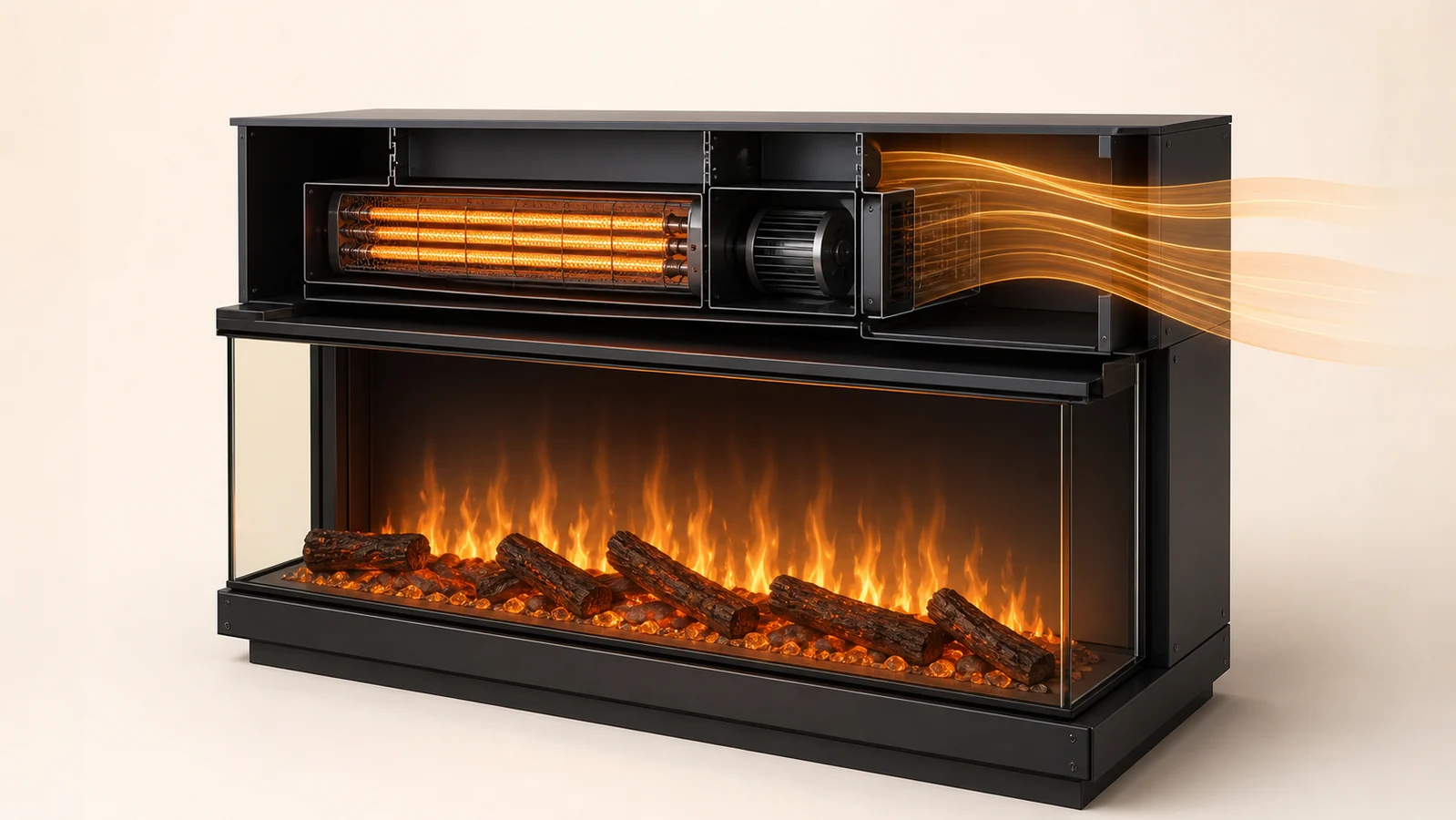
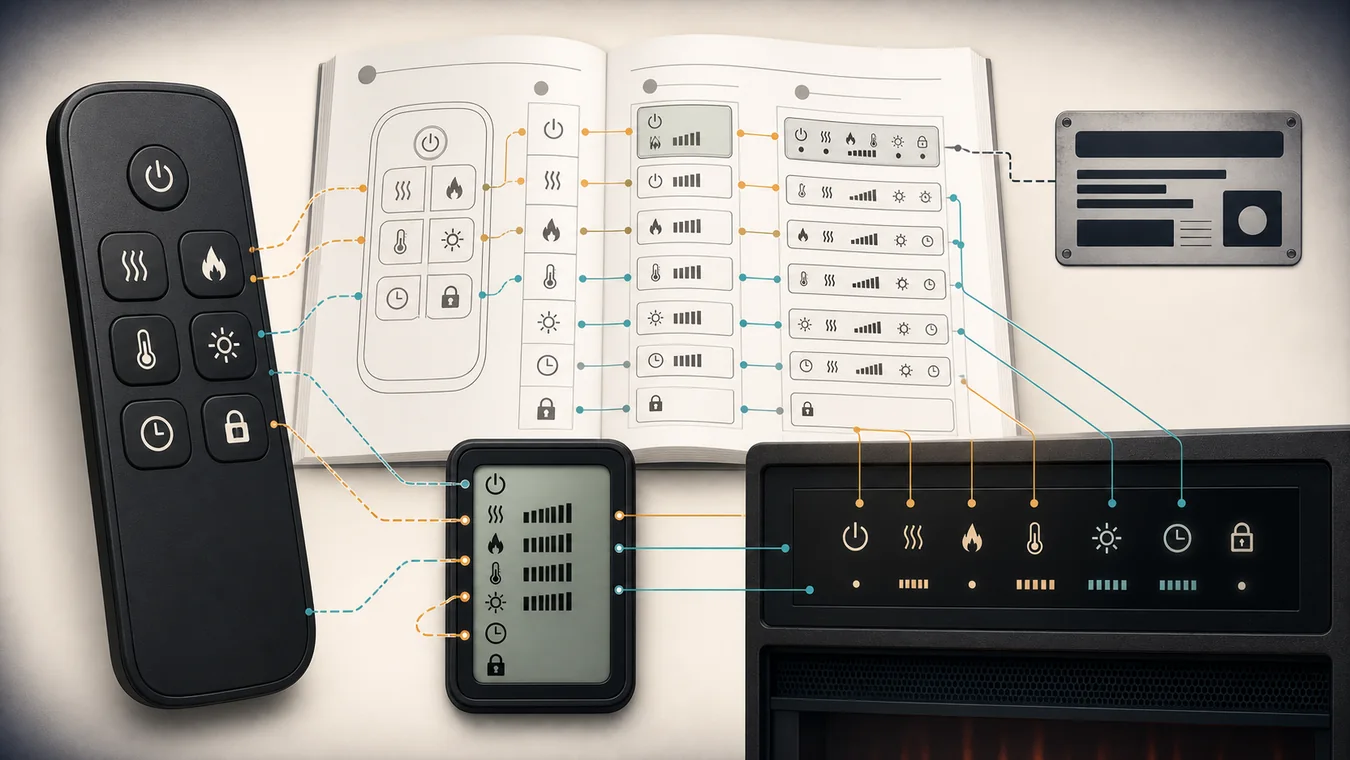
Carpet is not the first thing to identify. Start with the part of the fireplace that actually carries its weight.
A bare firebox can have a manual that rules out direct carpet contact, while the complete manufacturer mantel package surrounding that firebox may be permitted on carpet. A different firebox manual may allow the carpeted location only when every foot rests on one solid, flat support. A wall-mounted model creates another relationship because the carpet is not its permanent support.
That is why “electric fireplaces are fine on carpet” and “never put one on carpet” are both poor category rules. The useful answer is tied to the exact model, the complete assembly and the current document that controls it.
Name the part that bears on the floor
If you bought a complete fireplace-and-mantel package, the furniture base or its feet bear on the floor. The inner firebox is supported by that package. Do not pull a sentence from the firebox manual and assume it describes the underside of the finished cabinet; do not assume the package overrides the firebox instructions either. Confirm that the owner identifies the exact combination.
A bare firebox or insert is different. Its own feet, base or manufacturer-required support meets the floor or the opening. The same is true of a freestanding stove or log set once all required legs and base parts are fitted. The freestanding electric fireplace comparison separates stove, mantel and media-console formats; this page begins after the carpeted location is proposed.
For a wall-mounted or recessed fireplace, the finished support relationship belongs to the wall or framed opening. Carpet below it may still affect construction sequencing or cord planning, but it is not automatically an approved surface for resting or operating the loose appliance. Use the exact installation relationship rather than translating “it will end up above the carpet” into floor permission.
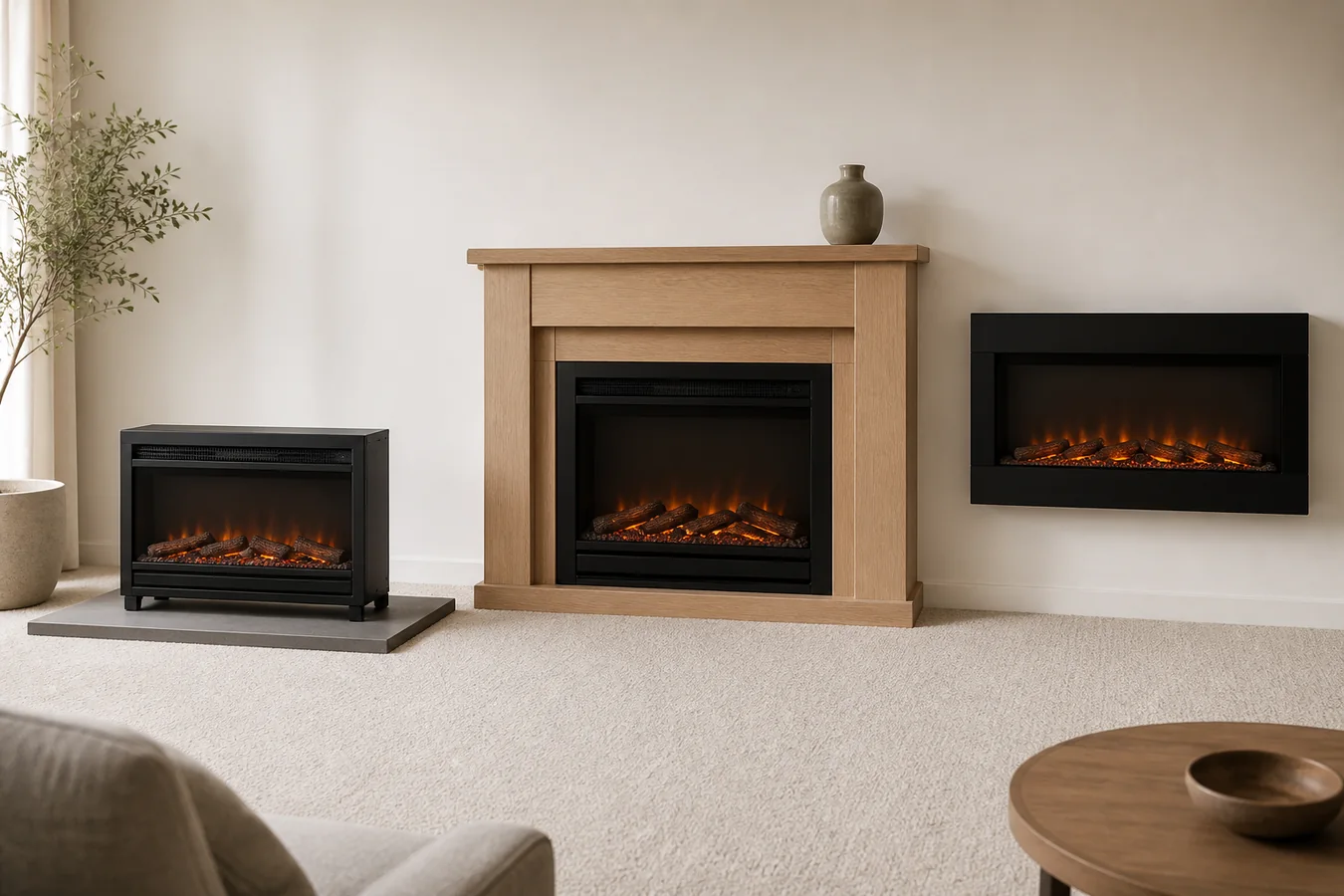
Dimplex publishes three different carpet outcomes
Current Dimplex sources make the distinction unusually clear. The records below are not three tips to mix together. Each answer stays with the product or package named by its source.
| Exact owner record | What bears on the floor | Carpet instruction | Result for that scope |
|---|---|---|---|
| Dimplex US mantel and TV-stand support | Complete Dimplex firebox-and-furniture package | Dimplex says the firebox manual’s no-carpet language refers to the firebox portion; its complete mantel packages may be placed on carpet | The complete package may use the carpeted location after its identity is confirmed |
| XHD23/XHD26/XHD28 L/G manual, 7214980100R04 | Named XHD firebox | Do not install the firebox directly on carpet or a similar surface that may restrict airflow; keep air circulation beneath it | No direct carpet contact for the named firebox |
| DFR2551L/G R04 and DF3033ST R11 manuals | Named firebox feet in a carpeted area | Place one solid, flat surface under the fireplace and make every stated foot rest securely on it | Solid flat support required for those named models |
The Dimplex technical-support answer is the source for the complete-package distinction. It does not say that every mantel from every brand can sit on carpet, and it does not erase the inner firebox’s operating instructions.
The XHD owner manual, revision 7214980100R04, names the covered XHD models on its cover and ties the carpet restriction to beneath-unit airflow. The DFR2551 manual, revision 7213950100R04 and DF3033ST manual, revision 7209120100R11 specify a solid flat support in a carpeted area and require the feet to rest on it.
Those last two manuals do not create a universal hearth-pad recipe. They do not authorize us to choose a material, thickness or footprint for another model. Their value is narrower and stronger: they prove that “not directly on carpet” and “not in a carpeted room” are different statements.
Keep six fields in the same placement record
Do not save a screenshot that says only “carpet okay.” Keep enough context for another person to apply the same result to the same object.
| Field | What to record | Why it changes the answer |
|---|---|---|
| Product identity | Brand, full model or item number, market and package SKU if furniture is included | A family name may cover several fireboxes or packages |
| Assembly | Bare firebox, complete manufacturer mantel/TV stand, freestanding stove/log set, or wall/recess installation | Identifies the object whose base or feet matter |
| Bearing component | The cabinet base, appliance feet, manufacturer support or wall/opening | Prevents a firebox rule from being assigned to a furniture base |
| Current owner document | Manual title, covered models and revision; manufacturer support answer when needed | Keeps the rule attached to its current authority |
| Contact condition | Direct-carpet wording, installed feet/base and any solid-flat-support requirement | Separates permission, required support and prohibition |
| Nearby paths | Beneath-unit air opening plus the factory cord and outlet route | A floor result does not grant permission to block airflow or run a cord under carpet |
The electric fireplace specifications guide keeps model, dimension, power and installation fields separate. If the label and PDF do not match, use the electric fireplace manual guide before applying any surface sentence.
Cord position deserves its own line. The cited XHD, DFR2551 and DF3033ST manuals also warn against routing the power cord under carpeting or covering it with rugs or runners. That is not the same question as whether a cabinet base may rest on carpet. If outlet reach is the problem, the electric fireplace extension-cord guide owns the current-manual permission and outlet-plan decision.
Once the six fields agree, assign only one result: complete-package carpet path; solid flat support required; no direct carpet contact; no floor contact in the final wall/recess relationship; manufacturer confirmation required; or placement hold. “Probably low pile” is not a seventh result.
Let the result change the project
When the manufacturer explicitly admits the exact complete package on carpet, keep that assembly boundary intact. Confirm the package SKU and its own base, feet and assembly instructions. Permission for the finished furniture does not mean the inner firebox may be removed and operated directly on the same floor.
When the exact manual requires a one-piece solid flat support, preserve the full condition—including every stated foot resting on it. If the owner does not specify the material, span or other field needed for the project, ask the manufacturer. Do not turn the phrase into a universal shopping recommendation for stone, glass, wood or a generic heater mat.
When direct carpet contact is prohibited, change the relationship instead of trying to negotiate with the sentence. A complete manufacturer package, a properly documented wall or recess path, another location or a different exact model may fit the room. Which alternative survives depends on its own manual, not on its resemblance to the rejected firebox.
When the model or package cannot be identified, stop at manufacturer confirmation required. A retailer photo, nominal firebox width or similar cabinet is not enough to choose the bearing rule. Keep the proposed carpet location, photographs of the label and complete assembly, and ask which current document controls that configuration.
The floor decision is complete when the named product and the named support relationship agree. If they do not, the carpet is not the item to “fix.” Change the package, support path, location or product before the fireplace is committed to the room.