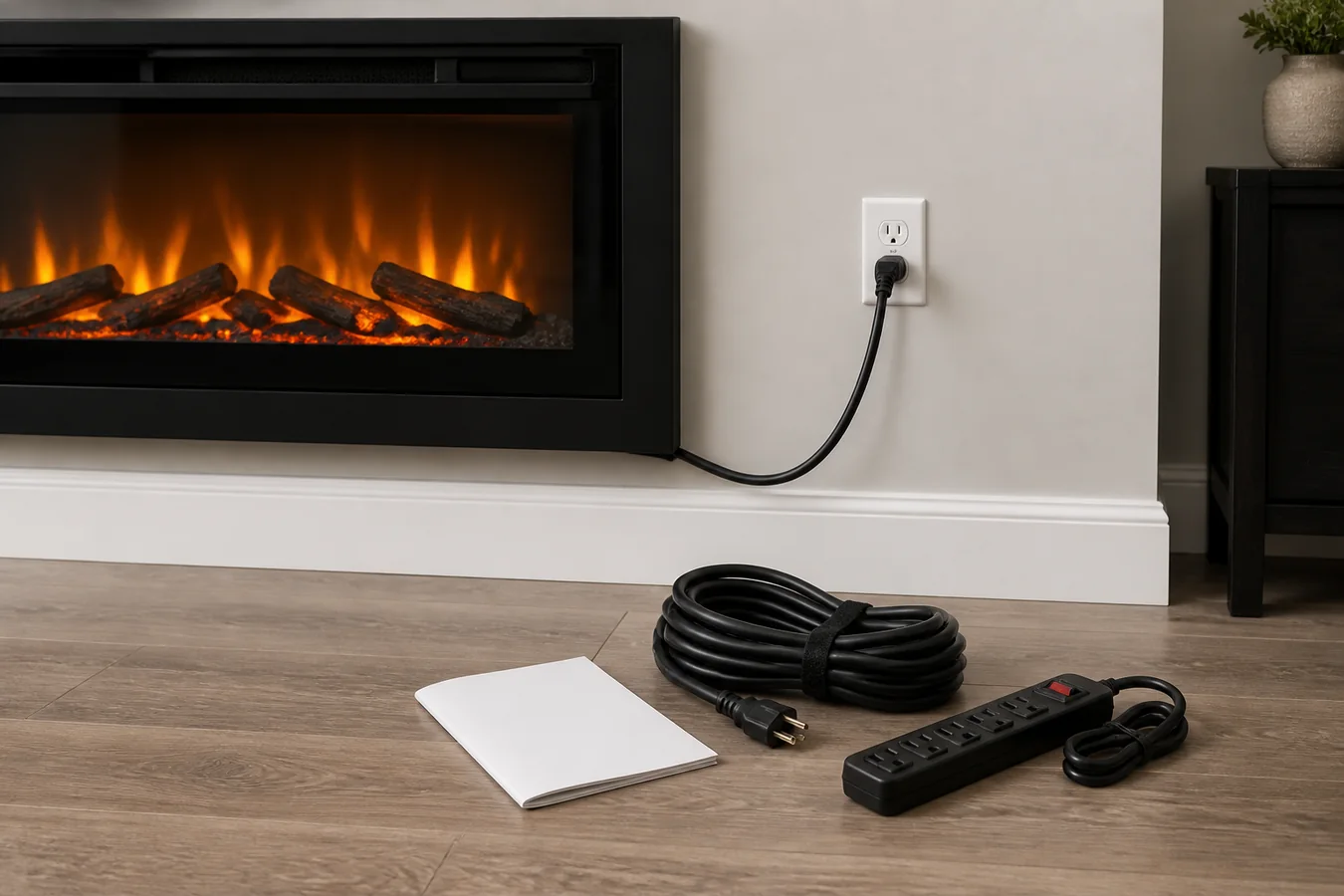
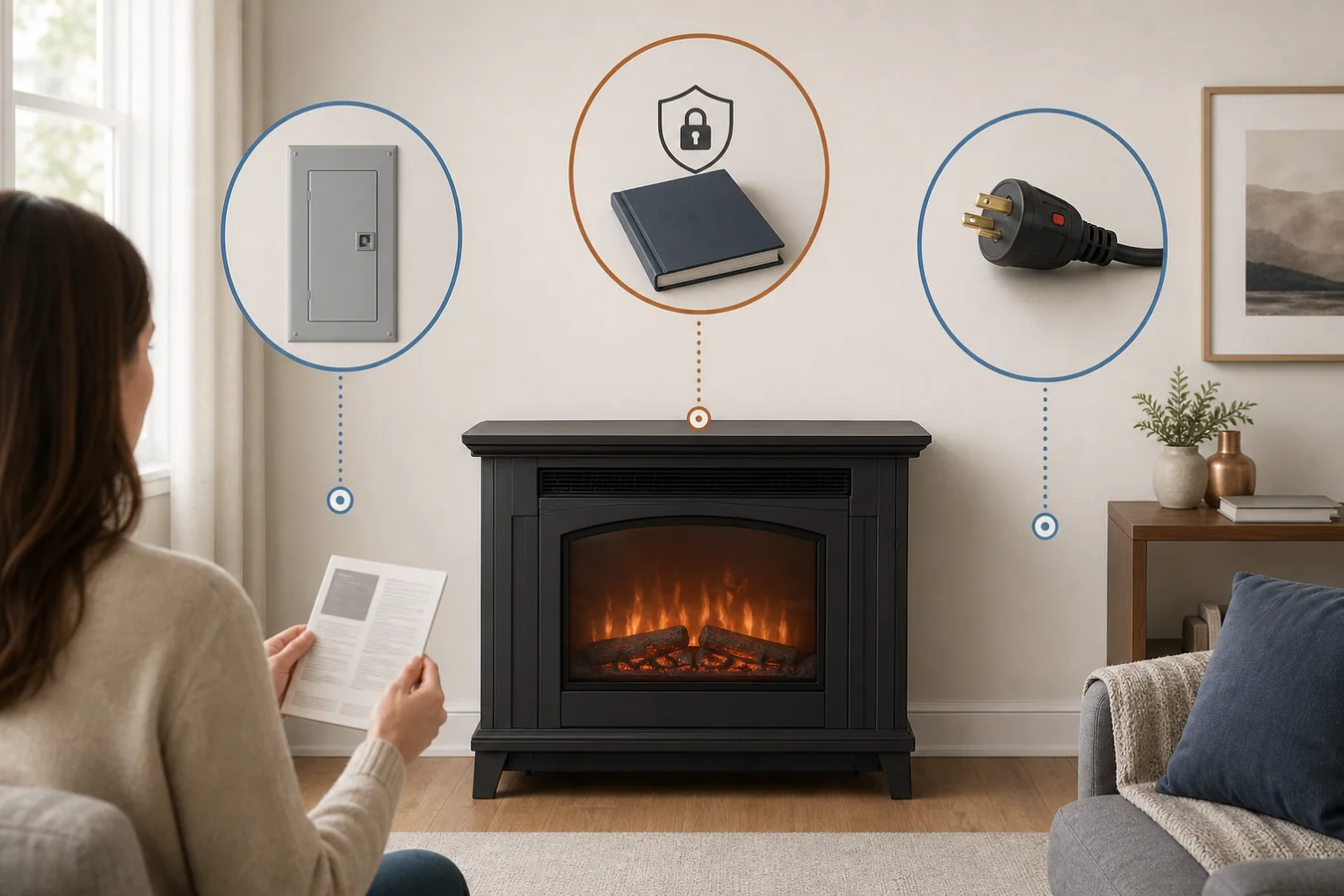
Do not choose paint yet. In one electric-fireplace project, the black appliance face, a wood or MDF mantel, a paint-grade surround and the drywall around the opening can belong to four different makers—and four different finish rules. A coating advertised for heat does not make all four surfaces eligible.
The useful first move is to name the exact object you want to change. Match the fireplace model and its current manual, identify whether the surrounding piece arrived factory-finished or explicitly paint-grade, and check the manufacturer’s warranty or support answer. If those records do not grant a finish path, the honest answer is not a different paint. It is a permission hold.
Before choosing paint, name the thing you want to change
| What you are looking at | Controlling record | Admitted result | What remains unproven |
|---|---|---|---|
| Black metal face, factory trim or appliance housing | Exact fireplace owner or installation manual and manufacturer support | Proceed only if that exact owner identifies a finishable area and method | That generic high-heat paint makes the appliance surface paintable |
| Glass, display, buttons, sensor area, inlet or outlet | Exact model drawing and manual | Keep outside the finish field unless the owner explicitly says otherwise | That masking an opening or control makes coating around it acceptable |
| Factory-finished mantel or TV stand sold with the firebox | Furniture product owner, warranty and support record | Manufacturer touch-up, replacement or no-coat disposition | That wood-like appearance means it can be sanded and recolored |
| Surround or wall kit sold as unfinished or paint-grade | Exact kit instructions and finish specification | Paint-grade path limited to the named kit and its stated finish area | That the permission extends into the fireplace trim or opening |
| Drywall, millwork or another field-built finish around the opening | Fireplace installation manual plus the construction-finish owner | Adjacent-construction finish path after model boundaries are preserved | That a wall finish may cover appliance edges, air paths or service access |
| Surface, model or owner still uncertain | Rating label, product identity and current official documents | Manual or manufacturer-permission hold | Any paint, primer, preparation method or warranty outcome |
“Looks like wood” and “looks like metal” are observations, not finish specifications. The same is true of color: a white surround can be factory-finished, while another white component may be sold specifically as paint-grade. Use the electric-fireplace specifications guide to preserve the exact model and document fields instead of borrowing instructions from a visually similar product.
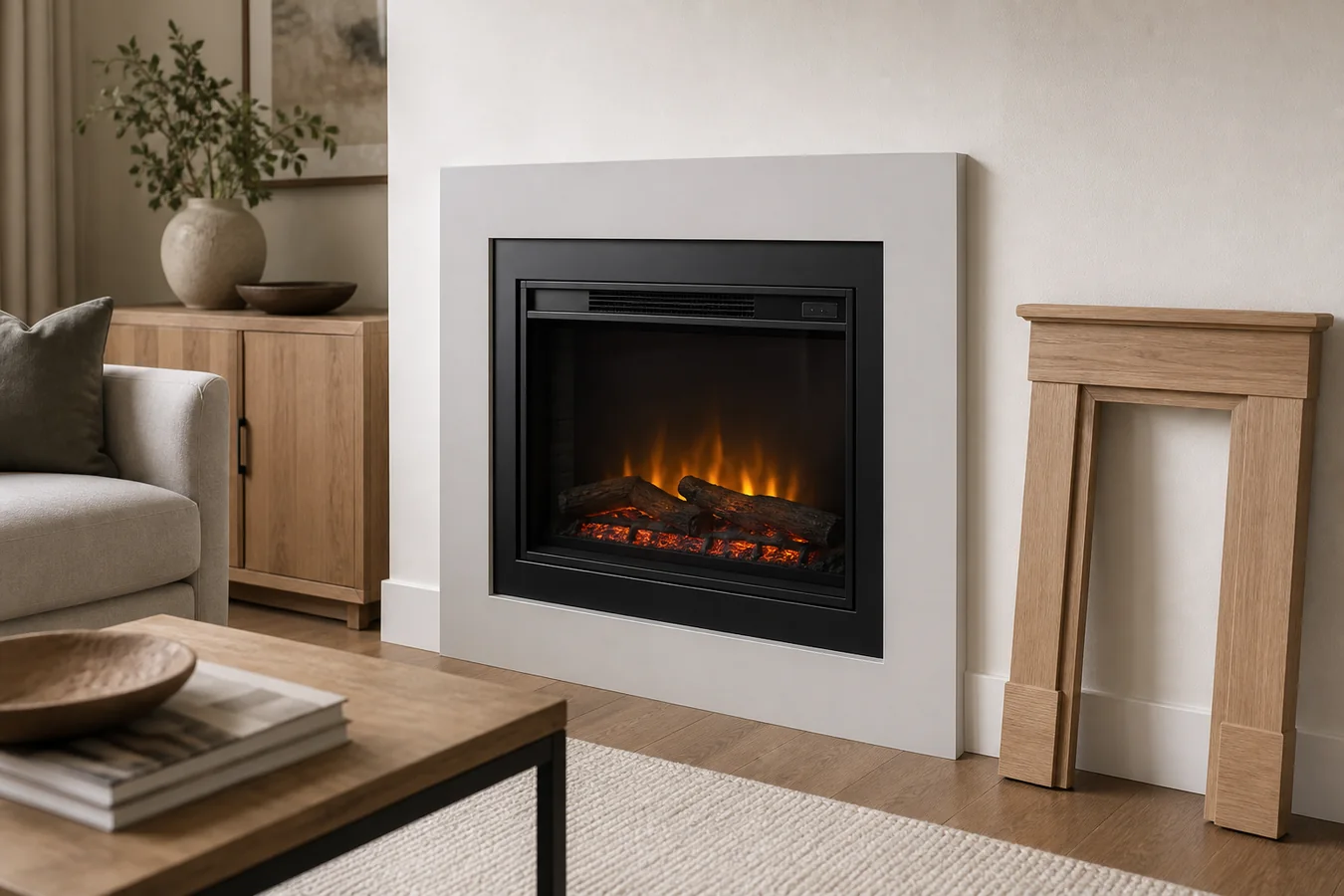
“Heat-resistant” is not permission
First-party instructions do not produce one category-wide rule. Dimplex’s current technical-support page says it does not recommend painting its mantels or TV stands and that doing so voids the unit warranty. That answer applies to the Dimplex furniture categories it names; it is not a claim that every surround from every manufacturer has the same warranty.
Modern Flames provides a different, equally bounded example. Its current Redstone US owner’s manual says paint or lacquer used to finish the mantel must be heat resistant to prevent discoloration. The subject is the mantel in that model-family instruction—not the glass, controls or black appliance face. The manufacturer also describes a separate white paint-grade wall system intended for a custom finish.
Those examples are not contradictory once the object is named. One factory-finished furniture product can carry a no-paint warranty answer while a separate paint-grade system has an intended finish path. “Heat-resistant” answers a coating requirement only after the product owner has admitted the surface. It cannot supply missing permission.
If you are still using “surround” to mean the black appliance border, a wood cabinet and the wall around both, separate those objects with the guide to the three meanings of electric-fireplace surround before reading a finish instruction.
Touch-up and recoloring are different decisions
A chip does not automatically turn into a repainting project. On the same Dimplex support page, the response to a chipped TV stand is to use a furniture crayon of the same color. That is a manufacturer-specific touch-up route: it attempts to make a small defect less visible without changing the whole factory finish.
Recoloring asks a larger question. It can change adhesion, appearance and warranty expectations across the entire piece. We have not applied coatings to these products, and the public sources above do not prove a universal preparation sequence or durable result. Ask the manufacturer about the exact model, material, current finish and intended color change. If support offers only a touch-up route, do not promote that answer into permission to sand or repaint the complete mantel.
A useful support request is concrete: “Model and country; factory-finished mantel/TV stand or paint-grade kit; exact surface; small chip or full color change; current warranty status; product and manual links.” A reply about a different collection, finish or region does not close the question. The electric-fireplace manual guide shows how to reject near-name documents before using them.
Keep the appliance boundary visible
Even when the surrounding material has a valid paint path, the appliance does not disappear from the project. Preserve every boundary the exact installation document assigns: finished opening, factory trim, glass, controls, air inlet and outlet, cord or connection area, and service access. Do not let a broad decorating article decide where a manufacturer drawing ends.
This page does not turn those fields into a universal masking or clearance recipe. The model’s document controls the relationship. If the finish changes the opening, wall build-up, projection or access route, return to the model-locked installation plan before work. If coating, debris or an altered surface could obstruct an opening, damage a connection or create an odor or heat concern during use, keep the heater off and use the electric-fireplace safety guide to route the operating state.
The distinction also protects future service. A removable trim piece is not automatically decorative, and an accessible fastener is not automatically an owner-finish area. The current owner may need that edge, label or panel unchanged to identify, remove or service the appliance later.
Give the surface a passport
Before buying primer or paint, record four things together:
Exact object — controlling owner — finish state — admitted outcome.
“Dimplex model ___ factory-finished TV stand — Dimplex support — full recolor — warranty/no-coat hold” is complete enough to stop shopping. “Modern Flames Redstone mantel — current Redstone US manual — field-finished mantel — follow the manual’s heat-resistant finish requirement” admits only the named mantel path. “White wall kit” remains incomplete until its exact product owner confirms that it is the paint-grade version and shows where its finish area stops.
Your result should be one of five plain outcomes: paint-grade surround, adjacent construction finish, manufacturer touch-up, manufacturer permission required, or warranty/appliance no-coat hold. If you cannot fill the exact object or controlling owner, add a sixth: exact-model manual required. That unresolved result is more useful than a confident paint recommendation attached to the wrong surface.