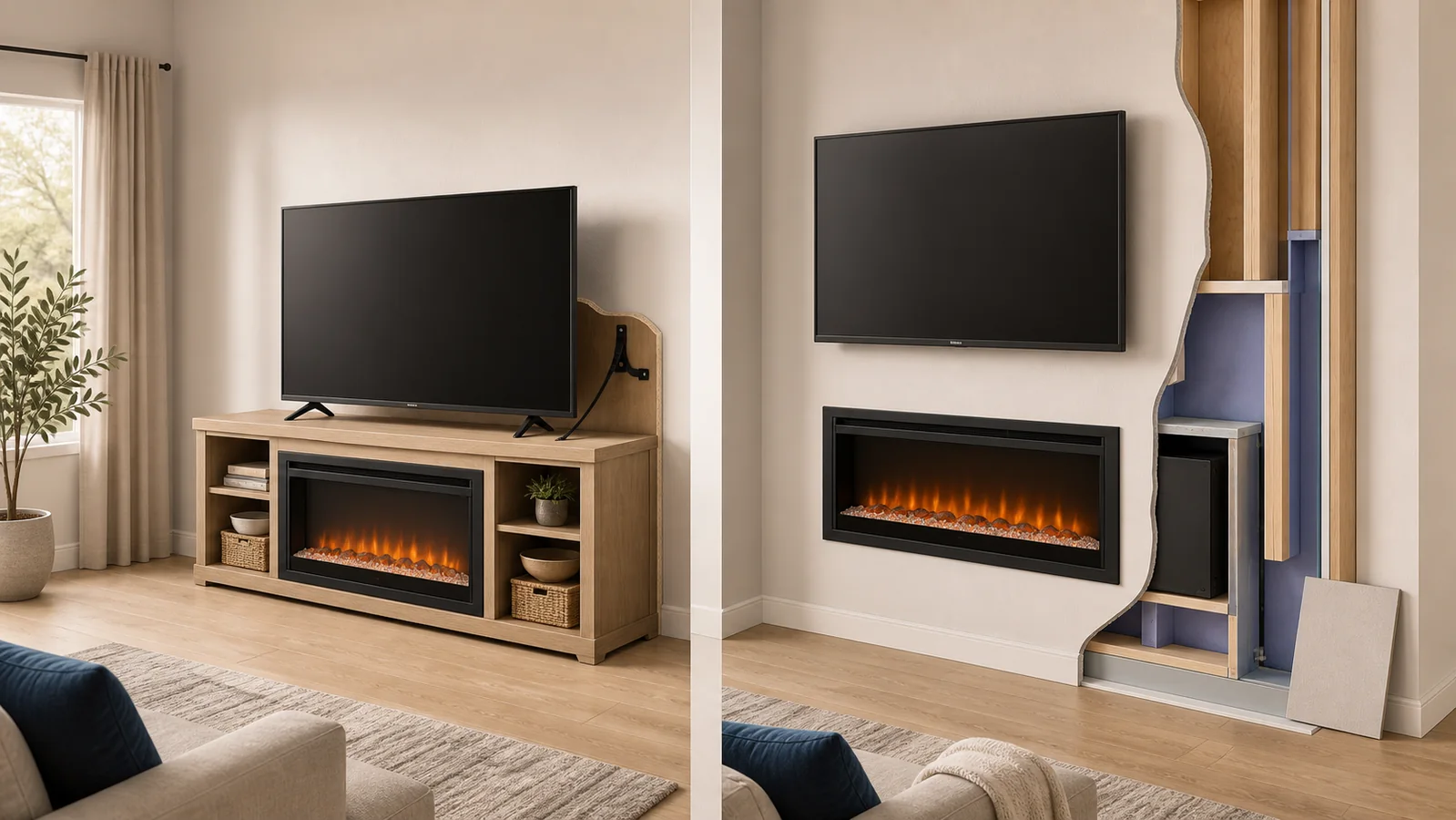
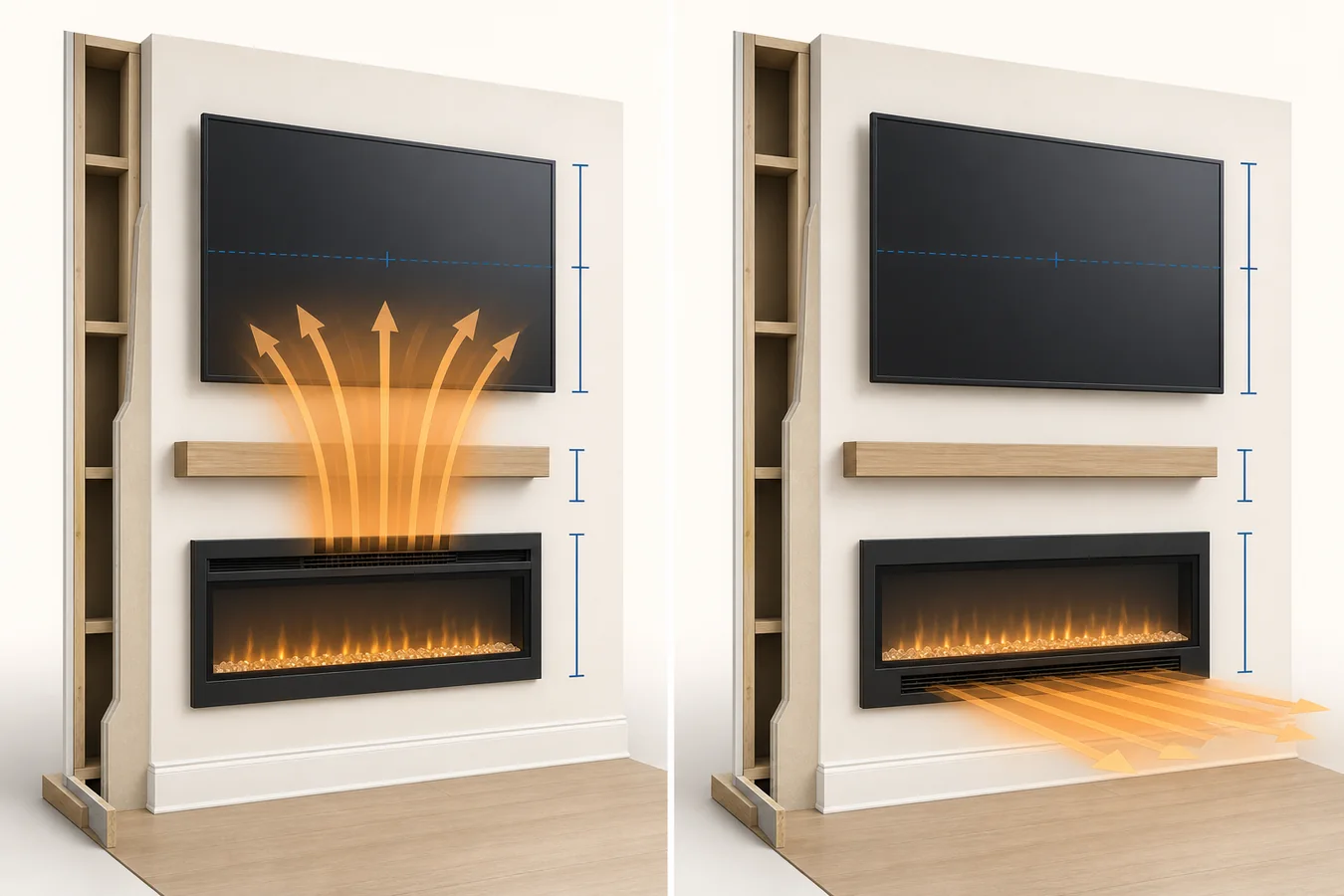
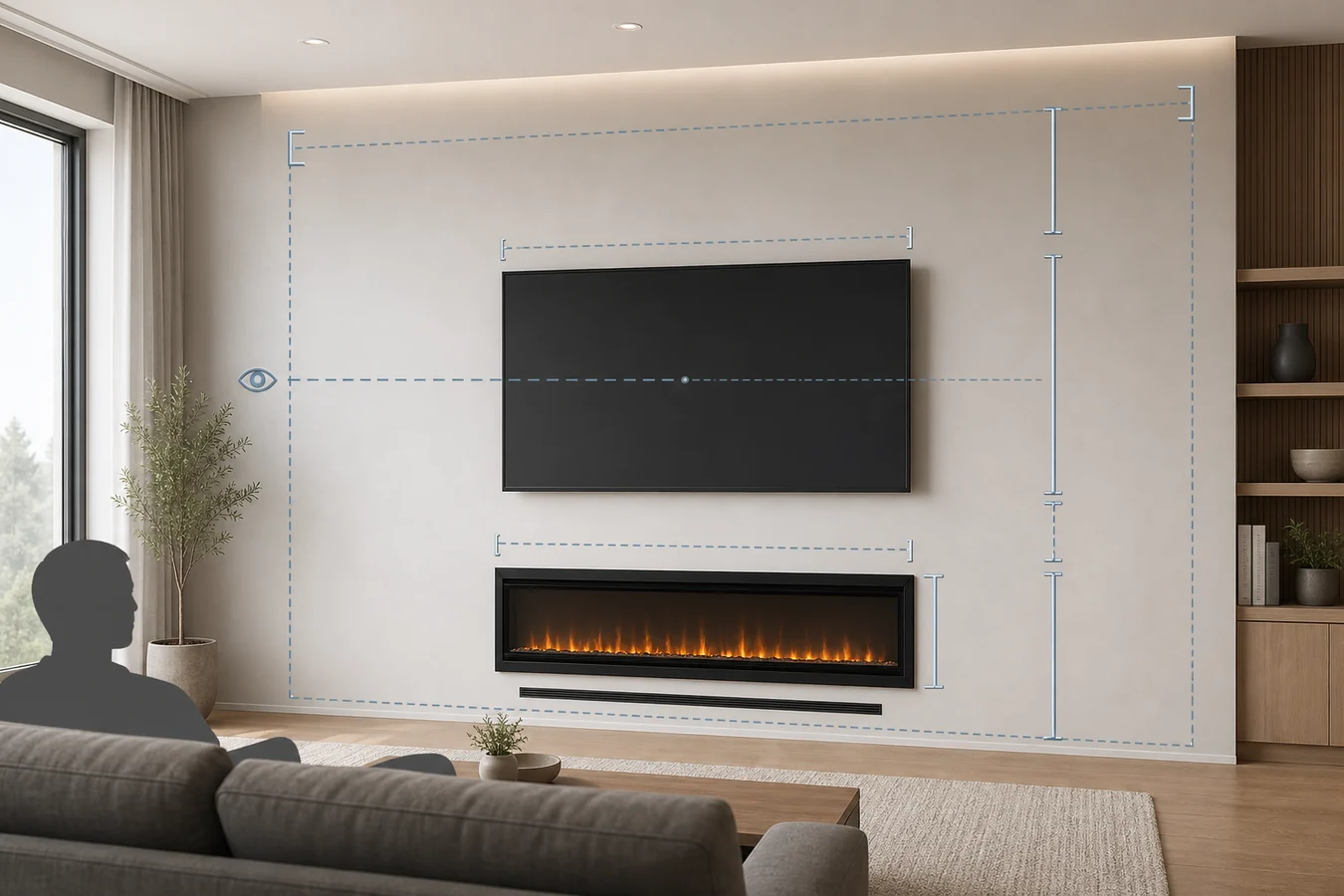
A fireplace TV stand can advertise support for TVs up to 70 inches and still be the wrong stand for your 65-inch television. The diagonal may fall inside the range while the four mounting holes do not match, the TV is heavier than the bracket permits, the supplied screws do not suit the TV back, or the screen hits the cabinet when it swivels.
Start with two numbers from the exact TV: its VESA hole pattern and its weight without the tabletop stand. Match both to the integrated bracket’s current document. Then test mount height, movement, furniture stability, heater airflow, power and future access. If the bracket’s VESA list or load ceiling is missing, the combination is not ready to order.
If you are still deciding between a movable console and a constructed wall, compare the fireplace TV stand and built-in paths first. This guide starts after the integrated-mount stand is already the proposed format.
The match has three signatures, not one size
The television supplies its model number, body dimensions without the stand, weight without the stand, VESA hole pitch and attachment instructions. Those fields belong to that TV, not to every set with the same diagonal.
For example, Sony’s current K-65S30 specification page describes a 65-inch-class television that is 57.17 inches wide, 32.91 inches high and 2.83 inches deep without its stand. It weighs 47.2 pounds without the stand and uses a 300 x 300 mm VESA hole pitch. Another 65-inch TV can present a different weight, rear shape or hole pattern.
The integrated bracket has a separate signature: supported VESA patterns, maximum TV load, attachment hardware, height positions and any swivel or tilt range. A screen-size label cannot replace any of them.
The furniture and firebox supply the third signature. Their complete placed width, height and depth must work on the floor and against the wall. The restraint, heater intake and outlet, power route, cable movement and service sequence must remain usable after the TV is attached. The electric fireplace and TV wall guide can help set the viewing height and room proportions; it cannot approve the bracket.
A live listing can leave the decisive fields blank
The current Amerlife Kivo CFT107 product page lists general dimensions of 70 x 15 x 31 inches, a weight of 89 pounds and a mounting system for TVs from 32 to 70 inches. It describes the mount as height-adjustable and able to swivel.
The linked CFT107 assembly instructions begin with cabinet dimensions of 68.9 x 14.5 x 25.5 inches. Those numbers may describe a different datum from the product page’s general dimensions. Keep both labels attached to their sources instead of silently choosing one for the room.
The assembly file also shows a TV-attachment step and wall-restraint sequence, yet the captured current page and linked instruction text do not state a supported VESA list or a maximum TV load for the bracket. The Sony example is within the advertised diagonal range, but that does not establish that its 300 x 300 mm pattern and 47.2-pound weight fit CFT107. The useful answer is a precise document request, not a guess.
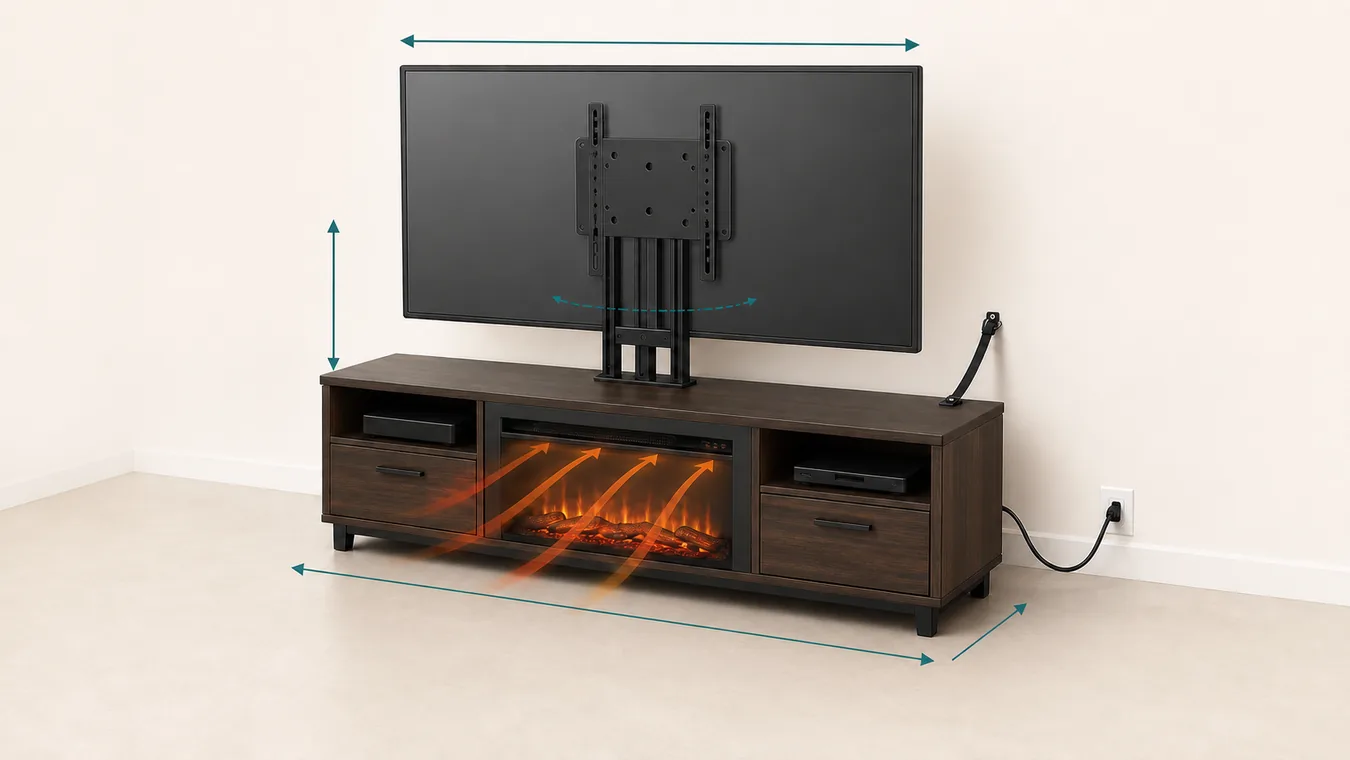
Build the compatibility receipt
Keep one row per controlling relationship. Do not combine a TV value from one model with a bracket value from a nearby listing or a fireplace instruction from another cabinet.
| Line | Record from the TV | Record from the stand or firebox | A usable result requires |
|---|---|---|---|
| Identity | Full TV model, market and current document | Full furniture, bracket and firebox model or package IDs | Every later fact names these exact products |
| TV body | Width, height, depth and rear shape without stand | Space around the bracket, post and cabinet | Screen and connectors clear the stand through the intended position |
| Hole pattern | VESA width x height in millimeters | Every supported VESA pattern | One documented exact match |
| Load | TV weight without stand | Maximum TV load for the integrated bracket | TV weight does not exceed the documented limit |
| Attachment | Screw thread, allowed engagement and spacer needs from the TV owner | Supplied bracket rails and hardware instructions | One authorized hardware combination suits the actual TV back |
| Viewing position | Desired screen center from the main seat | Bracket height positions and tilt or swivel range | A documented position reaches the viewing plan without collision |
| Placed envelope | Screen corners and connector exits | Cabinet dimensions, bracket projection, wall gap and moving sweep | The complete system fits the wall, floor and traffic path |
| Stability | TV load and movement | Level-floor rule, wall restraint and exact fastener owner | Furniture and television can be secured as instructed |
| Heat, power and service | TV ventilation and cable exits | Heater intake/outlet, allowed power path, assembly and removal sequence | Air, cords and future access stay available in every intended position |
A documented mismatch removes the candidate. An unresolved field sends one question to the manufacturer or seller: provide the current exact-model document for that field. It does not earn a favorable assumption because the return window is short or the screen is below the advertised maximum.
Swivel creates a moving envelope
A centered screen can clear the cabinet while a turned screen does not. Mark the left and right screen corners at every documented mount position. Include the bracket standoff, the TV’s rear connectors and the bend radius and slack of HDMI, power and network cables. A tight cable at full swivel can pull on a port even when it looks tidy head-on.
Movement also changes what sits above the firebox and beside media equipment. Use the exact firebox document to locate its air intake and heat outlet. Keep the moving TV and cables out of any required path. If the product page mentions built-in outlets or USB ports, treat that as a device feature with its own instructions—not permission to feed the fireplace through the furniture power module. The exact appliance power path remains controlling; the plug-in versus hardwired fireplace guide explains why a voltage label alone cannot choose it.
Record the deepest placed state, not just cabinet depth. The wall gap, plug, cord bend, restraint and rear connectors may control how far the stand projects. Swivel can also widen the occupied zone beyond the cabinet edges.
The stand must stay put while the screen moves
An integrated mount raises mass above the cabinet and invites people to rotate or adjust the screen. Stability therefore belongs in the compatibility decision, not in an assembly footnote.
The US Consumer Product Safety Commission advises using furniture designed to hold a television, mounting or anchoring TVs to prevent toppling, and following manufacturer instructions for both TV and furniture. That guidance does not identify the fastener for your wall.
For CFT107, the linked assembly document supplies an anti-tip strap, directs the installer to provide plugs and screws suitable for the wall type, and shows where the furniture is restrained. That is an exact-model instruction, not a rule for every fireplace TV stand. If your candidate has no current restraint instruction, do not copy the CFT107 method. Ask its manufacturer how that exact stand and integrated mount are meant to be secured on the actual floor and wall.
Check the floor before assembly. A level, stable bearing surface and the documented restraint need to remain effective after the cabinet is loaded. The broader electric fireplace safety guide covers operating risks after this furniture-and-mount decision is closed.
Assembly order decides whether service is possible
The CFT107 instructions call for two people to assemble and move the unit. That matters because the TV, bracket, cabinet and firebox create different handling stages. Record when the cabinet reaches its final location, when the restraint is installed, when the TV is attached and when power and signal cables are routed. A cable path that works before the screen is mounted may become inaccessible afterward.
Then draw the reverse sequence. Can the TV come off without removing shelves or trapping connectors? Can the bracket hardware be reached? Can the firebox be disconnected and removed in the direction its own document allows? Do not assume a visible firebox slides out from the front. When the exact removal path is missing, use the model-number and manual guide to locate the controlling document before furniture, decor and a television make the assembly harder to undo.
A size-range label does not complete the order
The stand belongs on a shortlist only when the TV and bracket have a documented VESA match, the TV is within the bracket’s load limit, the hardware suits the TV back, and one real mount position works with the cabinet, wall, restraint, heater, cords and future service.
If the exact VESA list or load ceiling is absent, request it. If the values conflict, change the TV or stand. If the documents agree but the moving screen, furniture or air path does not fit the room, choose a different location or product. The diagonal printed in the listing can narrow a search; it cannot finish this decision.