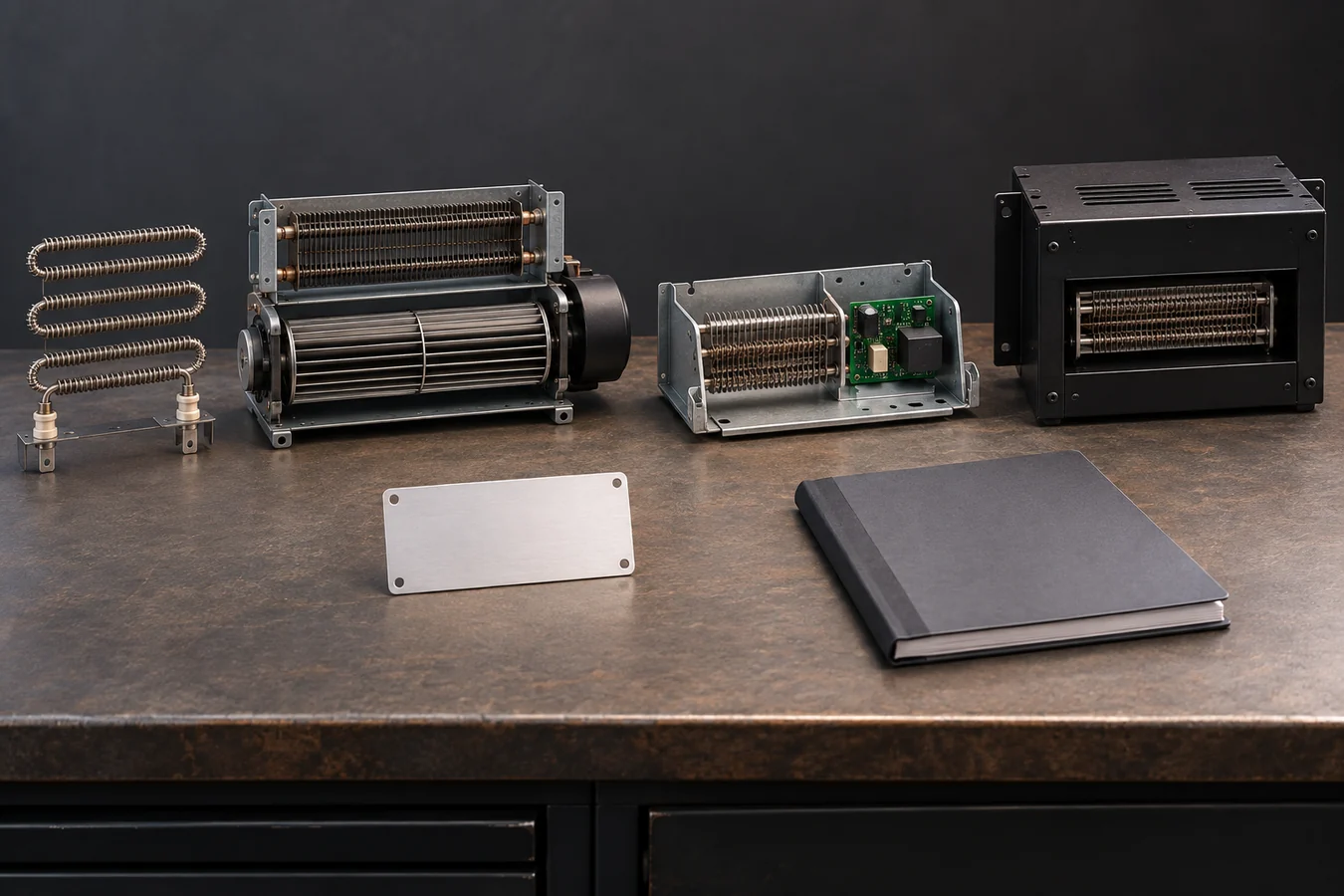
A search for an electric fireplace heater element can end with four different orderable objects: a bare element, an element and blower on one frame, a heater tray that also carries controls, or a larger service assembly that the manufacturer does not sell as loose components.
Those are not interchangeable descriptions. The correct answer comes from the exact fireplace model and the current document or parts owner that covers it—not from a similar-looking coil, a matching wattage, or the phrase a seller used in a listing.
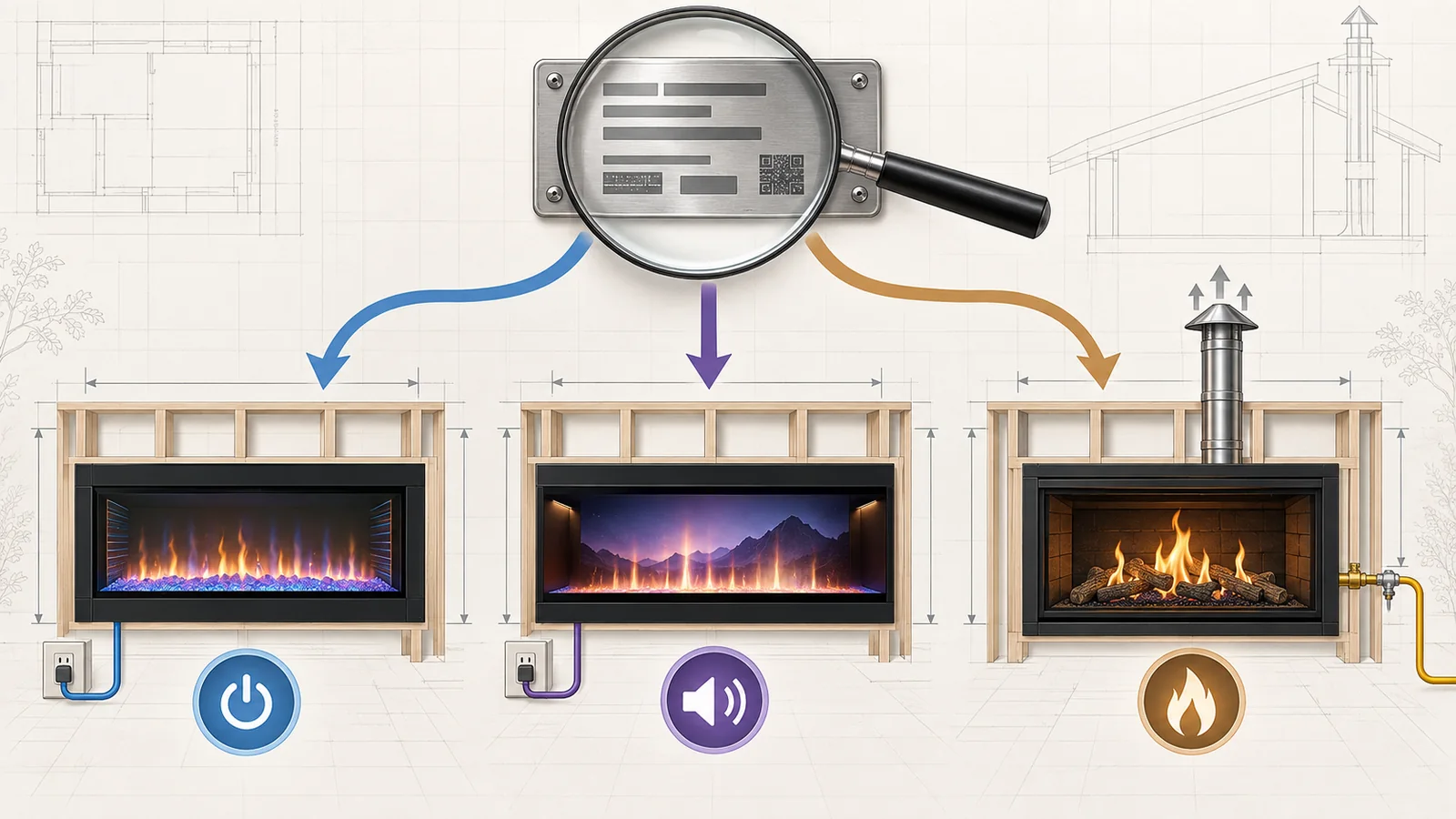
Before buying or opening the fireplace, recover the full model and any serial or date code on the rating label. Then find out what the manufacturer actually calls the heater unit for that identity.
The part name and the orderable unit can be different
Manufacturer documents do not draw the service boundary in one universal place. The examples below are useful because each one closes a different scope.
| Exact source scope | Manufacturer wording | Inside the service boundary | What the source proves | What it does not prove |
|---|---|---|---|---|
| Dimplex DF2608, BF8000, DF2690 and DF2623 | Blower/heater assembly, part 2000330100RP | Heater and blower in one named assembly; 120V, 2 x 600W | Dimplex currently lists that exact assembly for those four models | Compatibility with another Dimplex model, current stock, or a bare-element substitute |
| SimpliFire SF-BI30-E and SF-BI36-E | Heater Assembly, HEATER-BI30 or HEATER-BI36 | The 2015 service-parts list says the assembly includes the control board and fan | Those model families were documented with a larger combined service part | That a 2015 part is still orderable in 2026 |
| SimpliFire SF-INS25/30/35 | Heater/Control Board Assembly, HEAT-INS** | The service manual also calls it a blower/heater module and shows seven electrical connections | The manual’s service object is broader than a loose heating coil | Permission for an owner to disassemble it or use it in another series |
| SimpliFire SF-INC36 | Blower/heater assembly | A heater harness and heater/blower control are separately identified in the service diagram | Even closely related words have a model-specific wiring and control context | Cross-model interchangeability |
The current Dimplex part owner is the cleanest purchase example: it ties one part number, one electrical description and four model identities together. A separate Dimplex service manual uses a heater-assembly replacement section around an element-and-motor relationship. Both sources support the same principle, but neither authorizes a match outside the models it names.
The SimpliFire examples make the boundary wider. Its SF-BI service-parts list explicitly says the heater assembly includes the control board and fan. Its SF-INS service manual names a heater/control-board assembly and later calls the handled unit a blower/heater module. The number of connections in that document is not a repair instruction; it is evidence that a photo of a coil cannot define the service object.
Build the part request before you open the fireplace
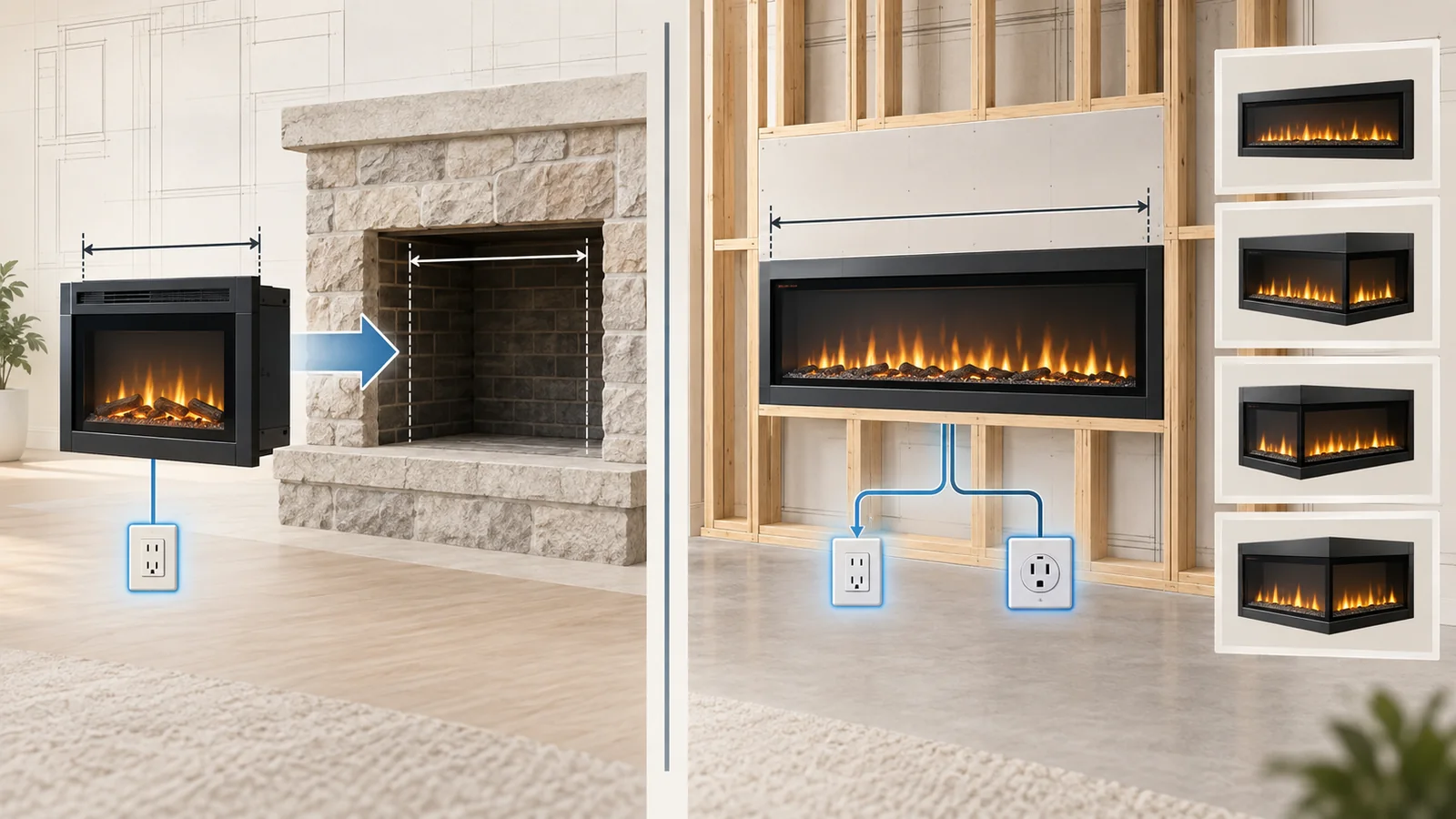
The useful record begins with the appliance, not the candidate part. Copy the brand and full model exactly as printed. Keep hyphens, suffixes and size codes. Add the serial number or date code if one is present, the country of purchase, and a clear photo of the full rating label.
Next, bind the document. Record the manufacturer URL, document title or number, revision/date, and the exact models printed inside it. The electric fireplace manual guide explains why a file with a familiar cover or filename is not enough: model, market, document type and revision all have to agree.
Only then add the candidate service object:
- the manufacturer’s component name, copied verbatim;
- the official part number and any documented supersession;
- the voltage and wattage printed in the same official record;
- whether the named unit includes a blower, control board, harness, tray or enclosure;
- who currently confirms availability—the manufacturer, an authorized dealer, or a service provider; and
- whether the document assigns the work to qualified service.
Voltage and watts are identity checks, not compatibility shortcuts. The electric fireplace specifications guide keeps those fields attached to model, market and operating state. If a listing has the same 120V and wattage as your fireplace but no official coverage for the model, the match is still open. Likewise, the electric-fireplace amps guide can help interpret an exact model’s listed or calculated current, but current draw does not create a part-number relationship.
A retailer or parts marketplace may uncover a useful candidate number. Treat it as a lead. Close the match at a current manufacturer or authorized parts owner that names the exact model, serial/date-code range if applicable, and replacement or supersession. A photo match, connector count or nominal dimensions cannot fill that gap.
If the rating label is inaccessible without moving installed furniture or removing a panel, stop the identity search there. Ask the manufacturer where the label is located for the known product family, or use purchase records and package information to recover the firebox identity. Do not turn the mantel name, cabinet width or flame-effect name into an invented model.
Fan behavior does not identify the failed part
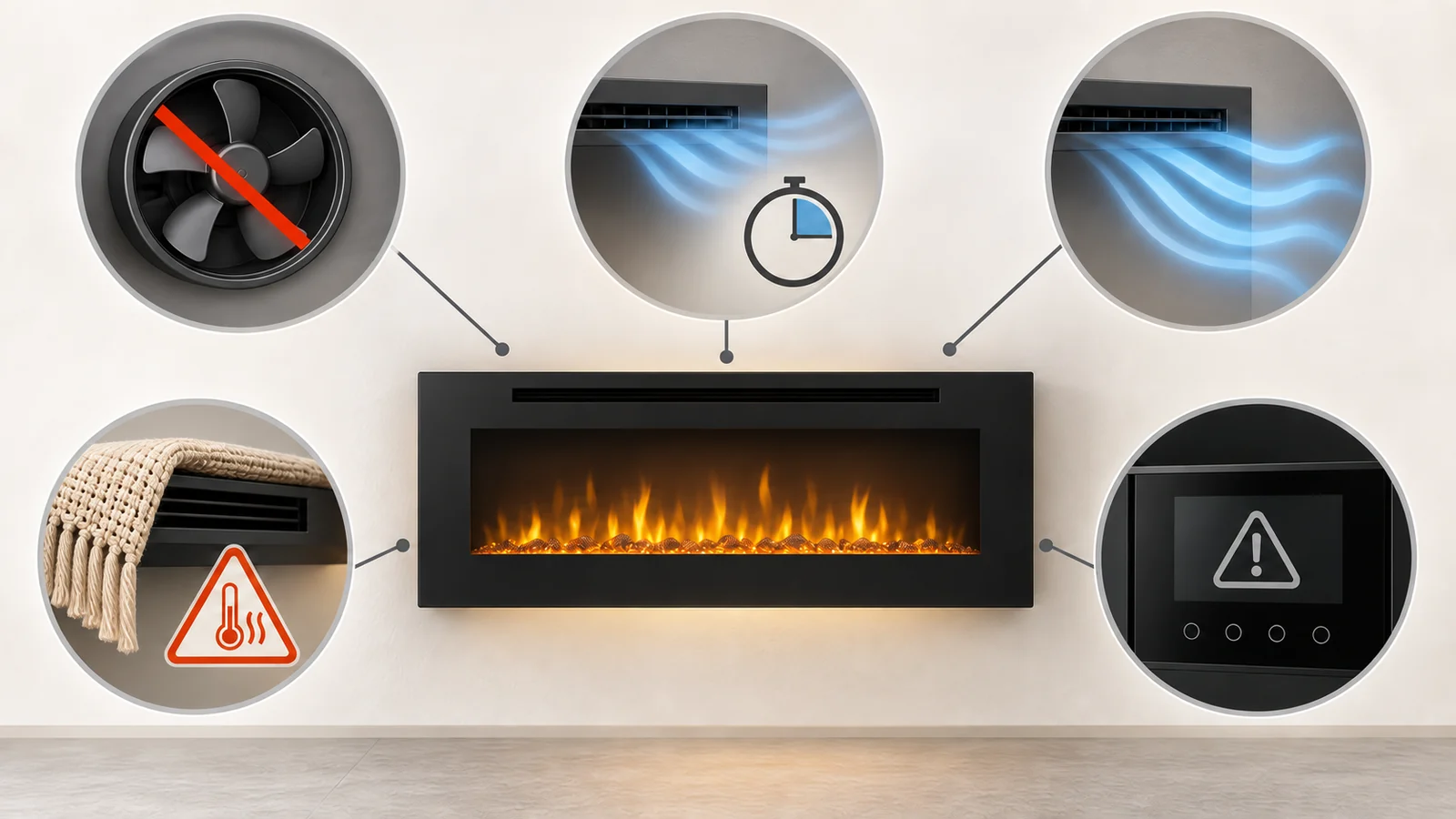
The heater element and blower often share a service assembly, but their behavior still answers a different question from part identity.
One SimpliFire insert manual says its blower starts about 10 seconds before the heater and continues about 10 seconds after heat is switched off. A Touchstone wall-mount manual allows cool air for up to 30 seconds before or after heat. These are model-family examples, not universal timing rules. They show why brief cool airflow can be documented behavior rather than proof of an open element.
Noise also needs its own route. A SimpliFire SF-SCT manual tells the reader to inspect the heater assembly and, for a defective blower motor in that exact context, replace the heater assembly. That is a manufacturer-specific service boundary—not evidence that every noisy electric fireplace needs a combined assembly.
If the unresolved observation is sound, classify when it occurs with the electric fireplace noise guide. If the purchase question is whether a new insert includes useful forced airflow, use the electric fireplace insert with blower guide. Neither question should be smuggled into a heater-element order.
The same separation applies to no-heat or repeated shutdown symptoms. A stopped heater can involve controls, airflow, protection logic or another documented condition. This page does not diagnose those systems from a symptom and does not turn a multimeter reading into compatibility. Part identity must close even when a qualified technician has already diagnosed the fault.
The purchase decision has three legitimate endings
Order the exact official part only when a current manufacturer or authorized parts owner covers the full model—and any required serial or date-code range—with the named component and part number. Confirm the voltage, wattage, included subassemblies and supersession in that same relationship. Availability and return terms still belong to the seller.
Ask the manufacturer or dealer to resolve one missing link when you have the model but the current part owner is absent, the service table is old, two documents use different assembly names, or a marketplace number has no official coverage. A focused request is easier to answer than “Which heater element fits?”
I have an electric fireplace sold in [country] with model [full model] and serial/date code [full value]. The rating label shows [voltage and watts]. Document [title/number/revision] calls the heater unit [exact wording], and I found candidate part [number/URL]. Please confirm the current orderable or service assembly for this exact identity, what it includes, whether the part number has been superseded, and whether replacement is restricted to qualified service.
Attach the full label, purchase description, current document URL and candidate part URL. Do not crop away suffixes or electrical fields. If support supplies a new number, ask it to state which old number it supersedes and the exact model range it covers.
Move to a repair-versus-replacement decision when the manufacturer cannot identify a supported part, the assembly is service-only, the correct assembly is unavailable, or the cost and scope have expanded beyond the original element search. The electric fireplace repair guide keeps recall, warranty, diagnosis, part availability, service access and replacement economics in one route instead of treating a found part as the finish line.
An answer is complete when the model, current document, service-assembly name, part number, electrical identity and availability owner all point to the same object. Until they do, “heater element” remains a search phrase—not permission to buy a part.