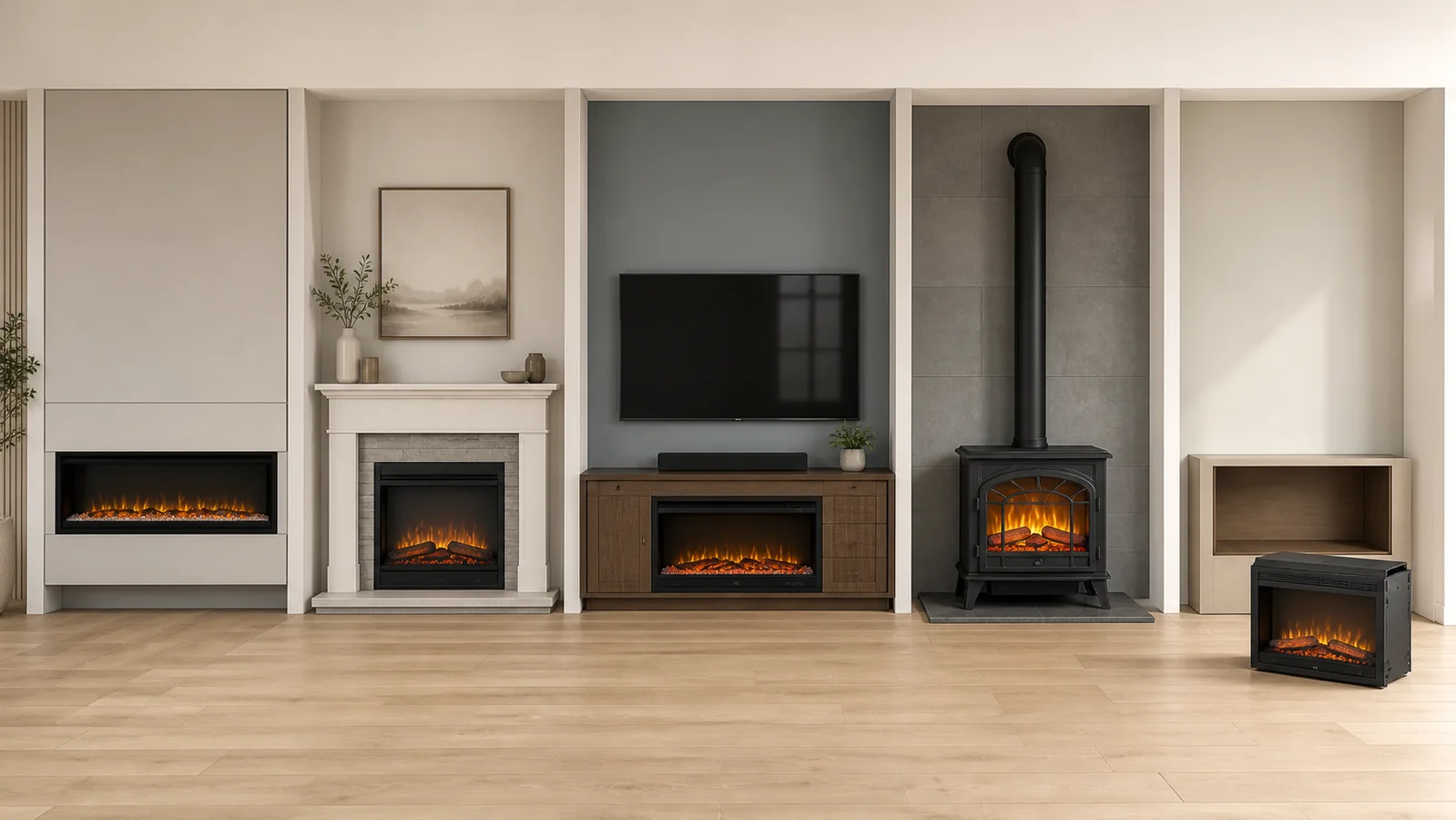
A missing flame is a symptom, not a component name. The same dark glass can belong to a fireplace that moves light across a reflector, produces a water-vapor effect, or plays the scene on a digital display. A “change the bulb” or “reset it” answer can therefore begin with the wrong appliance.
Keep the case closed at first. Record whether the heater and ordinary controls still respond, then describe the effect as entirely absent, lit but static, partial or dim, mist-related, or a dark or flashing display. Find the full model or SKU and the current manual before applying a setting, cleaning step, refill instruction or lamp procedure.
If there is smoke, a burning odor, sparking, visible cord or glass damage, or a repeated breaker trip, stop using the fireplace and follow its exact manual or manufacturer support path. Those signs are not a flame-setting problem to troubleshoot by changing modes.
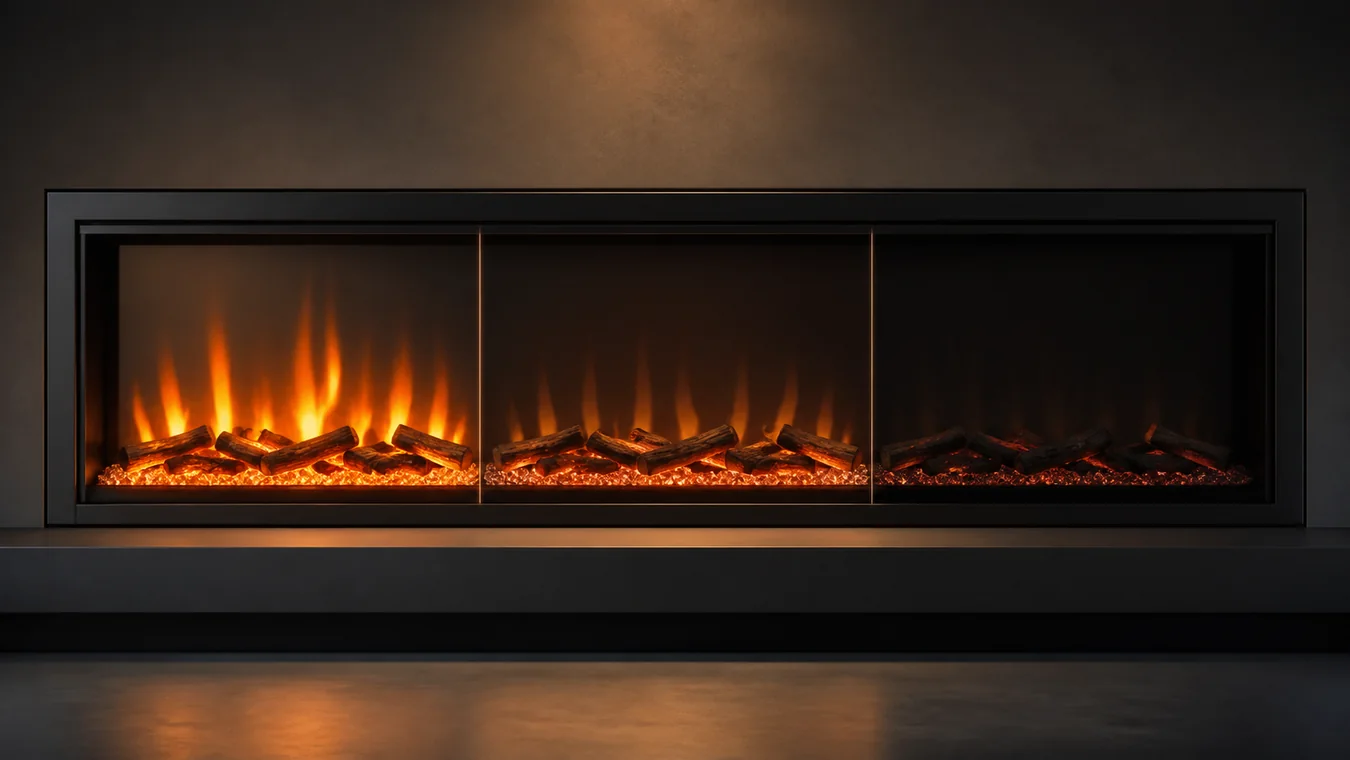
Name the visible failure before you name a part
| Visible state | Evidence to collect | Next boundary |
|---|---|---|
| Effect entirely absent while heat or controls respond | Exact response from the heater, buttons, remote and display; selected flame or brightness state. | Check only the flame or brightness control named in the exact manual. No component is identified yet. |
| Light is present but the pattern is frozen or static | Whether light remains even, whether the pattern ever moves, and whether a new sound began. | Record the state. The exact document decides whether motion exists and who services it. |
| One area is dim, dark or partial | Location, change over time, and any model-specific lamp or lighting terms. | Use a lamp path only if the owner manual explicitly makes that light source replaceable. |
| Mist is absent or uneven on a documented water-vapor model | Water state, documented startup interval, visible vapor distribution, and permitted maintenance status. | Follow only the family’s owner cleaning or refill instructions. Do not borrow bulb-and-reflector advice. |
| A documented digital screen is dark, frozen or flashing | Screen state, any code, menu response, and built-in diagnostic result. | Preserve the code or screen behavior and use the exact diagnostic or service route. |
“Heat works” is valuable evidence because it identifies what still responds. It does not prove that the visual section has a separate supply, a failed motor or a bad board. Keep observation and diagnosis separate. The electric fireplace specifications guide explains why model, control and document fields must stay attached to one product.
The same dark glass can hide three different effect systems
Light and movement can be separate service paths
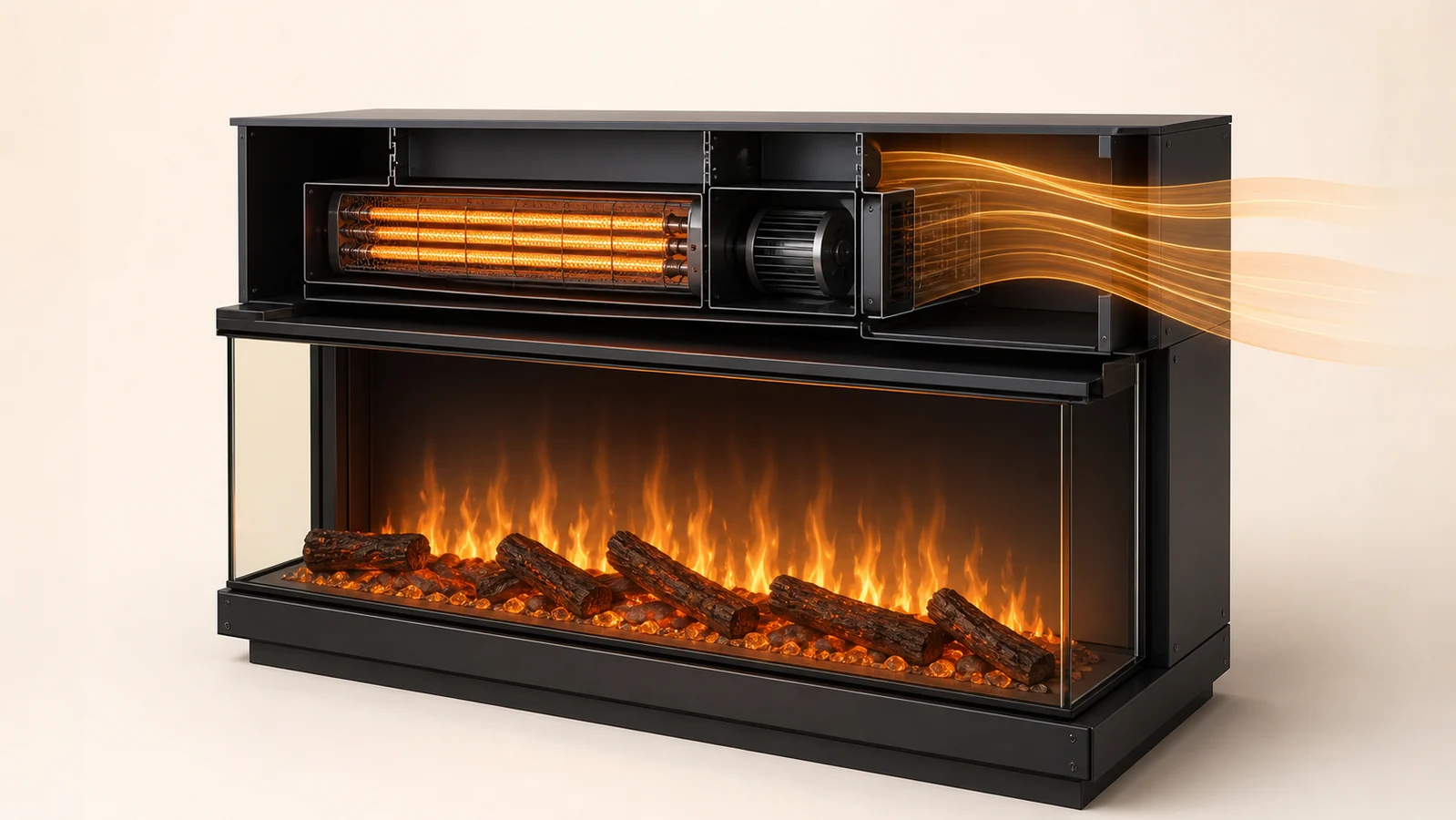
Some documented fireplaces create the scene with illumination plus a moving element. The Dimplex BLF7451 service manual, for example, separates a frozen effect, an invisible effect and a shuddering effect across different service branches. That is evidence about BLF7451, not permission to open a different fireplace or proof that every static flame has a failed motor.
Use the exact manual’s own nouns. If it says “flicker motor,” “LED assembly” or another named part, keep that term attached to the model and the document role. A service manual can explain why two symptoms differ while still leaving the work to a technician.
A water-vapor flame is not a bulb problem
The current Dimplex Optimyst Linear service documentation describes water, transducers, flame lighting and app-controlled states. It also gives that family a 10–15 minute stabilization period for flame height after startup. That interval does not become a generic reset timer; it belongs to the named family and documented condition.
An uneven mist effect, no visible vapor and flame lighting switched off are different records. The owner guide must decide whether checking water, refilling or cleaning is an owner task. Appearance alone cannot authorize access to a transducer or any internal assembly.
A digital flame can fail like a display
The SimpliFire Inception SF-INC36 manual describes a digital display, a System Diagnostics path and a boundary that assigns service beyond the documented installation and cleaning scope to authorized representatives.
On a model like that, a dark or flashing scene should be recorded as a display state, including any code and whether menus respond. Calling it a “burned-out flame bulb” would discard the most useful information before support sees it.
Run only the control check your exact manual allows
Start with identity. Photograph or transcribe the rating-label model or SKU, note the market, and match it to the current document. Manufacturer indexes may list several visually similar series; the Touchstone manual index, for example, maps item numbers to different manual families. The electric fireplace manual guide explains how to match model, market, generation and document role.
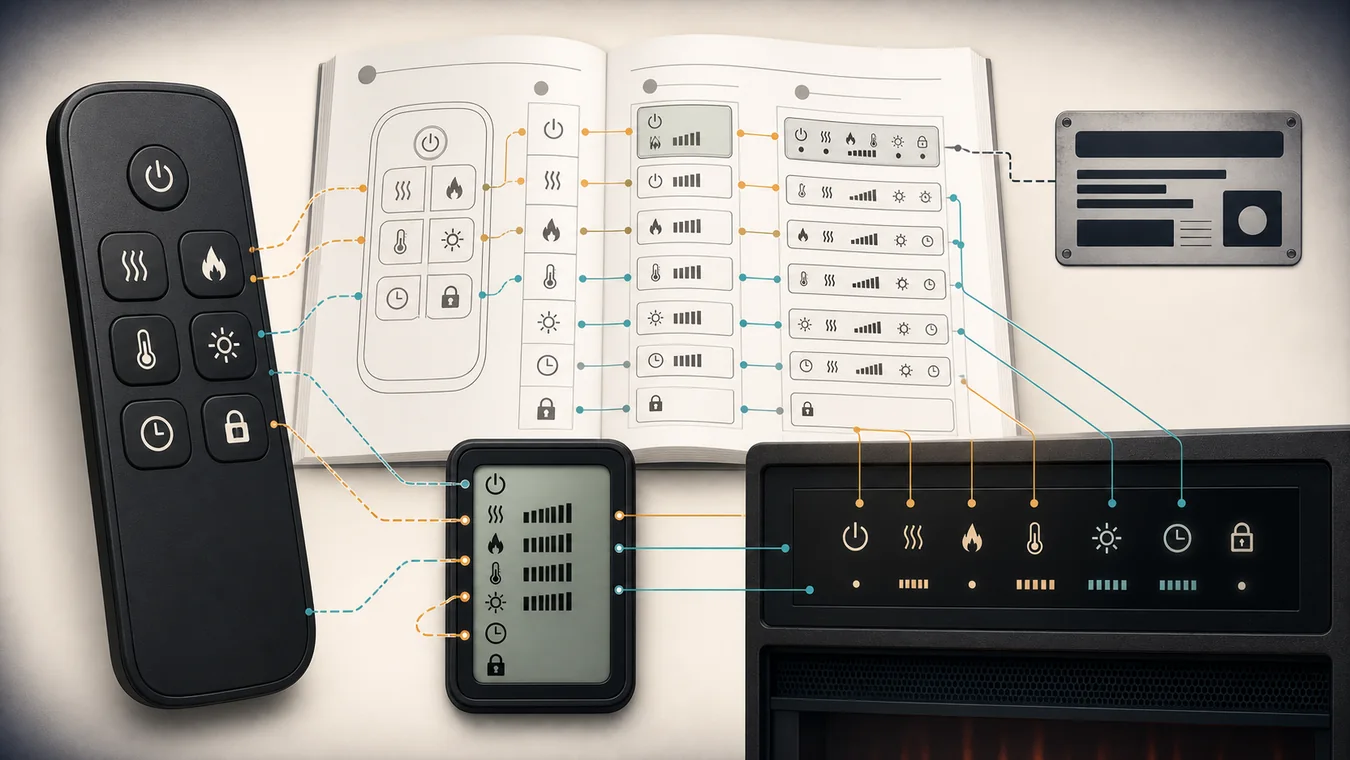
Next, find the term that the document uses for the visible system: flame effect, flame light, mist, display, screen or another model-specific name. That noun tells you which setting or diagnostic section is relevant. It does not identify a failed part.
If the manual documents a flame-off state, brightness control, display setting or app toggle, make one normal control check and record the response. If the whole fireplace has not reached its documented normal operating state, return to the normal startup guide instead of treating a standby condition as a visual-system failure.
Do not substitute a universal power cycle, remote sequence or rear-panel inspection. A control that is normal on one model can erase useful state, be absent on another, or move the case into an access area the owner guide never assigns to the user.
Let the document decide who opens the case
An owner manual that names a replaceable lamp and provides an owner procedure creates a lamp path. The electric fireplace bulb replacement guide owns the identity, access and replacement decision from that point. A search result saying electric fireplaces “usually” have an LED, bulb or spinner does not create the same authority.
A service manual creates a service path unless the owner documentation separately grants access. Preserve its symptom wording and component names for the handoff, but do not turn an exploded diagram or service sequence into a homeowner instruction.
Sound can change the route without identifying the part. If the effect becomes static while a new rubbing, clicking or grinding sound appears, record the mode and timing and use the electric fireplace noise guide. The noise is a separate observable event, not proof of a motor diagnosis.
When the exact document supplies no owner action, the model cannot be confirmed, a built-in diagnostic reports a fault, or the allowed action does not change the symptom, use the manufacturer’s support or authorized-service channel. Dimplex’s current support page itself spans bulbs, LED components, LED strips and transducer-based products—another reason to send model-bound evidence instead of a category-wide repair guess.
Give support a failure they can reproduce
Build the handoff from six facts: full model or SKU and market; manual title or revision; whether heat and ordinary controls respond; the exact visible state; the one documented setting or owner action tried; and every code, new sound, odor, damage sign or shutdown that changed the boundary.
Use a sentence support can replay:
On [full model/SKU], using [manual title/revision], the heater and [local/remote/app] controls [respond/do not respond]. The flame effect is [entirely absent/lit but static/partial or dim/mist absent or uneven/display dark or flashing]. I checked [exact documented setting or owner action] and observed [exact response]. The manual does not give me another owner step / diagnostics showed [code or state].
That description keeps the visible failure, the appliance identity and the access boundary together. It gives support a place to begin without claiming that a bulb, motor, transducer, display or control board has already been diagnosed.