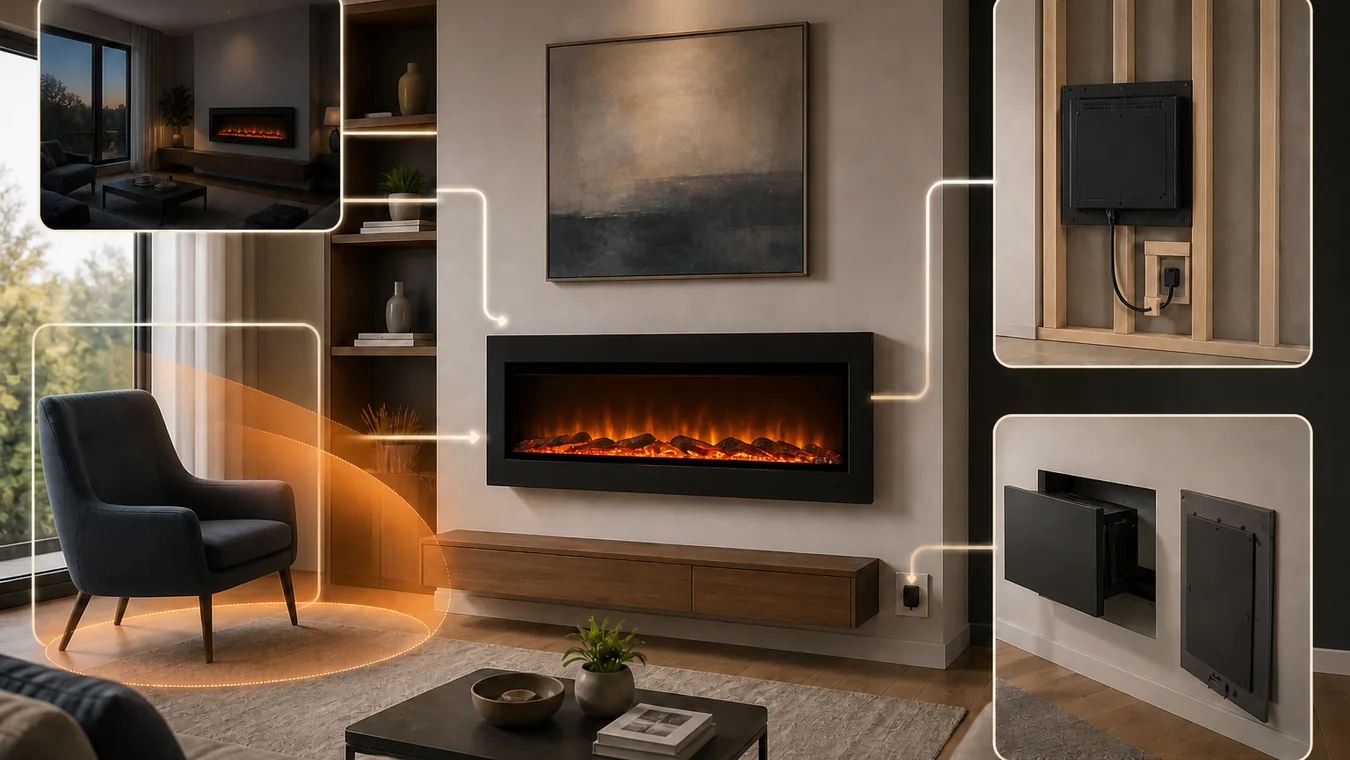
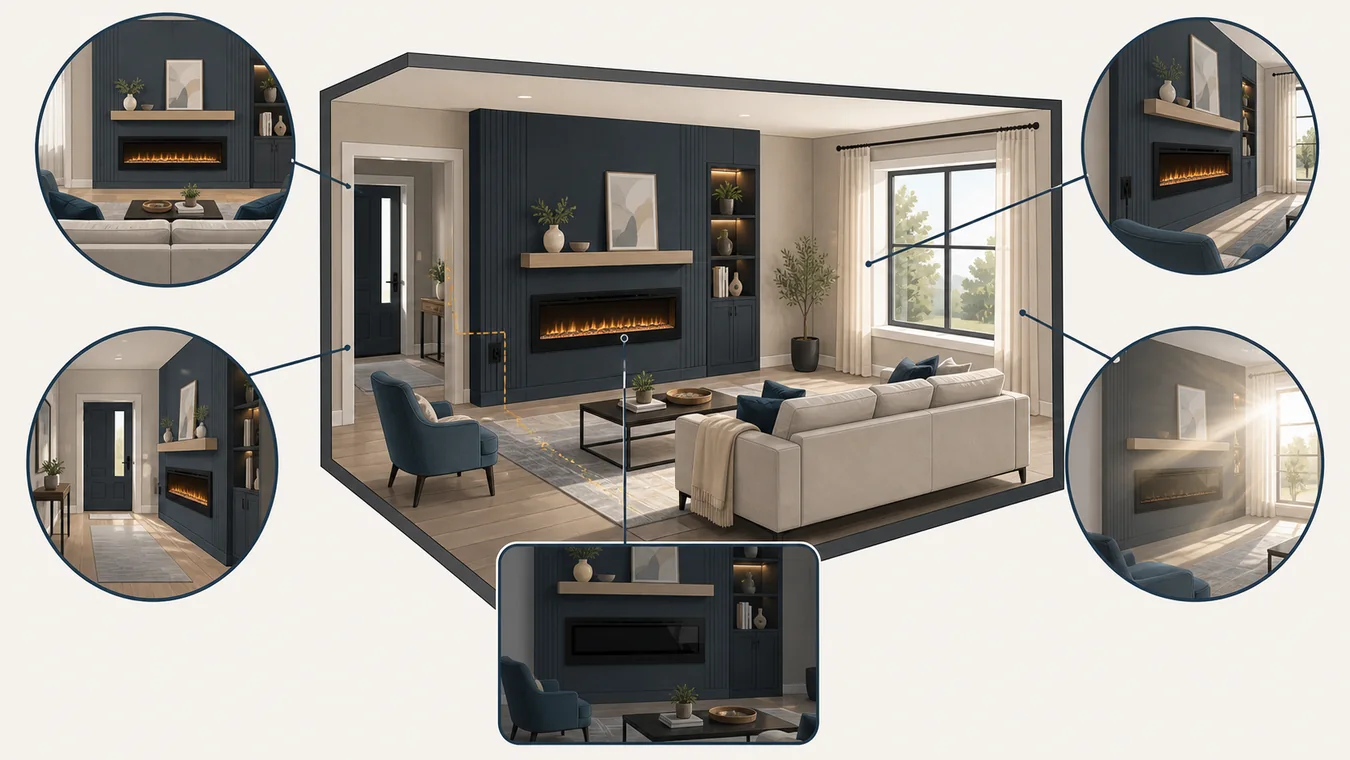
“Non-heating” can name a product, a setting, or a problem. Those are different purchase records.
A true heater-free electric fireplace has no heating function in its documented specification. A conventional electric fireplace may contain a heater and blower but let the flame effect run while heat is off. A third unit may have heat disabled by a control lock or installation setting. If an appliance is already owned and is supposed to heat but does not, that is a fault state—not a reason to shop the no-heat category.
The shortest defensible answer is to freeze one exact model and ask two separate questions: Is heater hardware present? Can the visual effect run independently? Then record any power, water, airflow and service requirements. A product photo or the phrase “flame-only” cannot answer the first question.
Three meanings hide behind “non-heating”
Use the phrase only after choosing the state you mean.
| State | What is true | What remains in the appliance or project | Correct next move |
|---|---|---|---|
| True heater-free | The exact specification says heat is absent or not applicable | Visual hardware, electrical load, installation and service still exist | Compare heater-free models using their documented effect and utilities |
| Flame-only with heater | Heater and blower hardware remain, but the effect can run with heat off | Heater inlet/outlet, clearances, controls and future heat capability still matter | Verify the independent mode in the exact manual |
| Heat disabled by configuration | Heater hardware remains but a lock or configuration prevents operation | The state may be intentional, market-specific or reversible only through the documented owner path | Identify the exact status before treating the unit as heater-free |
| No-heat fault | The owned model is expected to heat, but it does not | Cause, safe checks and service authority are unknown | Leave the shopping comparison and follow the exact manual/support route |
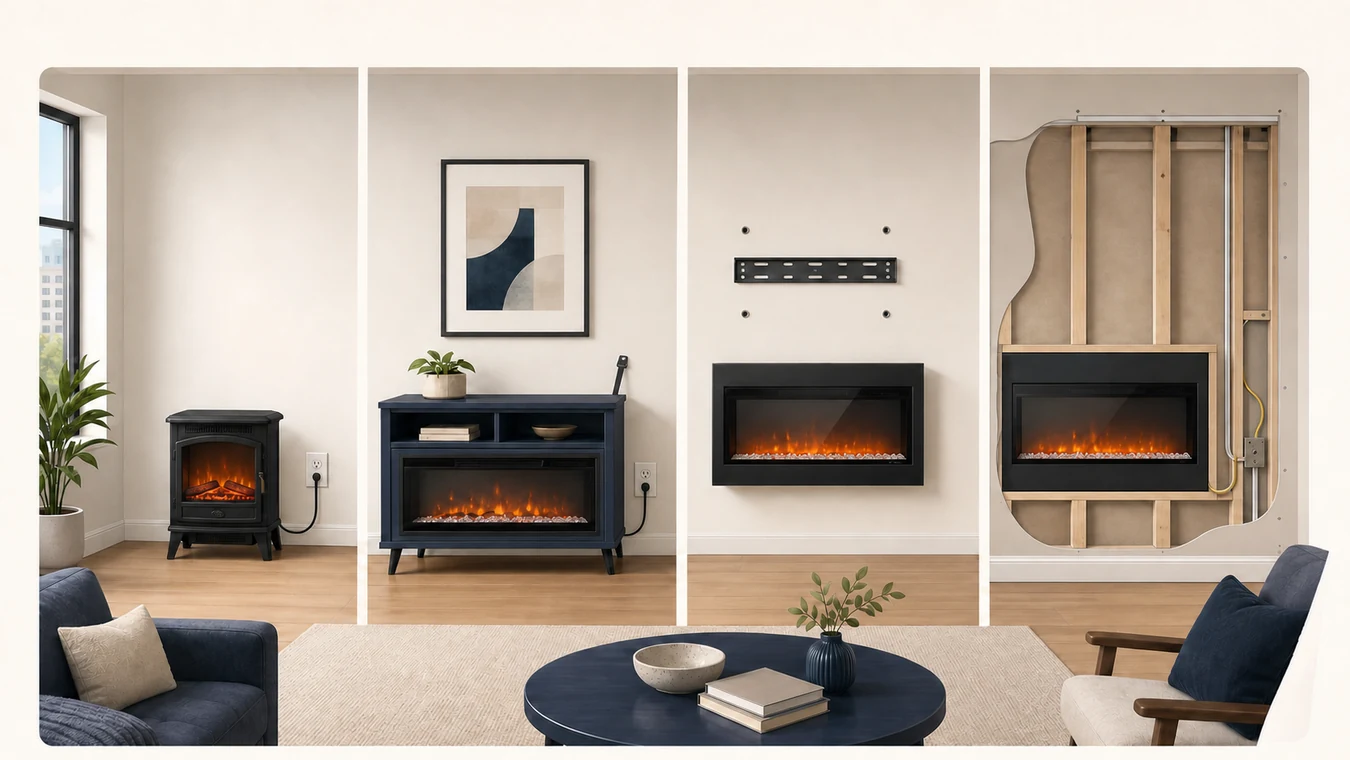
This classification does not replace the broader choice among firebox, insert, wall unit, cassette and furniture products. If the room relationship is still undecided, use the types of electric fireplaces guide first. “Without heat” narrows a function; it does not define how the product fits the wall, opening or floor.
A flame-only button does not remove the heater
Flame-only operation answers what the controls can do now. It does not answer what is physically inside the cabinet.
Dimplex’s current Nova Firebox page lists a fan-forced heater and flame-only selection on the same product line. The visual effect can therefore operate without requesting heat while the heater, blower and their air path remain part of the appliance.
The distinction is even more explicit in the Modern Flames Spectrum Slimline owner’s manual for its named SPS model group. The control table identifies H0 as heater/blower off and H1/H2 as heat levels; the manual also documents a heater lock. Those are operating and configuration states of a heated firebox, not proof of heater-free construction.
That difference changes the purchase in three ways. First, the cabinet may retain a heater outlet that the finish cannot block. Second, the electrical specification may be sized for the appliance’s heat capability even if you intend to use only the flames. Third, the exact model may still be unsuitable where the project prohibits heater hardware rather than merely unwanted heat.
If room heating is optional rather than prohibited, keep the two questions separate: how much heat the unit can provide, and whether the flame can run without it. The electric-fireplace heat guide owns the first question. This page owns the second and the hardware distinction.
Heater-free can trade heat for another system
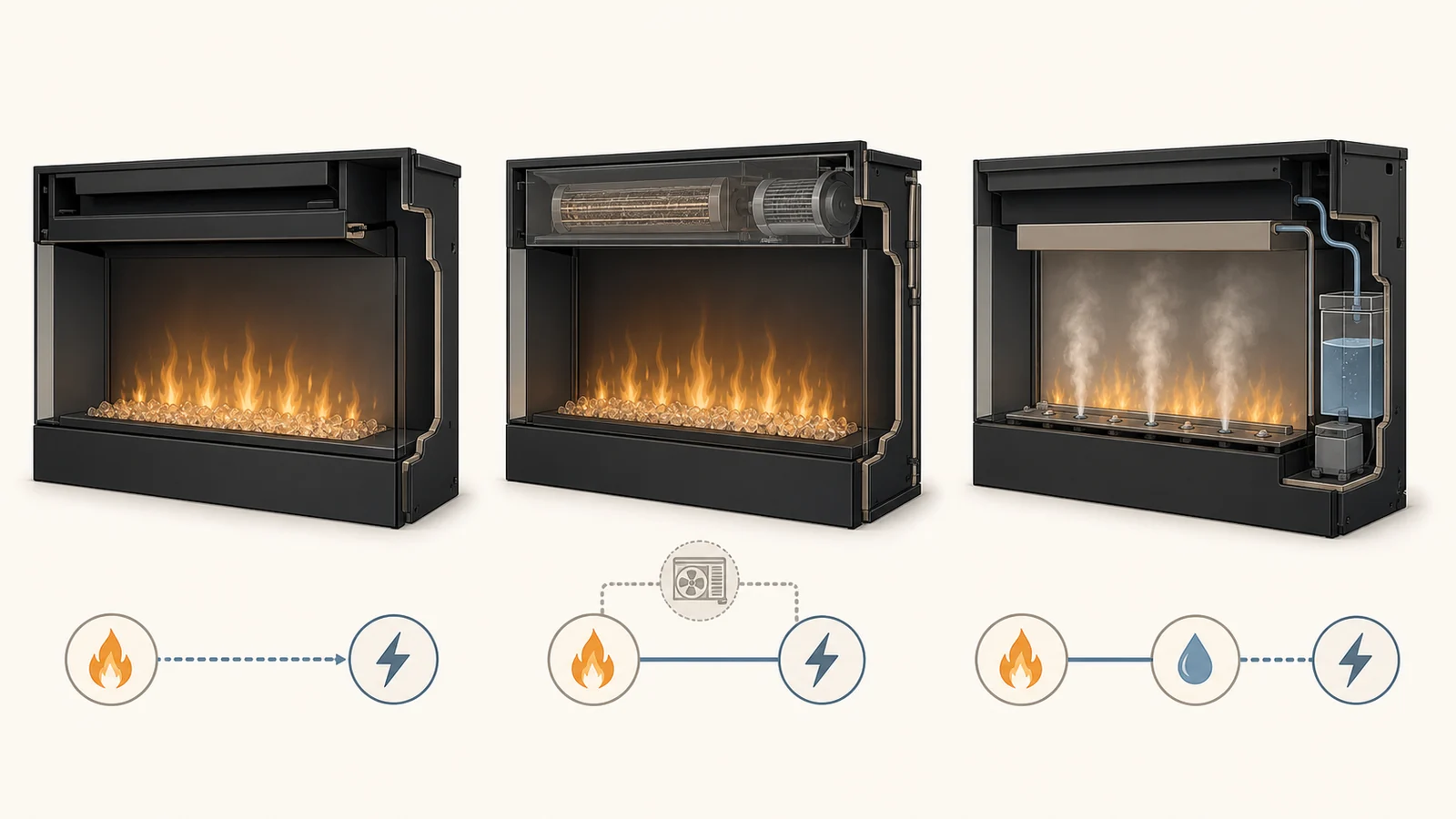
Removing the heater does not make every remaining dependency disappear. The effect technology decides what takes its place.
The Dimplex Opti-V Solo VF2927L specification records flame-only operation, heating as N/A, and a 32 W / 0.27 A electrical specification for that exact model. It is a clean example of a visual fireplace whose document does not present a heating function. The same conclusion cannot be transferred to another Opti-V size, market or successor without its own specification.
A water-vapor cassette offers a different trade. Dimplex’s current Optimyst Cassette RGB page describes a no-heat effect that runs on water and electricity and supports manual fill or an optional plumbed arrangement. That can satisfy a heat-free brief while adding water supply, refill and service decisions that a digital display does not have.
| Documented example | Heater field | Independent visual path | Dependency that still controls the choice |
|---|---|---|---|
| Dimplex Opti-V Solo VF2927L | Heating N/A | Digital flame and sound presentation | Exact electrical, installation and service record |
| Dimplex Nova Firebox | Fan-forced heater present | Flame-only selection | Heater airflow, power and future heat capability remain |
| Modern Flames Spectrum Slimline named SPS group | Heater present | H0 turns heater/blower off | Exact model, manual revision and lock state remain |
| Dimplex Optimyst Cassette RGB | Current page describes no heat | Illuminated water-vapor effect | Water delivery, electricity, refill/plumbing and service access |
These examples classify systems; they do not rank products. If mist is already the preferred visual effect, the water-vapor electric fireplace guide carries the water, heat and service comparison farther. If the unresolved issue is visual credibility rather than utilities, use the realistic electric fireplace guide to define the required views and reference fire.
No heat after purchase belongs on a different path
The phrase changes meaning once the fireplace is owned. If its exact specification includes a heater and it used to heat—or the current manual says it should—absence of heat is an observed symptom. It is not evidence that the model has become a non-heating fireplace.
Record what still responds without opening the appliance: exact model, display state, whether the visual effect runs, whether ordinary controls respond, what mode is shown, and whether a heater lock is documented. Then match the file to the full identity. The electric fireplace manual guide explains how to keep model, market, document role and revision together.
Do not use a shopping article to diagnose a heater, reset an unfamiliar control or authorize internal work. If the whole unit will not start, the power-path guide separates supply, standby and control states. If heat still works but the visual effect is absent, that is the inverse problem handled by the flame-effect troubleshooting guide. Either way, the actual observed state chooses the support path.
Put the requirement into one product sentence
Before comparing finishes or flame colors, write the condition so a seller, installer or manufacturer can answer it against one document:
For [full model, market and current document], heater hardware [is absent / is present]; the visual effect [can / cannot / is not documented to] operate independently; the intended no-heat state is [permanent hardware condition / selectable mode / locked configuration / unresolved]; and the remaining power, water, airflow, installation and service requirements are [recorded fields].
The words in brackets are not decoration. Each closes a different failure mode.
| Record field | Acceptable evidence | Hold condition |
|---|---|---|
| Exact identity | Full brand, model/SKU, US market and current assigned document | Product-family name or look-alike photo |
| Heater hardware | Specification says heat absent/N/A, or document identifies heater/blower | Inference from silence, flame-only marketing or a cool cabinet |
| Independent visual mode | Exact control table or manufacturer page states effect without heat | Generic claim copied from another model |
| Configuration | Current manual shows the heater’s enabled/disabled or lock state | Unknown status treated as permanent hardware absence |
| Utilities | Mode-specific power plus any water, plumbing, airflow and refill needs | “Electric only” or “no vent” used as a complete project description |
| Owned-unit state | Shopping for ambiance, or owned and expected to heat | The two situations mixed in one recommendation |
If the document does not state whether heater hardware exists, return exact manual required. If the unit should heat but does not, return no-heat fault route. Those are useful outcomes because they stop a false product comparison.
Choose the missing capability you can live with
For a room where heat is prohibited or where no heater hardware is wanted, require the specification to say heating is absent or not applicable. “Flame-only mode” is not enough.
For a room that sometimes needs ambiance and sometimes needs supplemental warmth, a documented flame-only mode may be the useful feature. Keep the heater outlet, electrical load and installation conditions in the record even if heat will usually remain off.
For an open-looking mist effect, accept the water and service system only after the exact refill or plumbed path is workable. For a digital display, accept its documented viewing and power characteristics rather than assuming every screen-based model behaves like the Opti-V example.
And for an appliance already expected to heat, stop comparing no-heat products. Copy the full model number and current display state into the manufacturer support path. The smallest accurate distinction—hardware, mode, configuration or fault—decides what happens next.