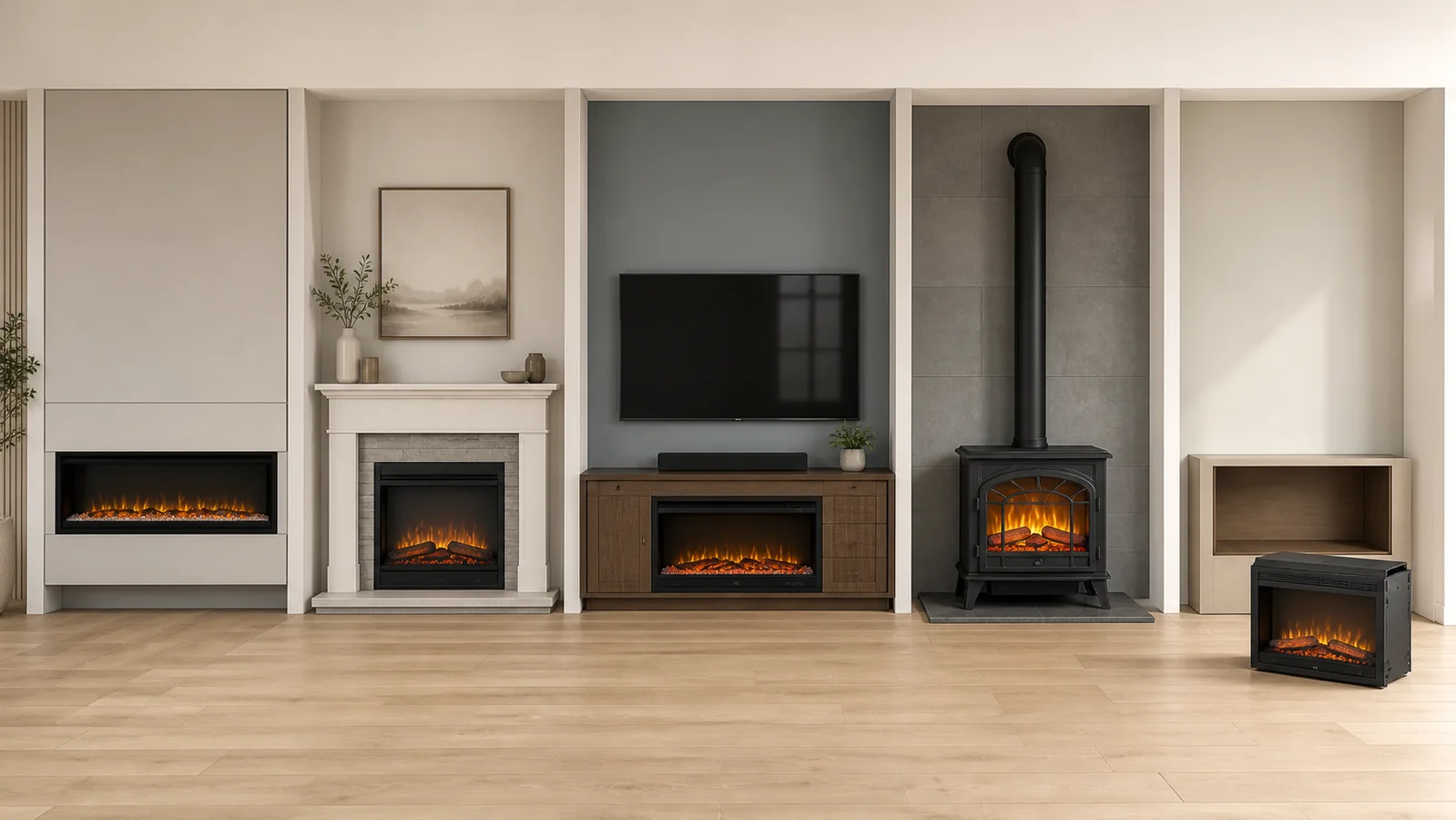
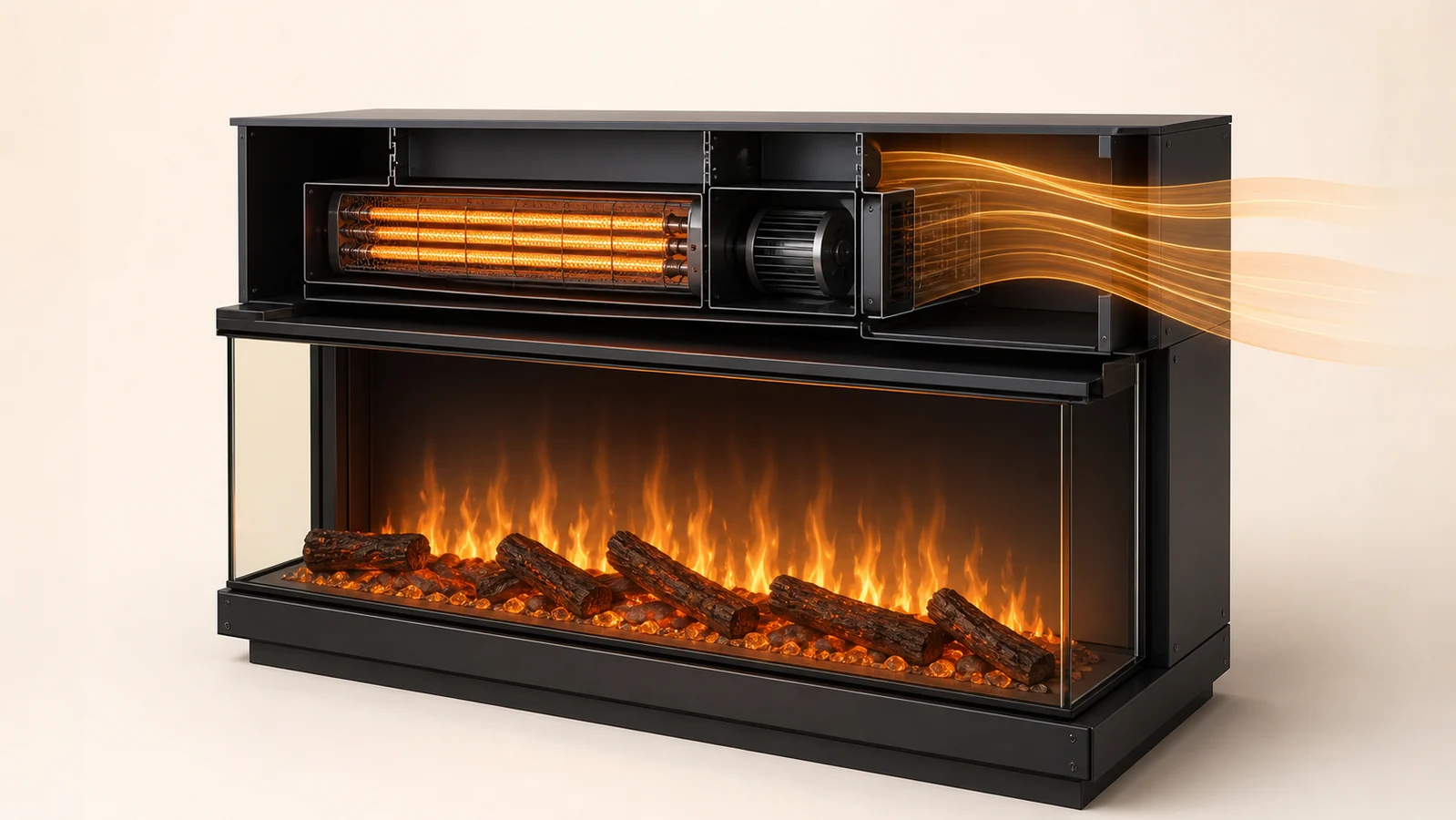
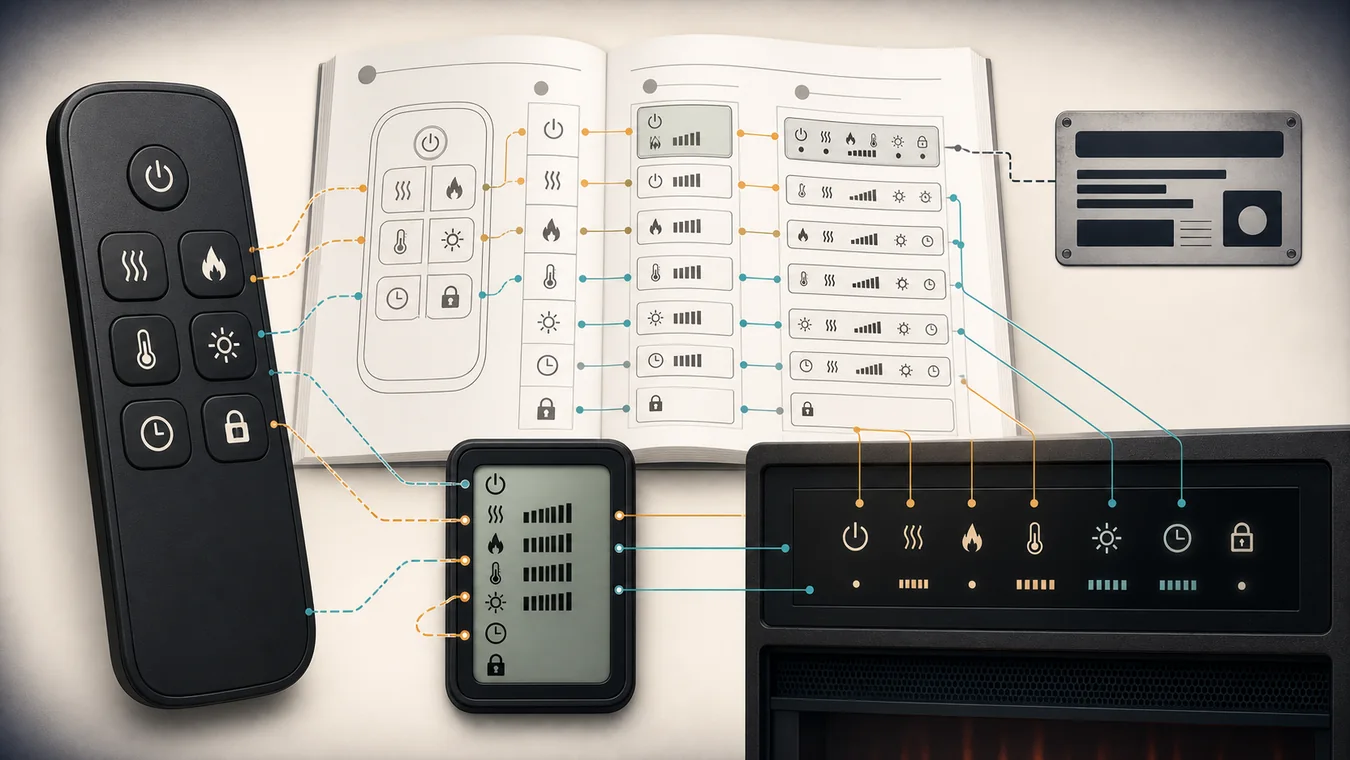
A 1,500-watt label does not answer the dedicated-circuit question. It tells you something about the appliance’s possible load. It does not tell you whether the manufacturer requires an exclusive circuit, merely recommends one, or makes one necessary only after a particular problem appears.
Current manufacturer manuals use all of those distinctions. One 120-volt manual can say that a dedicated circuit is preferred but not essential. Another can say it is not required but recommended. The same document may then prescribe a dedicated path if shared loads produce repeated breaker trips or blown fuses.
So the useful answer is: find the exact model’s current manual, select the actual voltage and connection method, and copy the dedicated-circuit sentence without shortening it. If the existing circuit cannot be confirmed, that is an electrician question—not an invitation to infer the answer from the receptacle face.
The manual’s sentence comes before circuit math
Keep two fields separate. The first is the circuit rating stated for the appliance, such as 15 amps at 120 volts. The second is the manufacturer’s dedicated-circuit wording. A manual can require the first while describing the second as preferred, recommended or conditional. Combining them into one field changes the manufacturer’s answer.
The record also needs the permitted connection. A plug-in firebox, a 120-volt hardwired path and a 240-volt hardwired path can belong to the same product family without being interchangeable. The electric fireplace specifications guide explains why voltage, amperage, wattage and connection method remain separate fields. If the model suffix or revision is uncertain, close that identity with the electric fireplace manual guide before copying any electrical sentence.
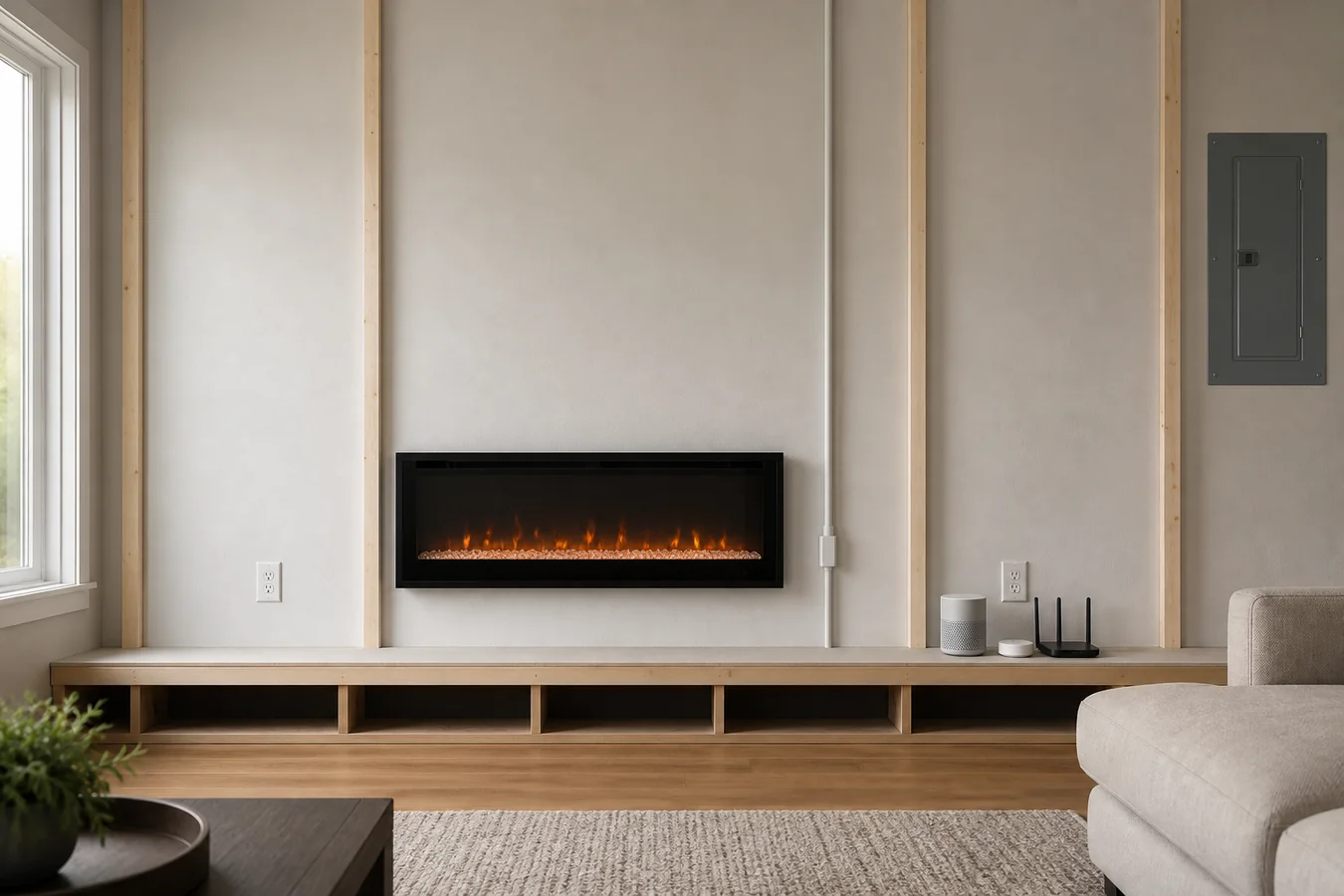
The wall outlet alone cannot close the circuit record. It does not show which other receptacles or lights share the branch circuit, whether a panel schedule is current, or whether the proposed fireplace configuration matches the circuit the manual describes. Record what is known; ask a qualified electrician to confirm what is not. Do not open a panel or alter wiring to complete this record.
Four manuals do not give one category rule
These manufacturer manuals are useful precisely because they do not collapse into one sentence. Each row below stays with the models, revision and configuration named in that row.
| Exact manual | Power fields in scope | Dedicated-circuit wording | Project result |
|---|---|---|---|
| Dimplex XHD23/26/28/33, 7216430100R02 | 120V, 12.5A, 1465W, plug-in; 15A circuit required | Preferred but not essential in all cases; required after regular heater-related breaker trips or blown fuses | The manual does not prohibit sharing, but regular trips change the result |
| SimpliFire SF-WM58/70/94, 2040-903 Rev. Q 7/21 | 15A, 120V/60Hz circuit required | Not required, but preferred to prevent breaker trips or fuse failure | Preserve “not required” and “preferred” together |
| Dimplex Ignite XL, 7215520100R05 | 120V or 240V hardwire; optional power cord only at 120V | Dedicated, properly fused 15A circuit recommended for the selected voltage; required after regular heater-related breaker trips or blown fuses | Choose voltage and connection before applying the sentence |
| SimpliFire Inception SF-INC36, 4200-900 Rev. K 1/26 | Minimum 15A at 120V or minimum 20A at 240V | Not required, but recommended; troubleshooting specifies dedicated 15A or 20A service when matched shared-load trips occur | Initial recommendation and symptom-triggered escalation are separate states |
The Dimplex XHD manual prints the electrical specification and the complete preferred/conditional sentence on the same specifications page. That makes it especially clear why “15-amp circuit required” is not identical to “dedicated circuit required from the start.”
The SimpliFire wall-mount manual uses another exact formulation for SF-WM58, SF-WM70 and SF-WM94: a 15-amp 120-volt circuit is required, while a dedicated circuit is not required but is preferred. That wording does not approve every existing shared circuit. It simply prevents us from rewriting “preferred” as “required.”
The Dimplex Ignite XL R05 manual keeps the recommendation with both voltage and connection choices. It also limits the optional cord path to 120 volts. The SimpliFire Inception Rev K manual states different minimum circuit ratings for 120 and 240 volts, then gives a dedicated-circuit response for a matched breaker/fuse symptom involving other appliances.
None of these documents supplies a universal wire size, breaker upgrade or code conclusion for another home. Those fields depend on the exact appliance, the existing electrical system and the rules that apply to the project location.
Build a circuit record before you hide the power path
The record is small enough to keep with a quote, model schedule or framing drawing. Its value comes from keeping the manufacturer’s sentence attached to the configuration it describes.
| Field | What belongs in the record | Why it changes the decision |
|---|---|---|
| Product identity | Brand, full model/item number, market and package identity | Prevents a similar series or furniture package from lending its rule to the target appliance |
| Current manual | Manual title, covered models, document number and revision/date | Establishes which sentence is current for the model |
| Voltage selected | 120V, 240V or unresolved | Can change circuit rating, connection and heater output |
| Connection selected | Factory plug, approved plug kit, 120V hardwire, 240V hardwire or unresolved | Determines which installation section controls |
| Manual’s circuit rating | Exact voltage and amp rating stated in the document | Keeps the product requirement separate from the home assessment |
| Dedicated wording | Exact required, recommended, preferred, not-required or conditional sentence | Prevents advice from becoming stricter or looser during handoff |
| Existing-circuit facts | Confirmed shared loads and who verified them; otherwise unknown | A receptacle location does not prove an exclusive path |
| Operating history | No history on a new project, or the exact breaker/fuse symptom on an existing unit | Some manuals change the disposition after repeated matched symptoms |
Use the plug-in versus hardwired electric fireplace guide if the connection has not been chosen. If the model offers both voltages, the 240-volt electric fireplace guide keeps the higher-output benefit attached to the extra project responsibility. Neither decision can be borrowed from another model that happens to have the same width or wattage badge.
A breaker label or panel schedule can be recorded, but it is not proof when it is incomplete, stale or unclear. The useful electrician question is specific: “For model ___, configured for ___ volts by ___ connection, the current manual says ___. What circuit serves the proposed location, and does this plan satisfy that manual requirement and the rules that apply here?” That question closes more than asking whether electric fireplaces “usually” need their own circuit.
Let the wording change what happens next
If the exact manual says dedicated service is required for the selected configuration, treat that as a project input before purchase or wall closure. Put the electrical handoff beside framing, finish and service-access work in the electric fireplace installation guide. Do not downgrade “required” because another brand uses “recommended.”
If the manual says dedicated service is recommended or preferred but not required, preserve both halves. The result is not “ignore the circuit.” It is “the manual does not prohibit sharing, but the actual shared loads and applicable electrical requirements remain to be confirmed.” That may still lead the electrician or project owner to choose a dedicated path before the wall is finished.
If the manual makes dedicated service necessary after regular trips or blown fuses, the operating history is now part of the decision. Do not turn repeated resetting into the plan. Confirm that the symptom and cause match the manual, then follow the model-specific response and obtain the electrical assessment the project needs.
If voltage, connection or current document is unresolved, stop the dedicated-circuit answer at that field. A retailer specification, product-family nickname or familiar 1,500-watt label cannot choose the controlling section. When outlet reach is the real problem, use the electric fireplace extension-cord guide rather than assuming a different cord can substitute for circuit planning.
Write the final disposition next to the model number: required now, recommended/preferred but not required, required after the documented symptom, or confirmation still needed. That single line gives the buyer, installer and electrician the same starting point before furniture or drywall hides the proposed power path.