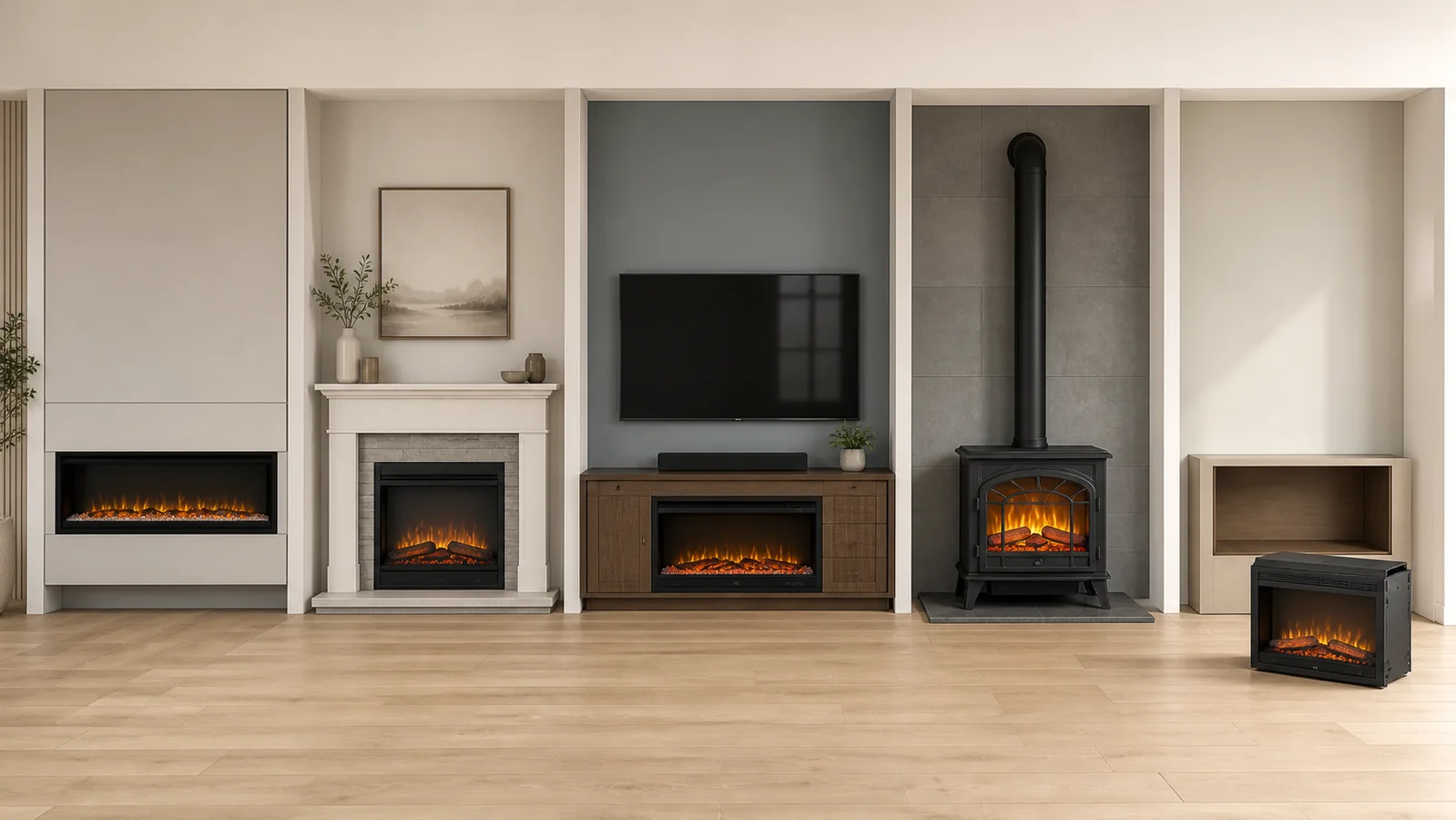
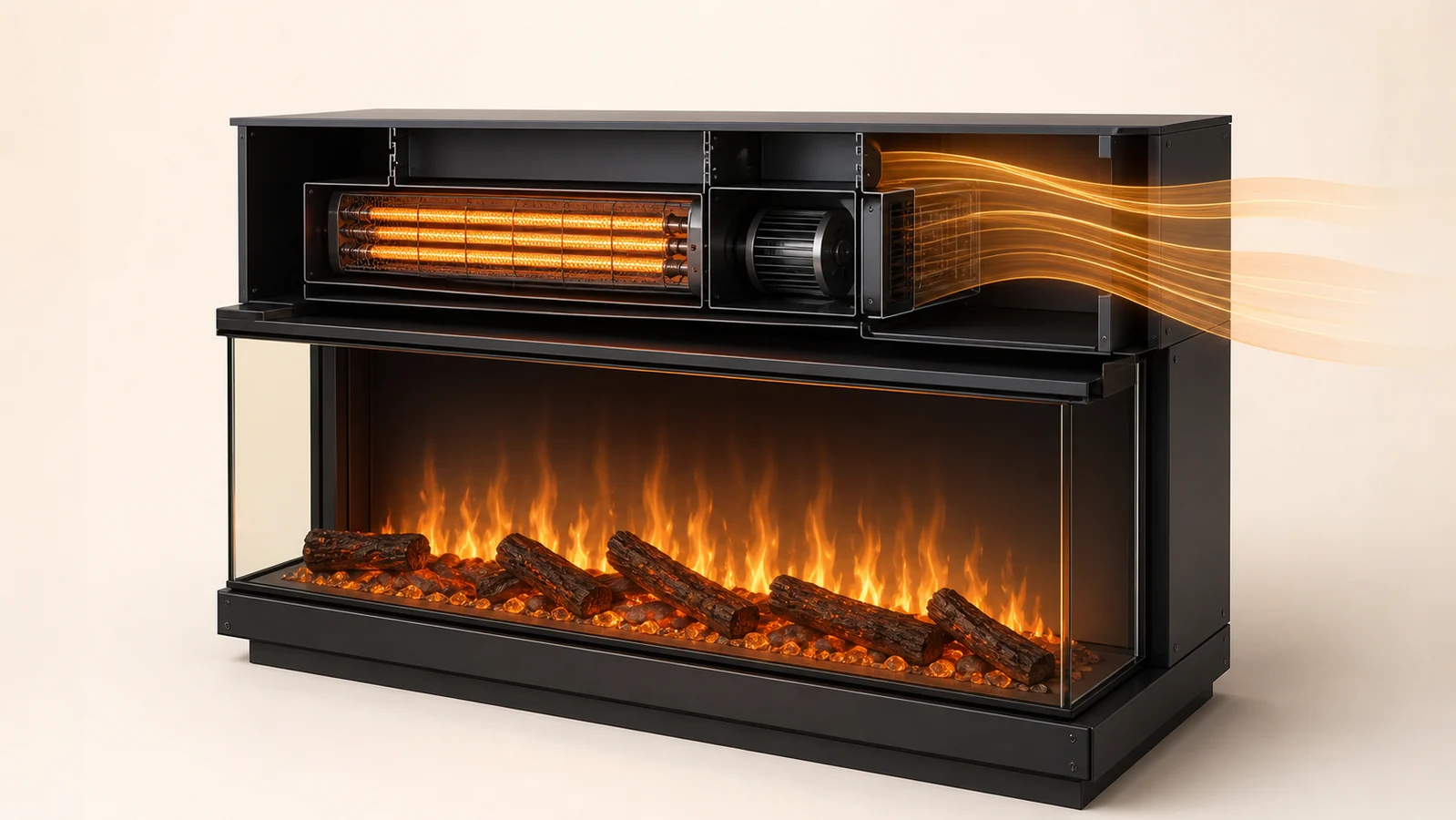
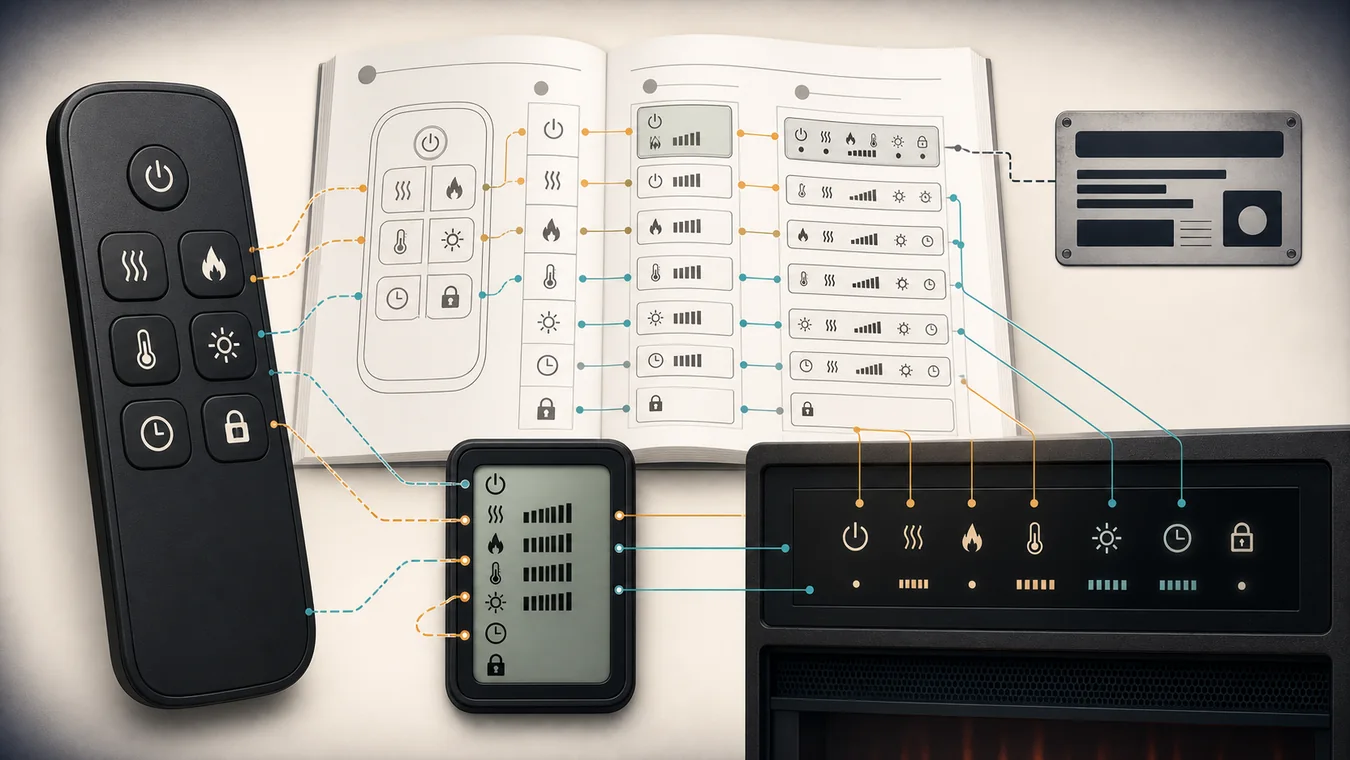
Two rooms can both be called garages and still produce opposite fireplace decisions.
One may be a finished, dry workout room with a sealed floor, insulated walls and no vehicle work. The other still receives a wet car, stores paint and fuel, makes sawdust and opens directly to weather. An electric fireplace that remains a candidate for the first room does not inherit permission for the second.
So the useful answer is conditional: classify the garage as it is actually used, then match one exact fireplace manual, power path and heat role to those conditions. A makeover photo or the word “indoor” cannot close the missing fields.
The word garage hides two different rooms
Start with current use, not the renovation mood board. A finished hobby room is kept dry and clean like an interior room. Vehicles and workshop materials no longer move through the fireplace zone. The appliance can have a protected wall, a stable traffic path and a planned service route.
An active garage changes during the day. A car brings in water or snow. A saw or sander changes the dust load. Fuel, paint and solvents may be used or stored. The overhead door exposes the room to moving air and weather. Those facts do not automatically forbid every electric heater, but they prevent a decorative room fireplace from being admitted by appearance alone.
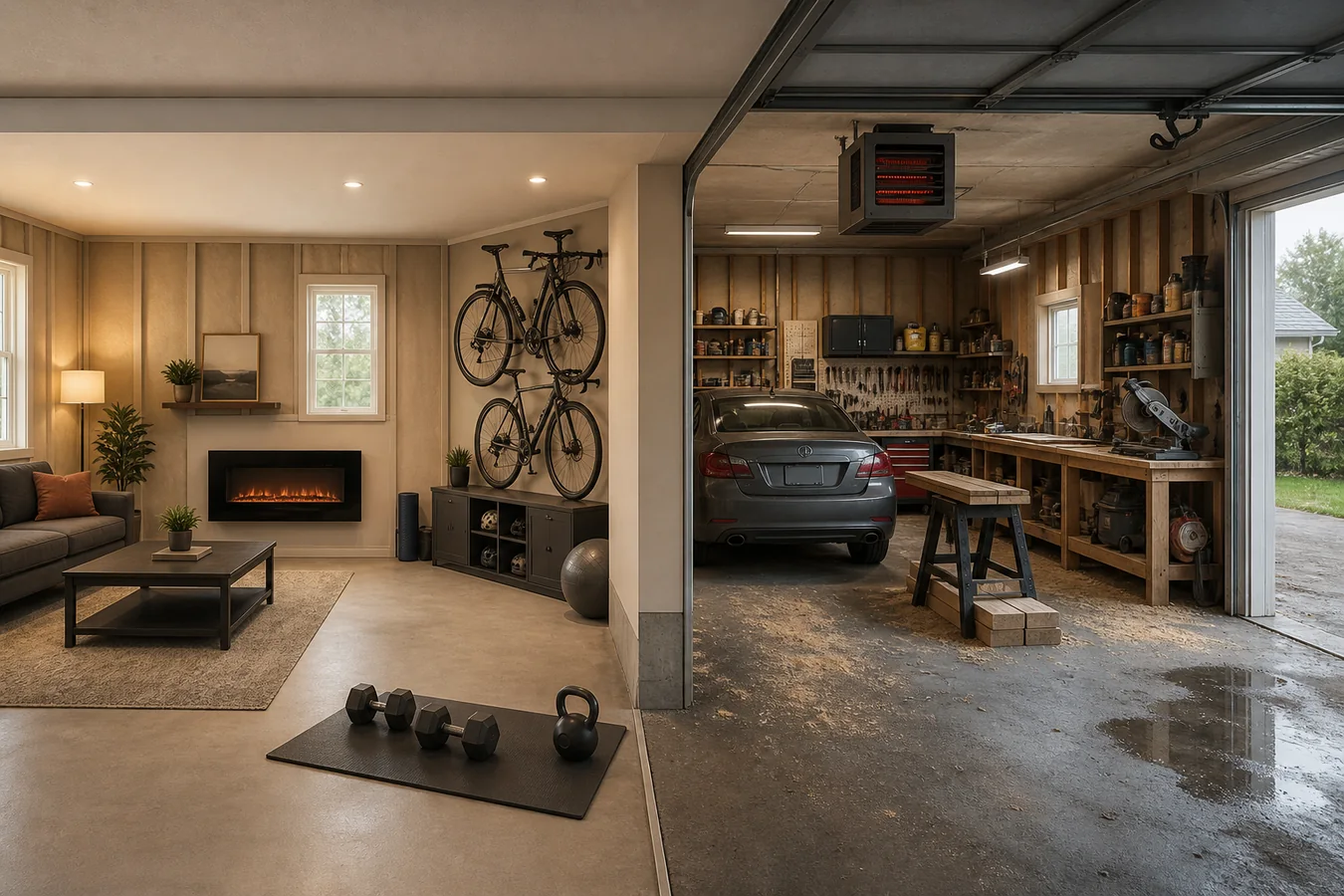
The room may also be mixed-use. A sofa and gym mat do not erase the vehicle, mower, workbench or material shelf that returns later. Record the most demanding normal use, not the cleanest moment in a listing photo.
A project photo is not location approval
Touchstone’s May 2026 garage project shows a Sideline 36 in custom entertainment cabinetry. The owner describes the room as a place for workouts and gatherings, and the project makes a decorative fireplace in a finished garage easy to imagine.
The current Sideline owner manual, revision 251114, supplies the narrower product authority. It identifies the listed models as electric room appliances, rates them at 120V and a maximum 1,500W, says not to use them outdoors, and calls for a location that is not prone to moisture or exposed to rain or snow. It also keeps the air paths clear and defines the permitted outlet or hardwire route. The project is useful inspiration; the manual decides whether that exact family can remain in the project.
Another exact manual reveals a garage-specific conflict that a photo cannot show. The current Dimplex RBF24DLX manual says not to use that fireplace in areas where gasoline, paint or flammable liquids are used or stored. That sentence belongs to RBF24DLX. It is not a universal quotation for every fireplace, but it proves why the reader has to open the manual for the model being considered.
“Electric” removes combustion at the appliance; it does not make product location language disappear. General operating risks still belong in the electric-fireplace safety guide, while this page asks the earlier purchase question: does this exact room admit this exact product at all?
Put the room and the model in one admission record
Do not keep a room photo in one note and a product spec sheet in another. The electric-fireplace specifications guide explains why model, power, installation and service fields need their own owners. For a garage, those fields have to meet the current use state in one record.
The admission matrix has no majority vote. A strong answer for seven rows cannot erase a direct conflict in the eighth.
| Field | What keeps the fireplace path open | What changes or stops the path |
|---|---|---|
| Current use | The space is maintained as a finished, dry leisure, gym or office room | Vehicles, repair work or material handling still define normal use; classify it as active or mixed-use |
| Flammable liquids | The exact manual and actual storage/use conditions do not conflict | Gasoline, paint, solvent or another flammable-liquid condition conflicts with the exact manual, or storage/use is unknown |
| Moisture and weather | The proposed wall remains inside the model’s documented dry-location and indoor conditions | Rain, snow, pooling water, wet-vehicle splash or another exposure cannot be reconciled with the manual |
| Dust and air paths | Dust-producing work is absent from normal use and every intake, outlet and blower path can stay clean and unobstructed as the manual requires | Cutting, sanding or dirty storage makes the manual’s air-path condition uncertain or impractical |
| Product identity | Brand, full model/item number, US market and current applicable manual agree | A family name, similar width, retailer image or old PDF is doing the work of an exact model match |
| Location and traffic | The wall keeps the appliance out of vehicle, door, impact and regular traffic paths while preserving service access | A bumper, door track, stored object or work route can enter the product’s protected or service space |
| Power | The exact model’s documented voltage, connection and circuit path is accepted for this location | An extension cord, assumed shared circuit, unavailable receptacle or unresolved hardwire plan substitutes for the manual |
| Heat task | The goal is display or documented supplemental heat under realistic room conditions | The project expects rapid recovery of a cold, frequently opened garage or primary heating without a heat-loss decision |
| Result owner | One person can preserve the room use, manual revision, power plan and finished layout together | Product research, electrical work and room use can change independently without anyone rechecking the whole record |
When the model is unclear, use the electric-fireplace manual guide to match the label, market, document purpose and revision. When weather enters the location, the outdoor electric-fireplace guide owns the exposure question; an open garage door does not turn an indoor product into an outdoor-rated one.
Dust needs equally careful wording. The current Sideline and RBF24DLX manuals both protect appliance air openings, but neither gives this page a universal dust threshold. The electric-fireplace venting guide separates an exterior vent from the intake, outlet and circulation paths the appliance still needs. If normal work makes those paths hard to keep within the exact manual, the result is a room/product hold—not a guessed cleaning interval.
Power is not inferred from the nearby wall outlet. The plug-in versus hardwired guide owns that selection after the exact model’s connection language is known. A responsible electrical review may still be required; this record does not design or approve a circuit.
Write one result at the bottom: finished dry-room candidate; active-workshop conflict; flammable-storage hold; moisture or outdoor-exposure hold; exact manual required; power-path hold; heat-task mismatch; or purpose-built garage-heater comparison. “Looks fine in the photo” is not a result.
A 1,500-watt fireplace and a garage heater are not the same class
Location eligibility and heating capacity are separate decisions. A fireplace can survive the room record and still be the wrong heater for the job.
The current Touchstone Sideline manual lists a maximum input of 1,500W for its named models. Dimplex’s current Garage & Workshop Heaters page separately presents three fan-forced models in a 4,000–4,800W range and describes them as built for garages, workshops and construction sites. These are documented input and product-positioning differences, not a universal sizing formula.
| Source-bound example | Documented class | Sensible question before comparison | What the source does not prove |
|---|---|---|---|
| Touchstone Sideline models in revision 251114 | 120V room fireplace, maximum 1,500W, flame and heater controls | Is the room eligible, and is the goal ambience or modest supplemental heat? | That 1,500W will recover or maintain this garage at a chosen temperature |
| Dimplex DGWH, EMC and DCH category | Purpose-built garage/workshop/construction heaters, 4,000–4,800W | Does the room and actual heat task call for a garage-heater class and its different power path? | That any one model is correctly sized, powered or approved for this project |
Input wattage does not tell you insulation quality, air leakage, outdoor temperature, door-opening frequency, thermal mass or the desired recovery time. The electric-fireplace heat and running-cost guide explains the difference between input, delivered heat expectations and operating cost. Use it to state the heat goal before treating a fireplace as the answer.
If the main goal is flame ambience during a workout in an already conditioned finished room, an admitted fireplace may still be relevant. If the goal is to bring a cold working garage up to temperature after the overhead door opens, compare purpose-built garage heating and obtain a real load and power decision. A larger decorative fireplace is not automatically a larger heater; the exact specification controls.
Choose the route that survives the actual room
A finished dry-room candidate is the narrowest positive result. It means the current use state, exact manual, protected location, air paths, power and heat goal agree well enough to continue planning. It does not certify construction or freeze the answer after the room changes.
An active-workshop or flammable-storage result changes the room or the product class. Removing one can of paint for installation day is not enough if vehicles, fuel or workshop materials return in normal use. Follow the exact manual and place any unresolved site condition with the responsible manufacturer, electrician or project professional.
A moisture or weather result changes the wall, the exposure or the model. Treat water carried by vehicles and an open overhead door as observed project facts. Do not borrow outdoor permission from another family or assume that occasional exposure is too small to matter.
A power hold stays open until the exact connection survives the finished plan. A receptacle hidden behind cabinetry, an extension lead across the floor or a hoped-for hardwire conversion is not a power path merely because the product is electric.
A heat-task mismatch changes the comparison set. Keep the fireplace for ambience only if the documented mode and room conditions support that use; otherwise compare products designed for the garage/workshop job. The right endpoint may be a different heater rather than a different fireplace.
The decision is complete when one sentence can name the current room use, exact model and manual, flammable-storage state, moisture/dust conditions, power path and heat role without borrowing a fact from a different garage or product. If the sentence changes when the car, tools or winter weather return, the room was classified too generously.