For routine use, press the Power or Standby control identified in your exact model’s manual once, then confirm that the flame display and heat indicator respond. If you only want the room to stop heating, use the Heater control instead; many electric fireplaces let the flame effect remain on without heat. Do not make unplugging the universal first step. Switching a fireplace off at its controls and disconnecting its incoming power are different actions.
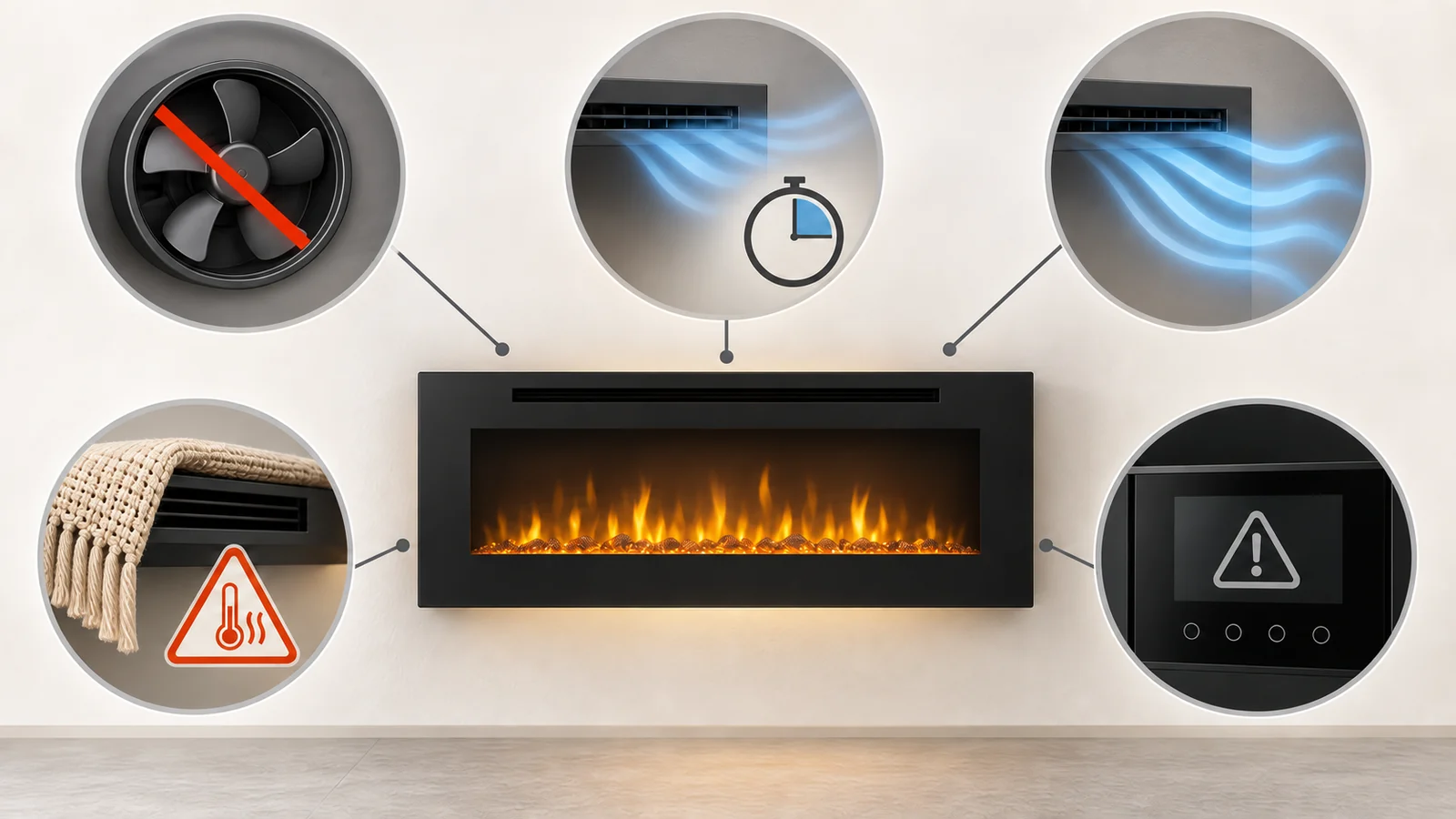
One more detail can make a successful shutdown look incomplete: the fan may keep running briefly after the heating element switches off. That can be a documented cooldown, not a command failure. The acceptable time is model-specific, so use the installed unit’s manual rather than an internet-wide countdown.
Choose the result before you touch a control
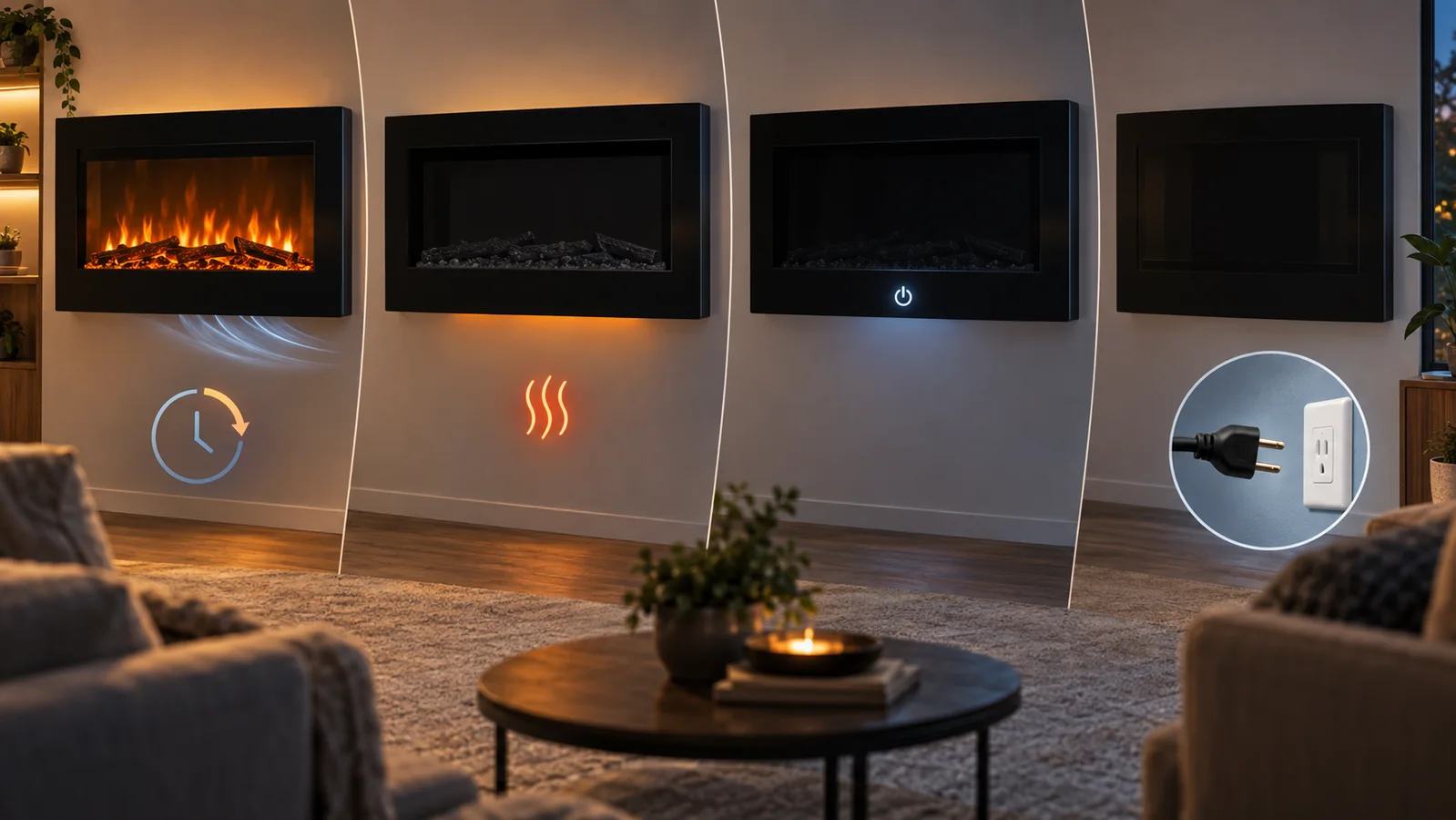
“Turn it off” can describe at least five outcomes. Pick the outcome first; otherwise, a control may work exactly as designed while leaving you convinced that something is wrong.
| Result you want | Control to identify in the exact manual | What may legitimately remain active | What confirms the result |
|---|---|---|---|
| No heat, but keep the visual effect | Heater/Heat control | Flames, ember bed, display and possibly a short cooldown fan | Heat indicator changes as documented; no new heat after the model’s cooldown |
| No visual effect | Flame/visual/media control | Heat may remain available only if that model supports independent operation | Flame/media display is dark; heater state is checked separately |
| Appliance in standby | Power/Standby control | Incoming supply and control electronics may remain energized; settings may be retained | Display and active effects respond as the manual describes |
| Let an automatic setting finish | Sleep timer or thermostat control | Timer logic, thermostat monitoring, flame effect or later heat cycling | Timer reaches its end or thermostat reaches its set point as documented |
| Fully isolate power for maintenance or an abnormal condition | Exact model’s plug or breaker instruction, after appliance-off | Nothing should be treated as owner-serviceable merely because supply is isolated | Power is disconnected only by the method and at the boundary stated in the manual |
This matrix is not a universal button order. A handset may label its control Power, Standby, Heat, Heater, Flame, Timer or Thermostat; an onboard panel may use symbols. Some models combine functions that another separates. The reliable sequence is therefore: name the desired state, find the exact control that owns it, press it once, allow any documented transition, and confirm the observed result.
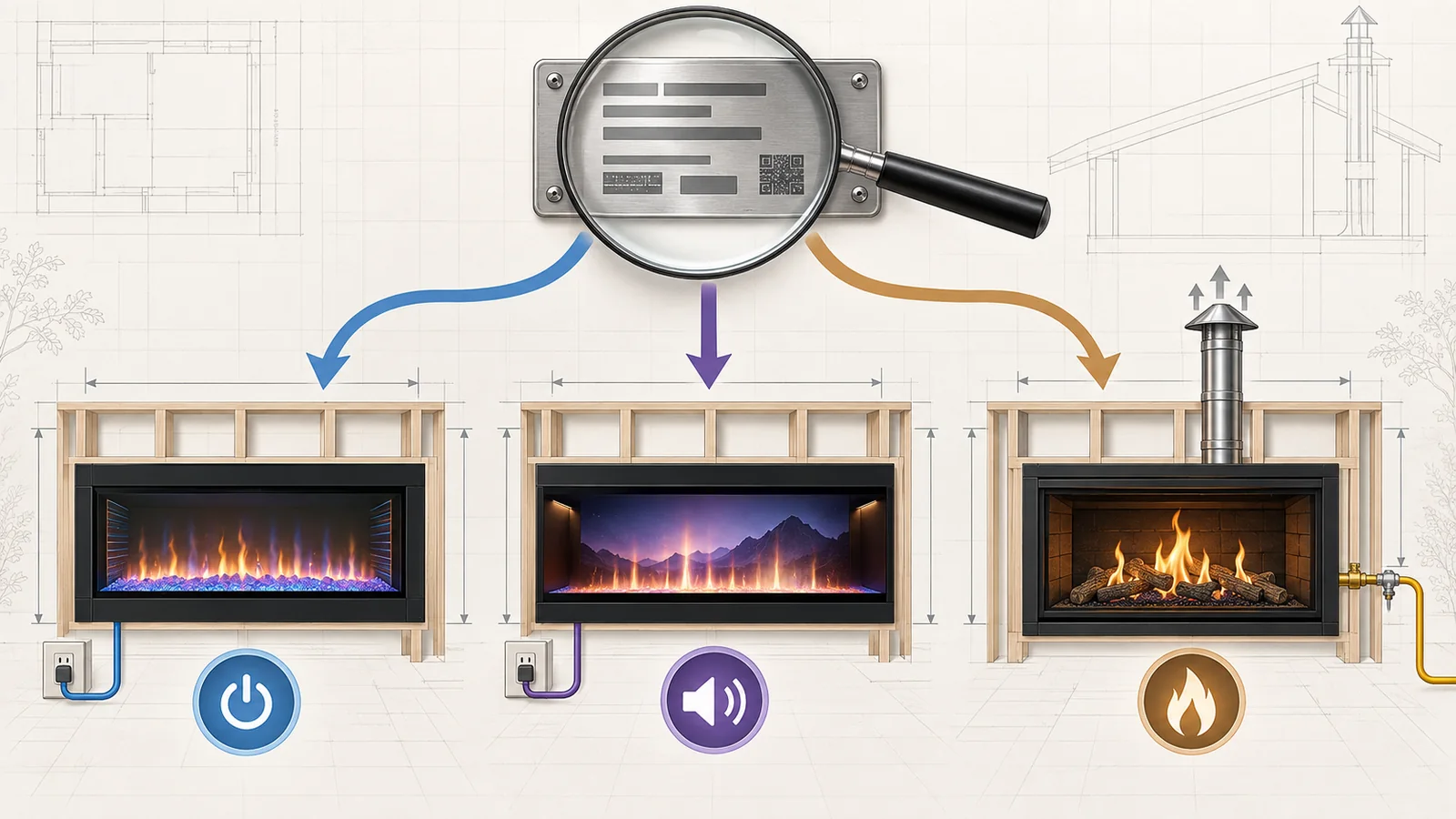
If the label or control diagram is missing, pause and identify the appliance before experimenting. The site’s electric fireplace manual guide explains how to match a document to the model and revision instead of using a near-match. The electric fireplace specifications guide keeps model, control, supply and installation fields attached to the same unit.
The fan may be finishing a shutdown you already completed
Two current manufacturer manuals show why a generic “wait a minute” instruction is not enough. The Dimplex XLF owner manual says that after heat is turned off, the element retains heat and a two-minute cooldown occurs before the fan shuts off. The Dimplex DF26/DF28 PRO owner manual documents a 60-second fan run after heat is turned off for its covered models.
Neither duration belongs to every electric fireplace. Together, they prove a more useful point: the heat command and the fan’s final stop can be two moments in one normal transition.
When you turn heat off, separate three observations. Did the heat indicator change? Did the heating output stop increasing? How long has the fan continued compared with the exact manual’s stated cooldown? A fan that is still moving air inside the documented window may be completing the command you already gave. Interrupting that routine transition by repeatedly toggling controls or immediately cutting supply makes the observation harder to interpret.
Once the exact duration has passed, do not invent a longer allowance. Record the elapsed time, indicator state and whether heat output continues. The electric fireplace making-noise guide owns the wider task of distinguishing normal operating modes from a sound that needs model-specific attention; this page uses sound only to verify the shutdown transition.
Standby can remember more than it appears to
A dark flame bed does not prove that incoming power has been isolated, and a Power button does not necessarily erase the last session. The XLF manual says its standby control turns the unit off and that turning it back on returns with the same functions. The DF26/DF28 PRO manual similarly describes its Power control as turning all functions off and restoring the same settings when switched on again.
The current SimpliFire Allusion Slim owner manual, Revision D dated June 2026 documents another bounded behavior: its appliance resumes previous settings except Timer and Heater. The same manual also describes a heat-disengagement switch that allows the appliance to operate without heat.
These examples should not be blended into one expectation. For your unit, record which settings the exact manual says survive standby or a power interruption. That matters if “off” really means “the next person must not get heat when the fireplace is restarted.” If retained heat settings are a concern, verify the exact model’s described return state; do not assume standby is a settings reset.
Smart controls add another owner but not another reason to guess. Use the physical control and offline behavior described for that exact appliance. The smart electric fireplace guide compares app dependence with the controls that still work locally; it does not turn an app command into proof that the appliance reached the requested state.
A timer or thermostat can stop heat without ending the session
An automatic stop can be correct even when it is not the state you expected. In the SimpliFire manual, the timer is a countdown that turns the fireplace off, while thermostat mode controls the heater in response to room temperature. The XLF manual likewise describes a sleep timer that turns the fireplace off after the selected period. Those are different control decisions: one ends a timed session, while the other may stop heat after reaching a set point.
If heat stops while the flame remains visible, check whether thermostat mode is active before treating the event as whole-appliance shutdown. If the entire display turns off at a predictable interval, check the sleep timer. Conversely, pressing Power or Standby yourself does not prove that a timer was cleared or that the next start will forget the thermostat setting; retained behavior belongs to the exact manual.
This distinction also keeps intentional shutdown separate from a fault pattern. A unit that repeatedly stops outside its documented thermostat, timer or cooldown behavior belongs in the electric fireplace keeps-shutting-off guide. Preserve what stopped—heat, visuals, fan, controls or all functions—rather than rewriting every partial change as “the fireplace turned off.”
Full disconnection belongs to maintenance and abnormal conditions
Routine shutdown normally uses the appliance’s controls. Full supply isolation is a separate state used where the exact manual calls for it, such as maintenance, service, reset or an abnormal condition.
The SimpliFire Allusion Slim manual tells the owner to turn the appliance off and disconnect incoming power before cleaning or servicing, using the plug or circuit-breaker route described for the installation. The Dimplex DF26/DF28 PRO manual also requires power disconnection for maintenance and reserves other servicing for authorized personnel. These instructions do not authorize opening panels, manipulating wiring or guessing which breaker serves an unidentified hardwired unit.
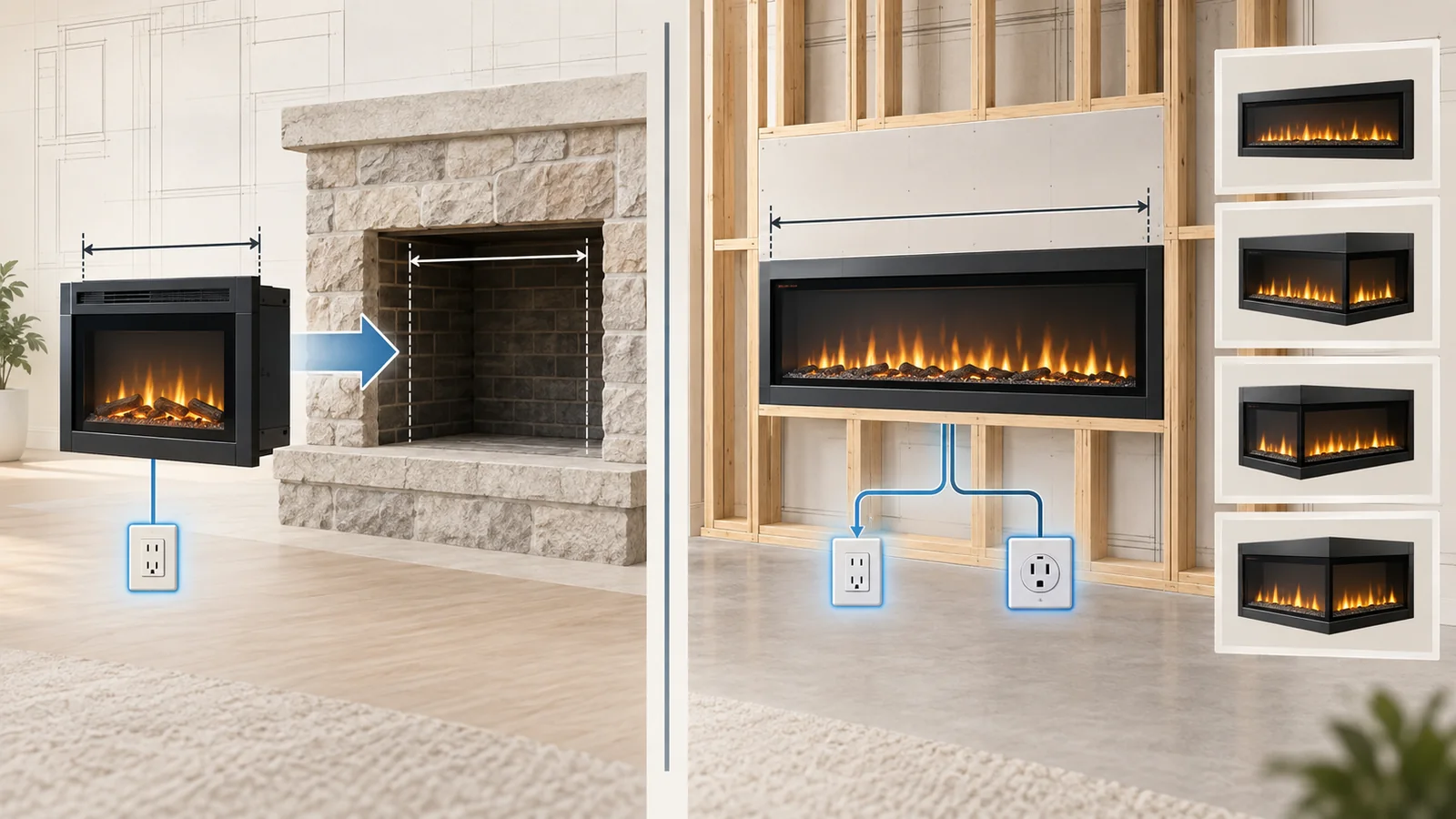
First determine whether the fireplace is plug-in or hardwired. For a plug-in product, the controlling manual may identify the cord connection as the disconnection path. For a hardwired product, follow only the identified circuit and exact manufacturer instruction; if the circuit is not positively identified, leave the electrical action to a qualified person. Moving from a working control shutdown to supply isolation without knowing the installation does not make the state safer or clearer.
An abnormal condition can move the decision out of routine operation. Dimplex’s current FAQ and documentation page distinguishes a slight odor during initial heat use from a persistent odor or burning-plastic smell, for which it says to unplug the unit and contact technical support. Apply that statement only to the covered support context, not as a diagnosis for every brand. Smoke, water exposure, a damaged cord, a hot or damaged plug/outlet, or other evidence that makes normal control use unsafe likewise calls for the installed unit’s emergency/disconnection instructions and qualified help—not more button trials.
For the broader operating boundary, use the electric fireplace safety guide. Its job is to evaluate the heater, supply, placement and observed condition; this article’s narrower job is to keep routine off, cooldown and isolation from being mistaken for one another.
If the command is ignored, the task has changed
A routine shutdown attempt has a clean expected result: the selected function changes state, any documented transition completes, and no abnormal sign appears. If that result does not arrive, stop adding generic steps and leave a record that the exact manual or support owner can close:
- intended result: heat off, visuals off, standby, automatic completion or full isolation;
- control used and whether its indicator/display responded;
- functions still present, including heat, flame/media, fan and control response;
- elapsed time since the command, compared with the exact model’s cooldown statement.
A remote that fails while the onboard control responds is a control-path problem, not proof that the appliance ignored shutdown. A unit that needs a documented reset belongs in the electric fireplace reset guide; repeated reset need or an unresolved thermal-cutout condition belongs with the manufacturer or qualified service owner. To verify the opposite transition after the state is understood, the turn-on guide traces the actual source, main switch, standby control and heater enable path.
The useful final sentence is model-specific: “For model ___ under manual/revision ___, I requested ___; the indicator changed to ___; the remaining fan ran for ___; and the resulting heat, visual and supply states are ___.” If any field cannot be filled without guessing—or the fireplace shows an abnormal condition—the correct result is not “try another sequence.” It is an unresolved control-response hold with the exact model evidence ready for support.